
Earthing and Bonding Explained: What Yours Should Look Like
Earthing and bonding do two different jobs and both get flagged on inspections. Here is what each one is, what good looks like, and why yours may be missing.

By Mo Elm
Lead Engineer•29 July 2026
Earthing gives fault current a route back to the supply so a breaker trips and the circuit dies. Bonding ties the metalwork in your home together so there's never a dangerous voltage difference between two things you could touch at once. Two different jobs, two different sets of cables, and one of them is missing in an awful lot of London properties.
Both show up constantly on condition reports, usually as a C2, and most people have never heard of either until an electrician points at a pipe and shakes their head. Here's what's actually going on down there.
What earthing does
Electrical Safety First describes it cleanly: "earthing protects you from an electric shock by providing a path (called a protective conductor) for a fault current to flow to earth". The same guidance spells out the risk it exists to remove: "if there is a fault in your electrical installation you could get an electric shock if you touch a live metal part".
Picture a washing machine where a live wire has worked loose and touched the metal casing. Without an earth, that casing sits at 230V and waits for you. With an earth, a large current dumps straight to earth through the protective conductor, the breaker sees it and disconnects in a fraction of a second.
Speed is the whole point. The circuit isn't protecting the appliance, it's protecting whoever touches it next.
What bonding does
Bonding solves a different problem. Even with earthing working perfectly, during a fault the earthing system can briefly sit at a raised voltage. If your copper water pipe is connected to something at a different potential, the difference lands across anyone bridging the two. Electrical Safety First notes that "the types of bonding generally used are main bonding and supplementary bonding".
Connecting the metalwork together removes the difference. Nothing is being earthed for its own sake, the point is that everything you can touch stays at the same potential.
Main protective bonding
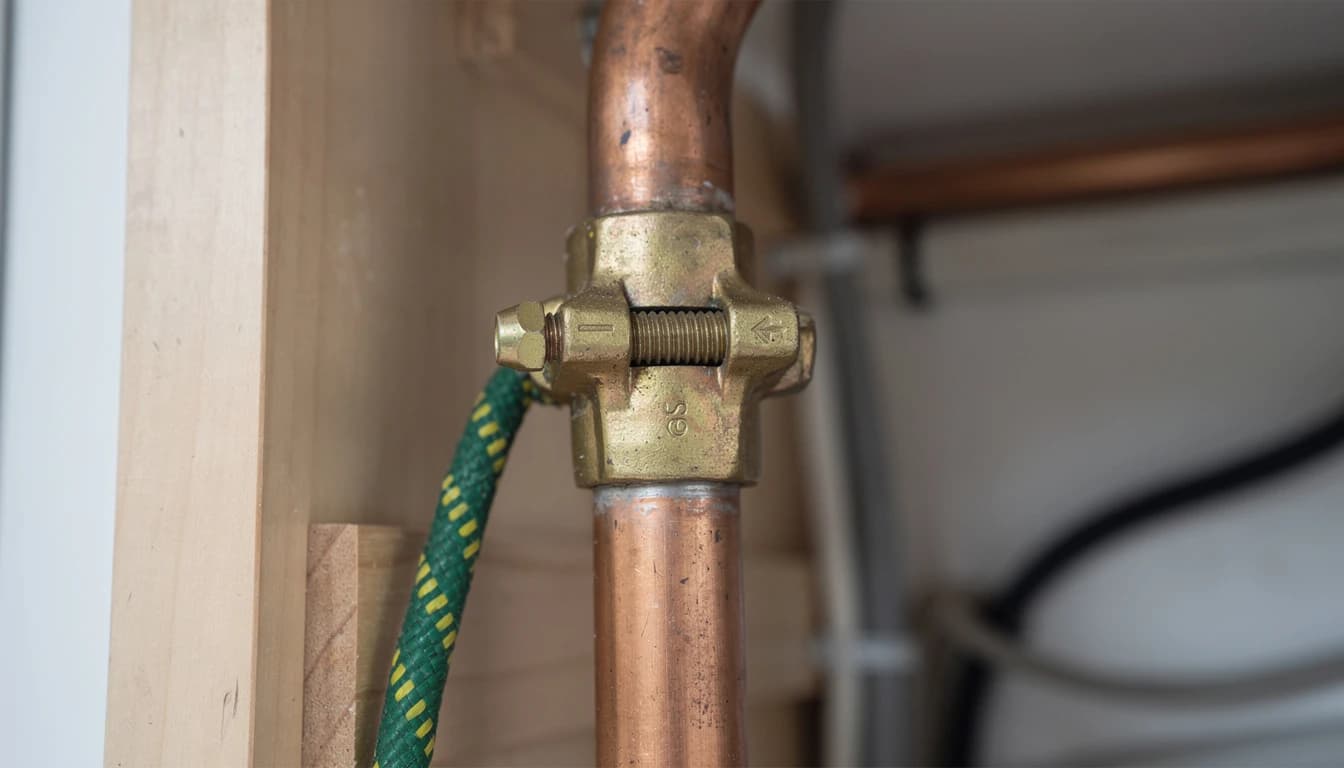
Green and yellow conductors running from your main earthing terminal, usually at or near the consumer unit, out to where the metal services enter the building. Gas, water and oil, wherever they're metallic.
What good looks like in a domestic property:
- 10mm² conductor in most homes on a modern supply, sometimes larger on bigger installations.
- Clamped within 600mm of the gas or water meter, on the consumer side of the meter.
- A green and yellow label on the clamp reading "Safety Electrical Connection, Do Not Remove".
- Clean bare metal under the clamp, not paint, and not a plastic section of pipe.
You can check most of this yourself in ten minutes with a torch. Find your gas meter, find your stopcock, look for a thick green and yellow cable clamped to the pipe. If you find nothing, you've found the problem.
Supplementary bonding
Smaller conductors linking exposed metal parts to each other within a room, historically the bathroom, tying pipework, radiators and the earth terminals of any fittings together.
Modern installations can often omit supplementary bonding in bathrooms where RCD protection is present, the main bonding is verified and disconnection times are met. That's the crucial detail: it's a conditional exemption, not a blanket one. Where any of those conditions fail, the supplementary bonding has to stay or be reinstated. Plenty of bathroom refurbishments have had it stripped out during a retile on the assumption it's obsolete.
Why bonding fails inspections so often
Four causes account for nearly everything we find.
- It was never installed. Properties wired before bonding requirements tightened simply don't have it, and nobody has touched the incoming services since.
- It was undersized. A 6mm² conductor was acceptable under earlier rules. On today's standards, that's usually an observation.
- A boiler or meter swap removed it. The old clamp came off with the old pipework and never went back. This is the most common one in London flats.
- Plastic pipe broke the run. A section of copper replaced with plastic during a bathroom job leaves a bonded pipe connected to nothing useful.
None of these are dramatic. All of them get coded as potentially dangerous, and a single one is enough to make a report unsatisfactory. Our breakdown of what EICR codes actually mean covers how that plays out on paper.
Your earthing system, and why London is a special case
How your property is earthed depends on what the network operator brought to your door. The arrangements are classified in BS 7671, the wiring regulations published by the IET, and three of them cover almost everything you'll meet in London.
- TN-S: a separate earth conductor comes in with the supply, typically the lead sheath of an older cable. Common in Victorian and Edwardian London housing.
- TN-C-S (PME): the earth is derived from the supply neutral at the cutout. The standard modern arrangement across most of the capital.
- TT: no earth from the network at all, so the installation relies on its own earth rod in the ground. Usual for outbuildings, some rural supplies and certain converted properties.
Why it matters to you: the earthing arrangement changes the bonding conductor size required, and it changes what's permitted where. PME supplies have restrictions around EV charge points and outbuildings that catch people out mid-project. If you're planning a charge point installation, the earthing arrangement is one of the first things we check, before anything else gets discussed.
Older London stock throws up genuine oddities. Lead-sheathed supply cables, earth paths through pipework that were never designed to carry fault current, and boards where somebody has connected the earth bar to the water pipe and called it done. It's one of the reasons we test rather than assume.
How it gets tested
You can't judge earthing by looking at it. It needs instruments.
An electrician measures the earth fault loop impedance, which tells you whether enough current will flow during a fault to trip the protective device fast enough. They'll also check continuity of the bonding conductors, confirming the cable you can see is actually connected at both ends and not just clamped decoratively to a pipe.
Those readings are on your condition report. If a number is out of range, no amount of tidy-looking green and yellow cable fixes it. This forms part of every EICR we carry out, and it's a routine part of fault finding when something is tripping for no obvious reason.
What it costs to put right
Typical UK market ranges rather than our prices, because the distance between your meters and your board decides most of it.
- Main bonding to gas and water, meters near the board: commonly £150 to £300.
- Main bonding where the gas meter is outside or in a distant cupboard: £300 to £600, since it's cable route and making good that costs.
- Upgrading undersized 6mm² bonding to 10mm²: similar to a new run, the cable is what's being replaced.
- Installing an earth electrode for a TT installation: usually £200 to £450 depending on ground conditions.
If your board is also due replacing, doing both together saves money and mess. A new board is the natural moment to bring the earthing and bonding up to current standards, and Electrical Safety First is clear that "if you are having any electrical work done, your electrician must check that the earthing and bonding arrangements you have are up to the required standard".
Our guide on whether your fuse board is safe will help you work out if you're in that position already.
Frequently asked questions
How do I know if my house has main bonding?
Look at your gas meter and your incoming water pipe near the stopcock. You're looking for a thick green and yellow cable clamped to the pipe, usually within 600mm of the meter, with a small label on the clamp. No cable means no bonding.
Is bonding the same as earthing?
No. Earthing gives fault current a path back so a protective device disconnects the supply. Bonding connects metal parts together so there's no dangerous voltage between them. An installation needs both, and having one doesn't cover the other.
Do plastic water pipes need bonding?
Plastic pipe doesn't conduct, so there's nothing to bond. The catch is a mixed system, where plastic enters the property and changes to copper inside. The copper section can still be connected to other metalwork, so it needs assessing rather than dismissing.
Why did my electrician say my bonding is too small?
Earlier wiring regulations accepted a smaller conductor than current standards do. A 6mm² main bond was normal for years. It isn't dangerous in the sense of an exposed live part, but it no longer meets the requirement, so it gets recorded as a defect.
Can I fit a bonding clamp myself?
Clamping a cable to a pipe looks trivial and the sizing behind it is not. The conductor size depends on your earthing arrangement and the supply, and the connection has to be tested to prove continuity. Getting it wrong gives you the appearance of protection without the function.
Does bonding stop me getting a shock?
It removes the voltage difference between metal parts, which is one specific shock risk. It doesn't protect you from touching a live conductor directly. That's what RCDs are for, and our post on what an RCD does explains the difference.
Had earthing or bonding flagged on a report and want it sorted properly rather than patched? See our consumer unit and earthing work or call 020 3653 2600. We'll test what you've got, tell you what's actually needed, and price it before we start.
Related reading
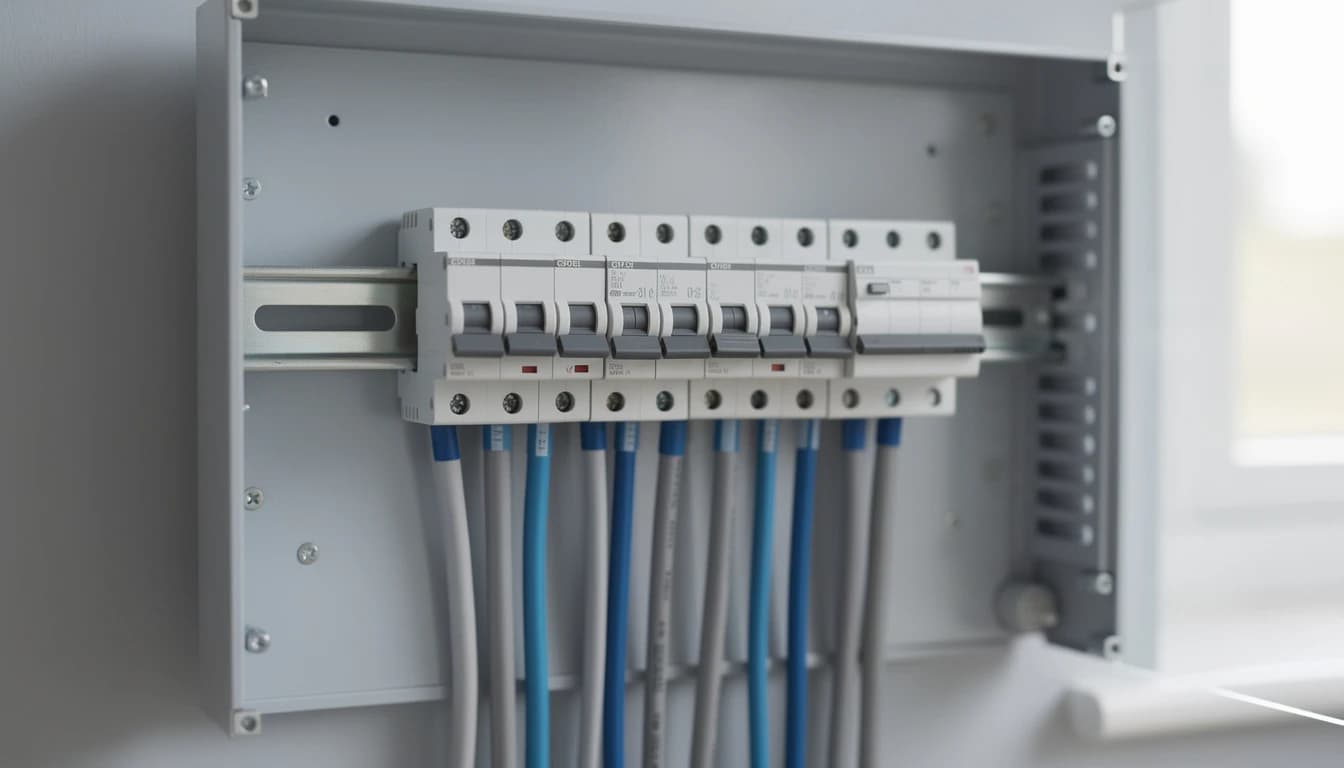
AFDDs and Surge Protection: What Modern Fuse Boxes Need
Arc fault detection and surge protection are the two devices changing what goes in a consumer unit. Here is what each does and whether your board needs them.
Read more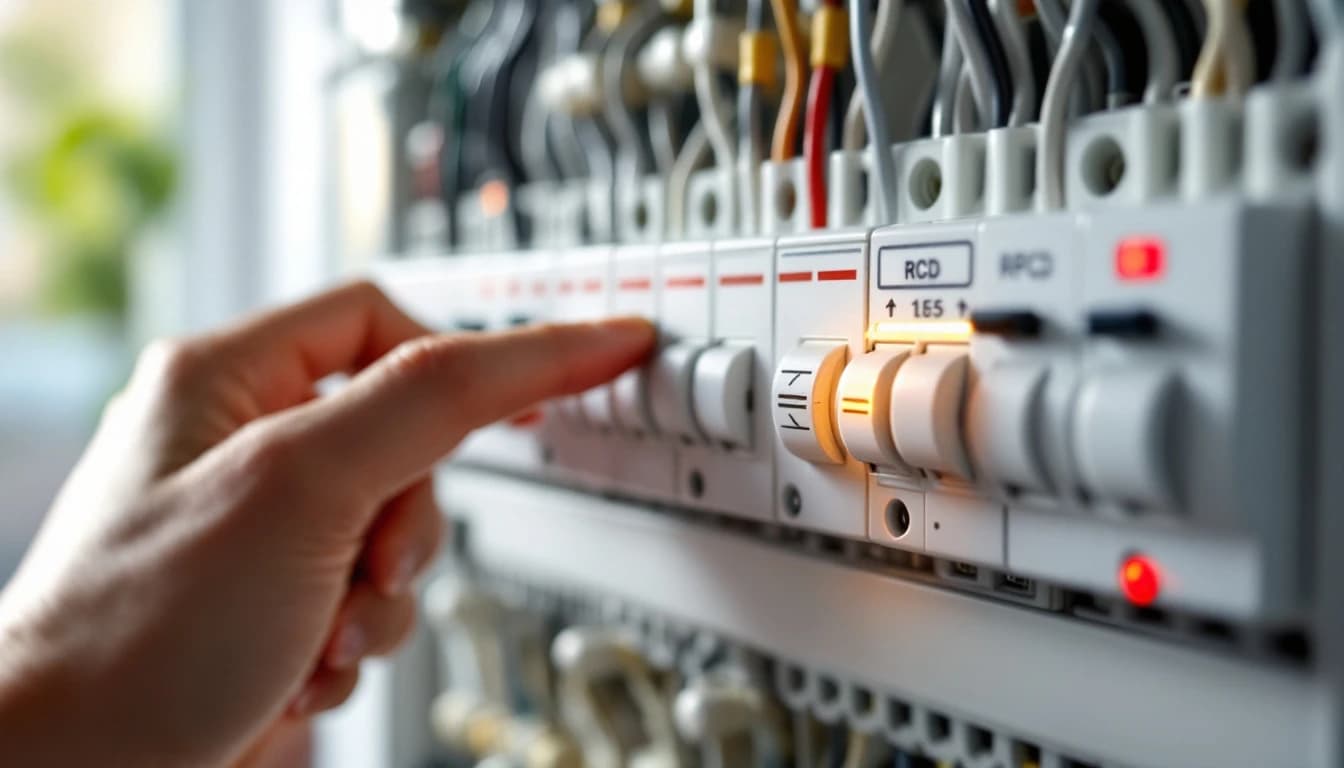
MCB vs RCD vs RCBO: What's Actually in Your Fuse Box
MCB, RCD or RCBO? Here's what each switch in your consumer unit does, how to spot which one you've got, and why one of them keeps tripping. Plain advice from London electricians.
Read more
The Best Consumer Unit Brands in the UK (2026 Compared)
The leading UK consumer unit brands for 2026 compared, from Hager and Wylex to Fusebox and MK, plus what actually matters more than the badge: metal, RCBO and SPD.
Read more