
Meter Tails: What They Are, Who Owns Them and When to Upgrade
Meter tails are the thick cables between your electricity meter and your consumer unit, and they belong to you. Here is what size they should be and when to upgrade them.

By Mo Elm
Lead Engineer•2 September 2026
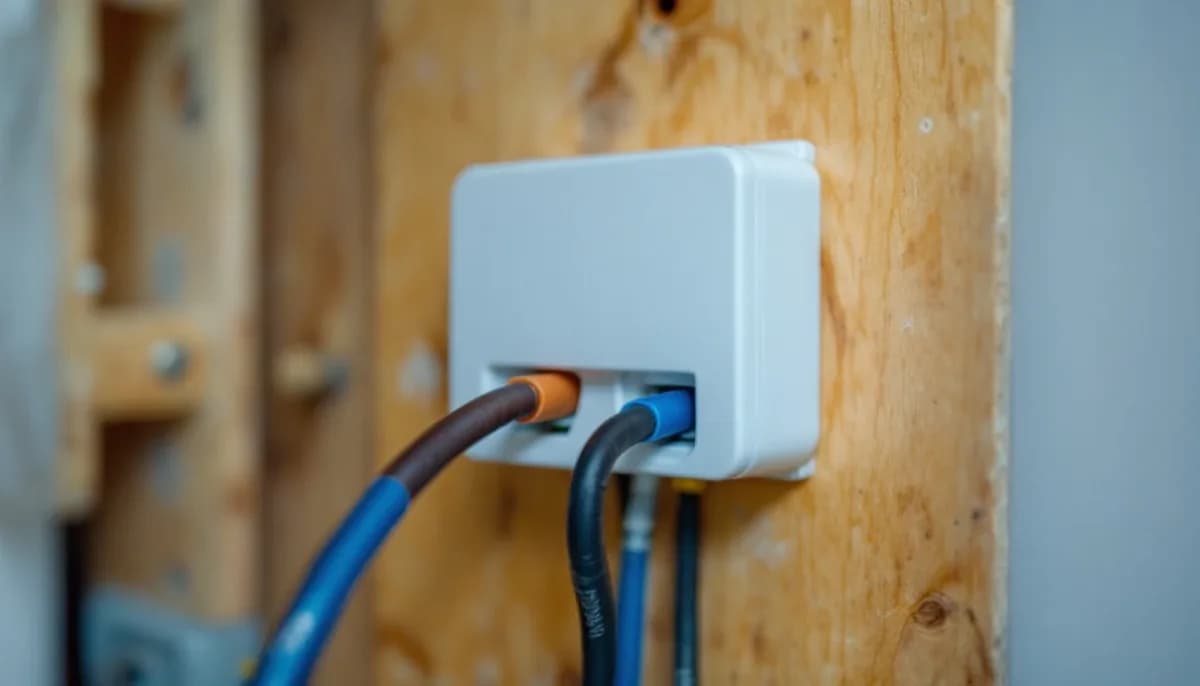
Meter tails are the short, thick cables that run from your electricity meter to your consumer unit, and they belong to you, the property owner. Not the network operator. Not your energy supplier. Everything from the meter's outgoing terminals onwards is yours, which means keeping those cables safe and correctly sized is your job to arrange.
That surprises people. We open meter cupboards most weeks where the consumer unit is brand new, the circuits are tidy, and the tails are thin old singles that have not been touched since the house had one ring circuit and a black and white telly. The weak link in the whole installation is two metres of cable nobody ever looks at.
What meter tails actually are
Two single-core cables, one live and one neutral, plus a smaller earth. Modern tails are a cable type called 6181Y: copper conductors with PVC insulation and a PVC sheath over the top, manufactured to BS 6004. Live is brown, neutral is blue or grey, the earth is green and yellow. Cable makers like Prysmian now make 19-strand "flexi" tails alongside the old 7-strand type, because the finer strands bend into terminals more easily and sit tighter under the screw. That matters. A loose tail connection is how meter cupboards catch fire.
One end of the tails lands on the meter's outgoing terminals. The other lands on the main switch in your consumer unit, sometimes via an isolator switch or a set of Henley block splitters on the way. It is a short run, but every amp your home uses passes through it.
Older houses have red and black tails instead of brown and blue. Really old ones, and there are plenty left in London, have rubber or cloth covered singles that have gone hard and crumbly over the decades.
Who owns what: cut-out, meter and tails
The dividing lines confuse almost everyone, so here they are:
- The service cable and cut-out: the cable coming in from the street and the box it terminates in belong to your distribution network operator. In London that is UK Power Networks. The main fuse lives inside the cut-out, and it is sealed. As the IET explains, the fuse may only be withdrawn by someone the distributor has authorised, and that permission "does not extend to the supplier's equipment, such as the meter".
- The meter: belongs to your energy supplier. If it is faulty, the call goes to them, not to an electrician.
- The tails and everything after: yours. The tails, any isolator, the consumer unit and every circuit in the property are the owner's responsibility.
So if your tails are undersized or damaged, nobody is coming to fix them unless you arrange it. And since they are your equipment, you are the one who pays for the cable and the labour.
16mm or 25mm meter tails: what the sizes mean
Two sizes cover nearly every London house. 16mm tails were the norm on older 60 amp supplies, and you still find them in pre-1990s properties. 25mm is the modern standard, sized for the 80 amp and 100 amp supplies that new consumer units and EV chargers expect. Longer runs, or anything fused above 100 amps, steps up to 35mm.
The logic is simple. The main fuse lets a certain amount of current through, and the tails have to carry that current safely. A 100 amp fuse ahead of 16mm tails means the weakest part of your supply is a cable rated well below the fuse protecting it. Under sustained load it runs warm, and warm connections are where problems start.
You can check your own size without touching anything. It is printed along the sheath, something like "6181Y 25.0mm". If you can only see the last centimetre before the cable disappears into trunking, that is usually enough.
Why tails matter for EV chargers, heat pumps and electric showers
Household loads have changed beyond recognition. A 7kW EV charger draws around 30 amps for hours at a stretch, sometimes all night. A 9.5kW electric shower pulls over 40 amps every morning. Add an induction hob and a heat pump and the total current flowing through your tails bears no resemblance to what a 1960s house was built for.
Undersized or loose tails cope, until they don't. Heat builds at the weak point, the connection oxidises, resistance climbs, and the heat builds faster. That cycle is how you end up with a scorched meter cabinet and a dead supply that turns out to be your problem to repair, not the network's.
If a charger is on your list, our guide to what you need to install an EV charger at home covers the supply checks in the right order, and our EV charger installation service starts with exactly this assessment.
The main fuse rating, and how upgrades work
Your main fuse is probably rated at 60, 80 or 100 amps, stamped on the fuse carrier inside the cut-out. If the number is 60 and you are adding serious electrical load, an upgrade usually enters the conversation.
In London you request it from UK Power Networks. They say they "can upgrade your main fuse from a 30 or 60amp fuse up to either an 80amp or a 100amp fuse", the site visit is free, and they "aim to process your request and contact you within 10 working days" through their fuse upgrade service. One condition they are explicit about: the meter, meter tails, fuse board and consumer tails all need to be correctly sized first, or the visit is wasted and they have to come back.
That ordering matters. Get the tails and the consumer unit sorted before you book the DNO visit, not after.
Isolator switches: the small box that saves a long wait
An isolator is a 100 amp double-pole switch fitted between the meter and the consumer unit. Once one is in place, any electrician can make your board dead safely in seconds, without waiting weeks for the DNO to attend and pull the main fuse.
Fitting it the first time still means interrupting the supply at the cut-out, so it normally happens alongside a tails upgrade or a consumer unit change. After that one job, every future piece of work on your installation gets quicker and cheaper. For what it all costs when bundled with a new board, see our post on consumer unit replacement cost.
Warning signs your meter tails need attention
You do not need to open anything to spot most of these:
- Warm cables: the tails above the meter feel warm when the shower or charger has been running.
- Discolouration: brown or yellow patches on the insulation near the terminals, or on the cabinet wall behind them.
- Cloth or rubber coverings: fabric-braided or perished rubber tails are decades past their working life.
- A burning or fishy smell from the meter cupboard, or any scorch marks around the cut-out.
If any of these sound familiar, leave everything closed. The cut-out is sealed because there is no safe way for you to isolate ahead of it. If the cut-out itself looks damaged or overheated, UK Power Networks will come and check the fuse and replace their equipment if needed. For everything on your side, our post on working out whether your fuse board is safe shows what you can check without tools. Then call us.
Replacing meter tails: who can do it and when the DNO gets involved
This is registered-electrician work. In England, most fixed wiring in a home sits under Part P of the building regulations, and the government's Approved Document P sets out what must be designed, installed, inspected and tested properly. Done by a registered competent person, the work is certified without you filing anything with building control.
The physical job starts with making the supply dead, and at the origin that means withdrawing the main fuse. There are three legitimate routes: the DNO attends and pulls it, an electrician does it with the DNO's written permission, or an isolator is already fitted. Breaking the seal yourself is not a fourth option. Missing or damaged seals have to be reported, and they raise questions about meter tampering that you do not want pointed at you.
Because the supply has to come off anyway, we usually replace tails at the same time as a consumer unit upgrade. One visit, one interruption, and the whole intake end of the installation is new.
The London flat problem: the meter in a communal cupboard
In a huge number of London flats the meter is not in the flat at all. It sits in a communal cupboard by the front door or in the basement, and the tails run from there up through a shared riser to the consumer unit in your hallway, three floors up and twenty metres away.
Two consequences. First, long tails like that need their own protective device at the meter end, not just the main switch in your flat, and fitting one is a job that happens in a cupboard everyone shares. Second, you will need the freeholder or managing agent on side before anyone works in a communal area. Get that agreement early, because it is the part most likely to stall. Tell them what is planned, give them our details, and we will sort access and timing with them directly.
Frequently asked questions
Are meter tails my responsibility?
Yes. The tails from the meter's outgoing terminals to your consumer unit belong to the property owner. The service cable, cut-out and main fuse belong to the network operator, and the meter belongs to your supplier. The split catches people out because all of it sits in the same cupboard.
What size meter tails do I need for an EV charger?
25mm tails with an 80 amp or 100 amp main fuse is the usual answer for a 7kW charger alongside normal household load. Your electrician should confirm with a load check rather than assume, because a house already running an electric shower and an induction hob has less spare capacity than one that doesn't.
Can any electrician replace meter tails?
A registered electrician, yes, but the supply has to be isolated first. That means the DNO pulling the main fuse, an electrician doing it with the DNO's written permission, or an isolator switch already in place. If someone offers to change your tails without mentioning any of that, find someone else.
How much does a meter tails upgrade cost?
As a rough guide for the UK market, replacing tails and fitting an isolator typically runs to a few hundred pounds, and it is often bundled into a consumer unit job at a saving over doing both separately. DNO fuse upgrades are frequently free for standard domestic supplies, though UK Power Networks notes charges can apply for shared supplies or an inadequate incoming cable. Costs vary, so get a fixed quote for your setup.
Do I need new meter tails for a smart meter?
Not automatically. The installer works on the meter itself, not your tails. But they will flag tails that are perished, undersized or loose, because disturbing old cables is exactly when weak connections show themselves. If yours get flagged, treat it as useful free information rather than an upsell.
How long can meter tails be?
Network operators generally want the run from the cut-out through the meter to your main switch kept short, around three metres. Longer runs, common in flats with communal meter cupboards, need their own protective device at the meter end. That is a design decision for your electrician, not a DIY judgement.
Live in London and not sure what state your tails are in? See our consumer unit upgrade service or call 020 3653 2600. We will check the whole intake end, tell you what needs doing and what can wait, and give you a fixed price before any work starts.
Related reading
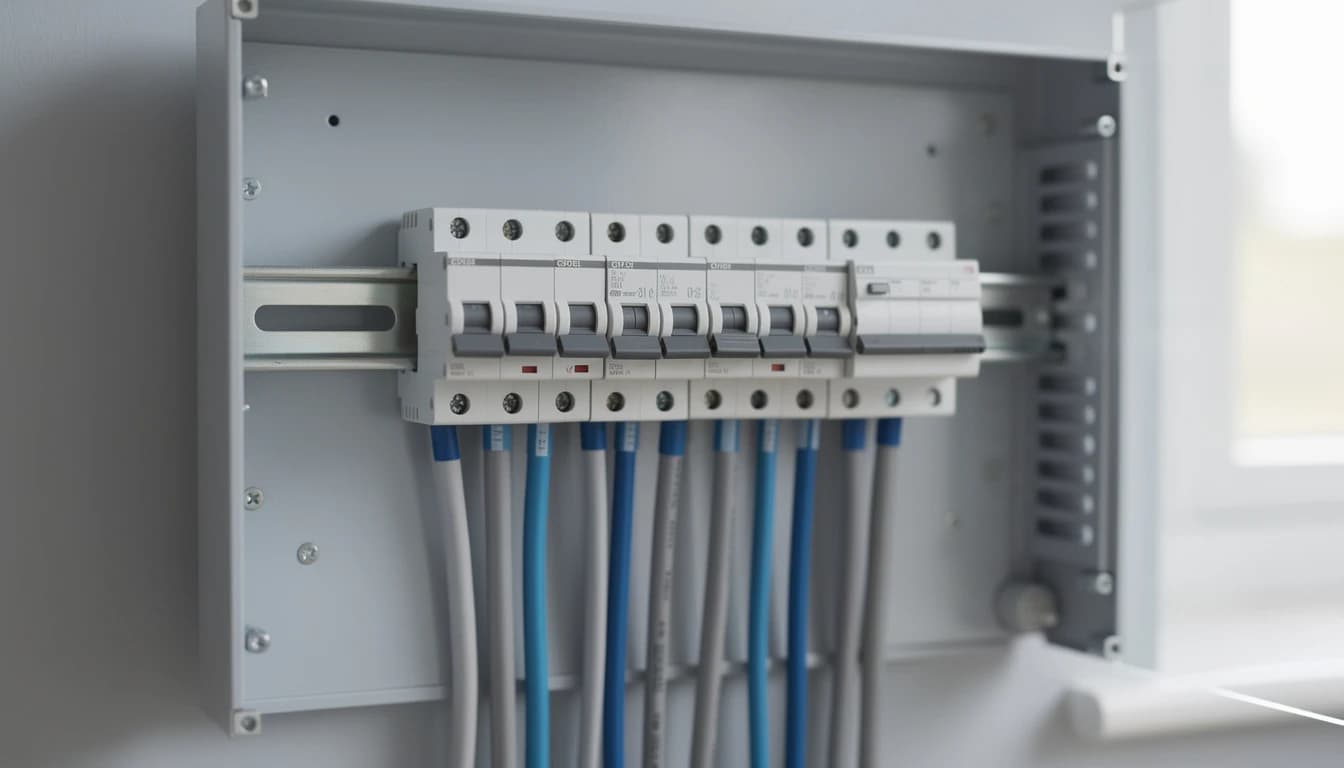
AFDDs and Surge Protection: What Modern Fuse Boxes Need
Arc fault detection and surge protection are the two devices changing what goes in a consumer unit. Here is what each does and whether your board needs them.
Read more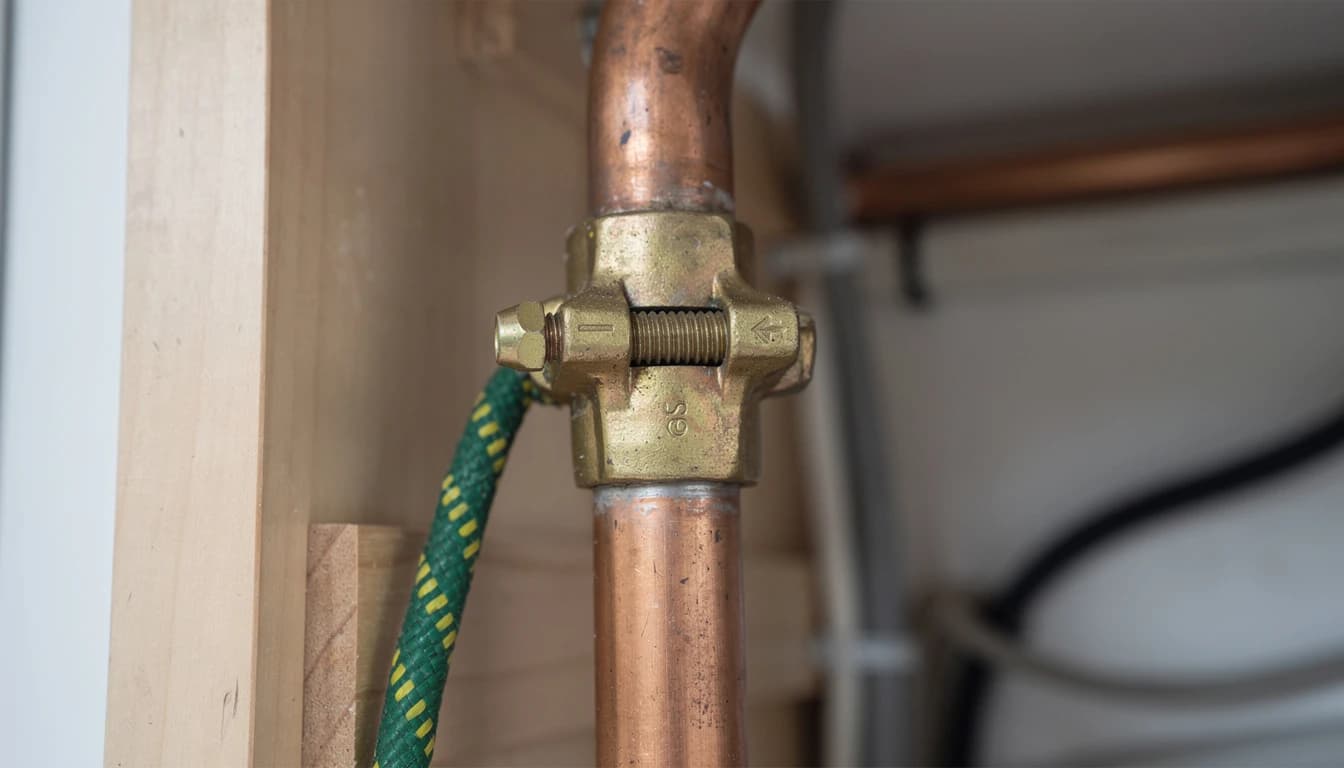
Earthing and Bonding Explained: What Yours Should Look Like
Earthing and bonding do two different jobs and both get flagged on inspections. Here is what each one is, what good looks like, and why yours may be missing.
Read more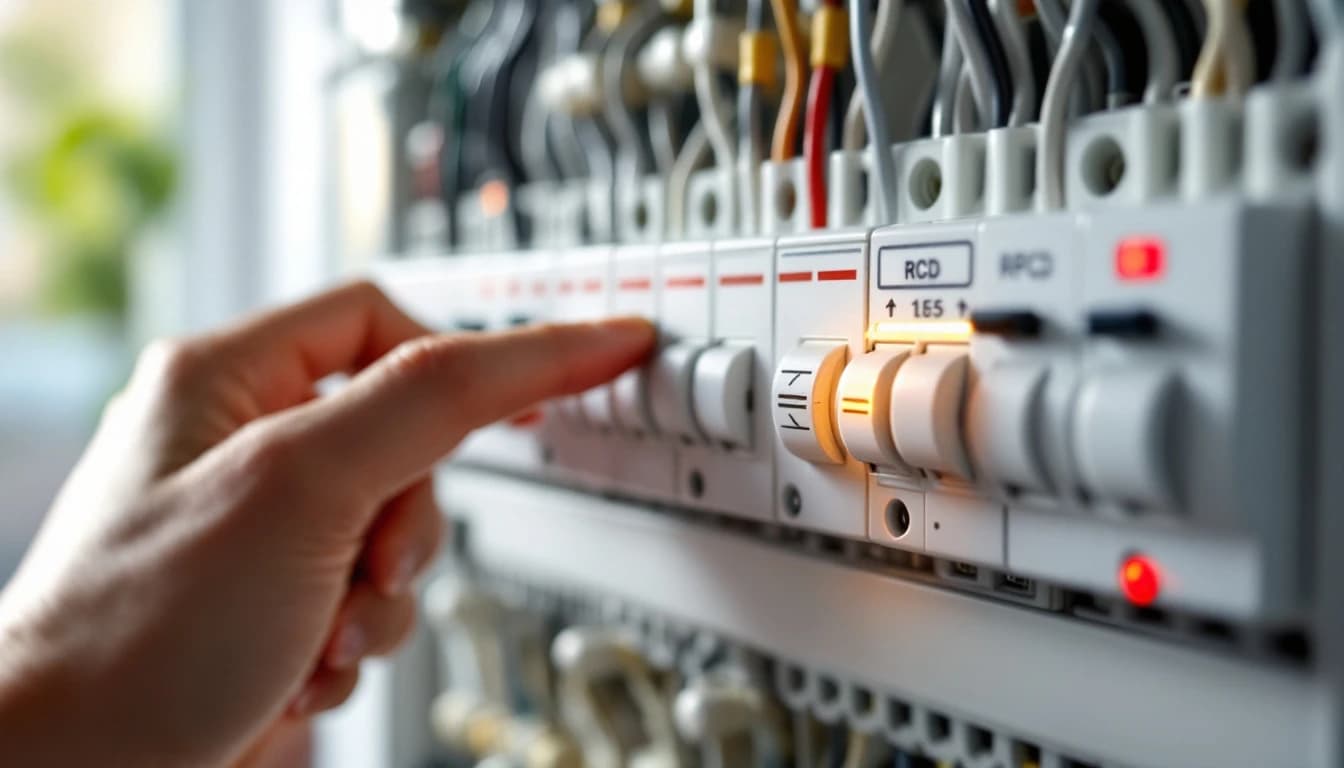
MCB vs RCD vs RCBO: What's Actually in Your Fuse Box
MCB, RCD or RCBO? Here's what each switch in your consumer unit does, how to spot which one you've got, and why one of them keeps tripping. Plain advice from London electricians.
Read more