
EICR Codes Explained: What C1, C2, C3 and FI Mean
Your EICR came back with codes against it. Here is what C1, C2, C3 and FI actually mean, which ones make a report unsatisfactory, and what you have to fix.

By Ali Elm
Managing Director•29 July 2026
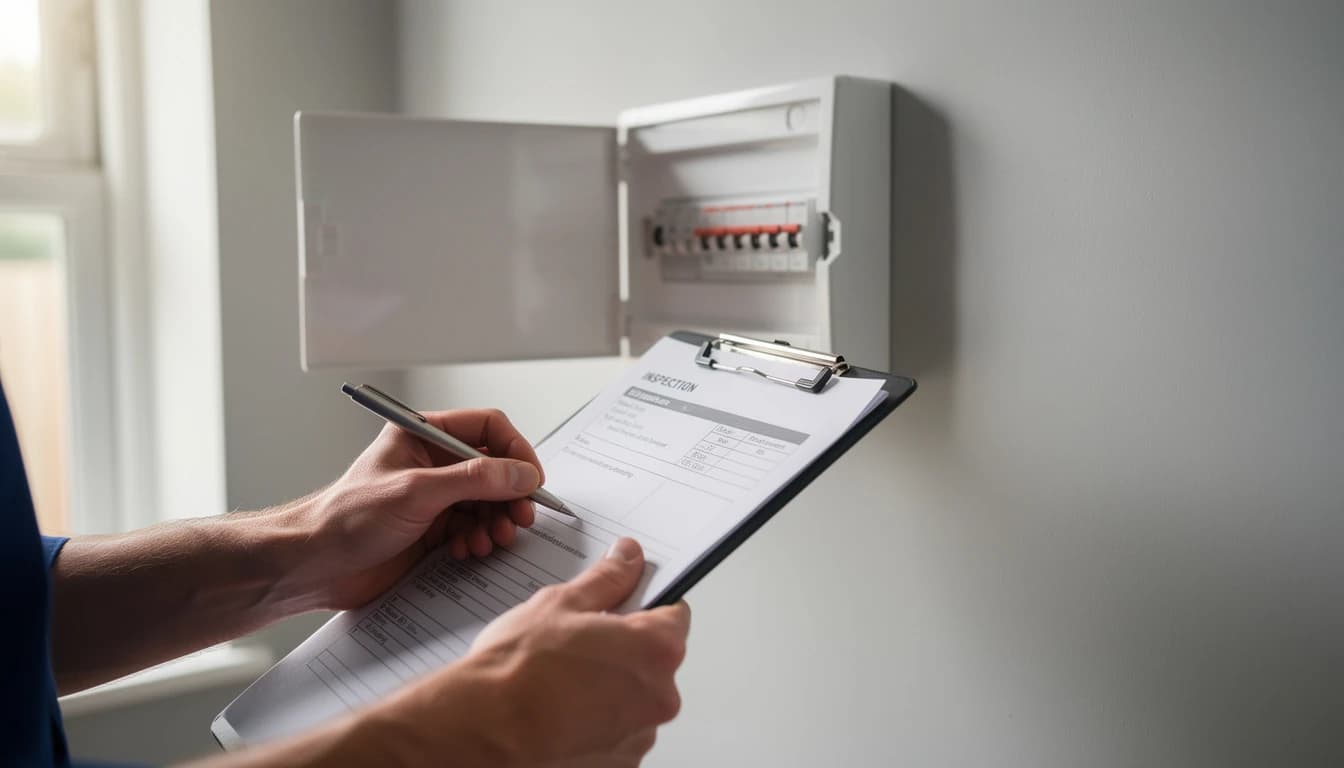
Four codes can appear on an EICR, and only one of them is good news. C1 means danger is present right now. C2 means potentially dangerous. FI means further investigation is needed. C3 is only a recommendation and does not fail anything. If your report has a C1, a C2 or an FI on it, the installation is recorded as unsatisfactory and the work has to be done.
That one-line summary is what most people want. The rest of this covers what each code looks like in a real London property, what happens next, and where the codes are more of a judgement call than people assume.
The four EICR classification codes
These aren't invented by individual electricians. The government sets them out in its guidance on electrical safety standards in the rented sectors, and the same codes get used on owner-occupier reports too.
C1: danger present, risk of injury
Something on the installation could hurt someone today. Exposed live copper behind a cracked socket front. A broken light fitting with the terminals showing. A consumer unit with a missing blanking plate you could put a finger through.
The government guidance says the inspector "may make any C1 hazards safe before leaving the premises". In practice we usually do, because walking away from live exposed conductors isn't an option. That might mean isolating a circuit or fitting a temporary cover, and it gets noted on the report.
A C1 is the one that makes your stomach drop. It's also the one that tends to be quickest and cheapest to put right, because it's usually a single accessory rather than the whole installation.
C2: potentially dangerous
No one is in danger while things are working normally, but if a fault develops, someone could be. This is the code we write most often in older London housing stock.
Typical C2 items:
- No RCD protection on socket circuits or on cables buried in walls.
- Missing or undersized main protective bonding to the gas or water service.
- No earth conductor on lighting circuits, common in properties wired before the 1960s.
- Damaged cable insulation where old rubber or fabric sheathing has gone brittle.
- Wrong size fuse or breaker protecting a circuit, so the cable isn't properly protected.
A C2 fails the report just as firmly as a C1 does. The difference is timing, not seriousness.
C3: improvement recommended
The only code that doesn't fail anything. The guidance is clear that "further remedial work is not required for the report to be deemed satisfactory". It flags something that met the standard when it was installed but wouldn't be done that way now.
A classic C3 is a plastic consumer unit in a flat. It was compliant when fitted. Current standards ask for a non-combustible enclosure. It isn't dangerous, so it gets a C3, and you can leave it or upgrade it as you choose.
Some inspectors code heavily on C3s and some barely use them. Neither is wrong. It's worth reading the C3 list rather than ignoring it, because it's often a preview of what will become a C2 at your next inspection.
FI: further investigation required
The inspector found something that doesn't add up and couldn't get to the bottom of it within the scope of the inspection. A circuit that isn't identified on any board. An earth reading that looks wrong. A cable disappearing into a wall with no obvious destination.
FI means "further investigation required without delay", and it fails the report. It isn't a cop-out, it's honest. Chasing a mystery circuit through a four-storey Victorian conversion can take half a day on its own, and pretending it's fine would be worse.
Satisfactory or unsatisfactory: how it's decided
The rule is simple. Any C1, C2 or FI, and the report reads unsatisfactory. C3s on their own leave you with a satisfactory report.
People get caught out by two things. First, one small C2 is enough. A single unbonded gas pipe fails an otherwise tidy installation. Second, "unsatisfactory" doesn't mean the property is uninhabitable or that you have to rewire. It means specific items need putting right, and most of them are targeted jobs rather than a full house rewire.
If you're trying to work out what a full inspection costs before you book one, we've broken the numbers down in our guide to EICR costs for landlords.
What landlords have to do when a report fails
This is where the codes stop being technical and start being legal. Under the Electrical Safety Standards in the Private Rented Sector (England) Regulations 2020, landlords have hard deadlines attached to the outcome.
Where a report shows remedial or further investigative work is needed, you must complete it within 28 days, or sooner if the report specifies a shorter period. Within 28 days of finishing, you supply the tenant and the local council with written confirmation the work is done.
Other duties worth knowing:
- Copy to the existing tenant: within 28 days of the inspection.
- Copy to a new tenant: before they move in.
- Copy to the council: within 7 days of a request.
- Inspection interval: at least every 5 years.
Two things changed recently and a lot of landlords have missed them. The rules were extended to the social rented sector in 2025, and the maximum financial penalty a council can impose is now up to £40,000 per breach. That's a meaningful jump from the figure most online guides still quote.
If you manage a portfolio and want the paperwork handled rather than chased, that's the bulk of what our landlord compliance work involves.
What the codes usually cost to clear
We can't quote your property from a blog post, but here's the honest shape of it based on what we see across London. These are typical UK market ranges, not our fixed prices.
- Single accessory swap (socket, switch, light fitting): often £60 to £120 per item once someone is on site.
- Adding main protective bonding to gas and water: commonly £150 to £350 depending on how far apart the services and the earthing terminal are.
- Consumer unit replacement to bring RCD protection in: typically £500 to £900 for a domestic board.
- Investigating an FI: usually charged by time, half a day is a fair planning assumption.
Flats in converted terraces tend to land at the higher end, because the gas meter is in a cupboard three floors down and the cable run is never short. Get a fixed quote against your actual report rather than a per-item estimate over the phone.
Can you challenge a code?
Competitors rarely mention this, but yes, you can. Coding involves professional judgement, and two qualified inspectors can genuinely disagree on whether an item is a C2 or a C3. Electrical Safety First publishes Best Practice Guide 4 on classification codes specifically to reduce that inconsistency across the trade.
Where it's worth questioning a code:
- The observation is vague. "Old wiring" isn't an observation. Ask which circuit, which accessory, which reading.
- Everything came back C2 and the remedial quote conveniently matches a full rewire.
- An item was coded C2 without any test result recorded against it.
Ask the original inspector to explain the reasoning first. Most will, and often the detail makes sense once you hear it. If it still doesn't sit right, a second inspection from an independent firm costs less than a disputed rewire. We've picked up plenty of jobs where the second report was far shorter than the first, and a few where it was longer.
What owner-occupiers should do with their codes
If you own and live in your home, no law forces you to act on any of it. That cuts both ways. Nobody is going to fine you, and nobody is going to fix it either.
Our honest advice: clear C1s the same week, plan C2s within a few months, and treat C3s as a shopping list for whenever you next have the walls open. If your report flagged the board itself, our guide on whether your fuse board is safe covers what to look for.
Frequently asked questions
Does a C3 mean my EICR failed?
No. A report with only C3 observations is recorded as satisfactory. C3 means improvement is recommended, not required, and you're free to leave the item as it is.
How long do I have to fix a C1?
For rented property, remedial work must be completed within 28 days of the report, or sooner where the report specifies. In practice a C1 should be made safe on the day it's found, and most inspectors will do that before they leave.
Can I get a new certificate after the remedial work, or is the old one amended?
You get written confirmation that the remedial work has been completed, which is what you give the tenant and the council. Whether a fresh EICR is issued depends on how much was done. Clearing several C2s across different circuits often justifies a new report.
Why did my property pass five years ago and fail now?
Standards move on and installations age. An item that was acceptable at the last inspection can drop to a C2 once the wiring regulations change or once the insulation has had another five years to degrade. The consumer unit and RCD requirements are the most common cause of this.
Who is allowed to carry out an EICR?
A qualified person competent to undertake the inspection and testing. For rented property the government guidance requires exactly that, and most landlords and letting agents look for registration with a scheme such as NICEIC as the practical proof of it.
Does an unsatisfactory EICR stop me selling my house?
It doesn't legally block a sale, but buyers and their solicitors will ask about it and it often turns into a price negotiation. We've covered the detail in our post on whether you need an EICR to sell.
Got a report in front of you full of codes and no plain answers? Send it over. See our EICR and electrical certificate service or call us on 020 3653 2600 and we'll tell you what actually needs doing, what can wait, and what it will cost as a fixed price.
Related reading
Which Electrical Certificate Do You Actually Need?
EIC, Minor Works and EICR are three different documents for three different jobs. Here is which one your electrician should hand you, and when.
Read more
How Often Should You Get an EICR? Rules by Property Type
How often you need an EICR depends on the property. Homeowners are advised every 10 years, landlords must test every 5 years by law, businesses follow a risk cycle.
Read more
EICR Cost in London: What Landlords Pay and Why It Matters
What an EICR actually costs in London, what moves the price up or down, and why every landlord is on the hook for one every five years.
Read more