
MCB vs RCD vs RCBO: What's Actually in Your Fuse Box
MCB, RCD or RCBO? Here's what each switch in your consumer unit does, how to spot which one you've got, and why one of them keeps tripping. Plain advice from London electricians.

By Mo Elm
Lead Engineer•22 July 2026

Open your consumer unit and you'll see a row of switches. Some protect the wiring. One or two protect you. The quick version of MCB vs RCD is this: an MCB trips when a circuit draws too much current, so it guards the cables and stops them overheating. An RCD trips when electricity leaks to earth, which is what saves you from a fatal shock. An RCBO combines both in one device, for a single circuit.
So you're not really choosing between them. A safe board needs both kinds of protection. What's changed in recent years is how they're arranged, and that's where RCBOs come in. Below, we'll show you how to read your own board, tell which device is which, and work out why a particular switch keeps going off.
MCB vs RCD vs RCBO at a glance
Three switches, three jobs. Here's the short version before we get into the detail.
- MCB (miniature circuit breaker): Protects the wiring. Trips on overload or short circuit. One per circuit. Does nothing to stop an electric shock.
- RCD (residual current device): Protects people. Trips when current leaks to earth, usually at 30mA. Often covers several circuits at once. Does nothing about overloads or short circuits.
- RCBO (residual current breaker with overcurrent): Both jobs in one module. Overload and short-circuit protection plus 30mA earth-leakage protection, for a single circuit.
What is an MCB?
An MCB, or miniature circuit breaker, is the switch that protects a single circuit from drawing too much current. It's the modern replacement for the old rewireable fuse, the sort you had to fix with a strip of fuse wire.
An MCB trips for two reasons. The first is an overload: you've plugged too much onto one circuit, the current climbs past what the cable can safely carry, and after a short delay the breaker cuts out. The second is a short circuit, where a live conductor touches neutral or earth. That's a sudden, huge surge of current, and the MCB drops almost instantly.
Either way, the MCB is protecting the cable buried in your walls from overheating and starting a fire. What it does not do is protect a person. If you touched a live wire on a circuit fed only by an MCB, the current passing through you might be nowhere near enough to trip the breaker, but it's more than enough to stop your heart. That gap is exactly why the RCD exists.
What is an RCD?
An RCD, or residual current device, is the switch that cuts your power in a fraction of a second when it senses electricity escaping to earth, for example through a person who has touched something live. According to the IET's Wiring Matters, "an RCD monitors the earth leakage current in a circuit".
The way it works is neat. Under normal conditions, the current flowing out on the live conductor should exactly match the current returning on the neutral. An RCD constantly compares the two. If some current goes missing, it's leaking somewhere it shouldn't, and the device switches off. For shock protection, the trip level is small: BS 7671 lists RCDs "not exceeding 30 mA tripping current" for that additional protection, again per the IET. That's about a tenth of the current an MCB might tolerate.
The catch is the mirror image of the MCB. An RCD won't trip on an overload or a short circuit, because in both of those cases the current still balances between live and neutral. It only cares about leakage to earth. We go deeper into this in our guide to what an RCD is and how it protects you.
What is an RCBO?
An RCBO is an MCB and an RCD built into one module. It gives a single circuit its own overload and short-circuit protection, plus its own 30mA earth-leakage protection.
The clever part is that everything is per circuit. If an earth fault develops on the lighting in your bathroom, only that RCBO trips. The rest of the house stays on. That's a real change from older boards, and it's the main reason electricians now reach for RCBOs by default. More on that further down.
How to tell which device you've actually got
You don't need to be an electrician to read the front of your board. You just need to know what to look at.
- Find the main switch. It's usually the largest switch, sat on its own at one end. That's what kills the whole supply.
- Look for test buttons. Any device with a small "Test" or "T" button has RCD protection built in. Electrical Safety First says the same: to check whether your unit has an RCD, "look for the 'Test' or 'T' button", per their RCDs Explained guidance.
- Read the numbers on the front. A rating like 6A, 16A or 32A tells you the overcurrent side. A marking of 30mA or 0.03A tells you the earth-leakage side.
From there, most London boards fall into one of three layouts:
- All identical breakers, no test buttons: an older MCB-only board with no RCD protection at all. If yours is even older and uses fuse wire, it predates breakers entirely. Either way, it's worth reading whether your fuse board is still safe.
- Two banks of breakers with one or two larger switches at the end: a split-load or dual-RCD board. Those bigger switches with test buttons are the RCDs, and each one guards a whole bank of circuits.
- Every circuit has its own breaker, each with its own test button: a full RCBO board. This is the current standard for a new installation.
Which one is tripping, and why
This is where knowing the difference pays off. What trips tells you what's wrong.
If a single breaker drops and it's an MCB, the fault is on that one circuit, and it's either an overload or a short. Unplug a few things, reset it, and see if it holds. If it trips the moment you reset it with nothing switched on, that points to a fault in the fixed wiring rather than an appliance.
If an RCD drops and takes out a whole bank of circuits at once, you've got earth leakage somewhere on those circuits. A common culprit is a single faulty appliance, like a kettle element on its way out or a washing machine that's letting in damp. Here's the quick way to narrow it down:
- Unplug everything on the affected circuits.
- Reset the tripped device.
- Plug items back in one at a time, waiting a moment after each.
- When it trips again, the last thing you plugged in is your suspect.
If it trips with nothing plugged in, the leakage is in the wiring itself, and that's a job for an electrician, not more resetting. If your board seems to go off for no clear reason, our guide to why a fuse box keeps tripping walks through the usual suspects, and our fault finding and repair service exists for the ones you can't pin down yourself.
Why modern boards use RCBOs
Picture a dual-RCD board on a winter evening. A fault on one lighting circuit trips the RCD, and because that RCD covers a whole bank, half your house goes dark. Worse, if the fridge and freezer sit on the same bank, they're off too, and you might not notice until the morning.
A full-RCBO board fixes that. Every circuit has its own combined protection, so a fault on the bathroom light only trips the bathroom light. Nothing else. That single change is why RCBOs have become the default choice on new consumer units.
It also lines up with the standards. All fixed wiring in UK homes is designed to BS 7671, the wiring regulations now in their 18th Edition, which the IET describes as the chief standard for electrical work. Its push for wider 30mA protection across circuits is far tidier to meet with RCBOs than by cramming everything behind one or two shared RCDs.
One thing to be clear about: swapping a consumer unit is not a DIY job. The same IET guidance notes that consumer unit replacements are notifiable work under Part P of the Building Regulations, so it has to be done and signed off by a competent registered electrician. If your board is due an upgrade, our consumer unit upgrade service covers the whole job, from choosing the right board to the certificate at the end. Prices vary with the size of the board and the state of your existing wiring, and our guide to consumer unit replacement cost breaks down the typical UK ranges. For your actual figure, it's always worth getting a fixed quote.
Frequently asked questions
What is the difference between an MCB and an RCD?
An MCB protects the wiring by tripping on overload or short circuit. An RCD protects people by tripping when current leaks to earth, which is what prevents a fatal shock. They cover different faults, so a safe board uses both.
Is an RCBO better than an RCD?
An RCBO isn't a replacement for an RCD, it's an RCD and an MCB combined for one circuit. The advantage over a shared RCD is that a fault only trips the affected circuit, so you don't lose half the house at once. For most homes, a full-RCBO board is the better setup.
Does BS 7671 require RCDs on every circuit?
The 18th Edition of BS 7671 calls for 30mA RCD protection on most socket-outlet and cable circuits in a home, with some limited exceptions your electrician will assess. In practice that's why new boards use RCBOs on nearly every circuit rather than leaving anything unprotected.
Why does my RCD keep tripping but the MCBs don't?
Because the fault is earth leakage, not an overload. Something is letting current escape to earth, often a failing appliance or damp getting into a fitting. Unplug the items on the affected circuits and reintroduce them one at a time to find the source.
Can I replace an MCB with an RCBO myself?
No. Work inside a live consumer unit is dangerous, and consumer unit alterations are notifiable under Part P, meaning they must be carried out and certified by a registered electrician. Fitting the wrong rating or type of device can also leave circuits unprotected.
How do I know if my consumer unit needs upgrading?
If you've got a rewireable fuse box, a board with no test buttons at all, or one that trips repeatedly, it's worth having it assessed. An electrician can tell you whether it meets current standards or whether an upgrade to a modern RCBO board makes sense.
Not sure which switches you're looking at, or tired of the whole house going dark over one fault? Take a look at our fuse board replacement work, or call us on 020 3653 2600 for a straight answer and a fixed quote from a real London electrician.
Related reading
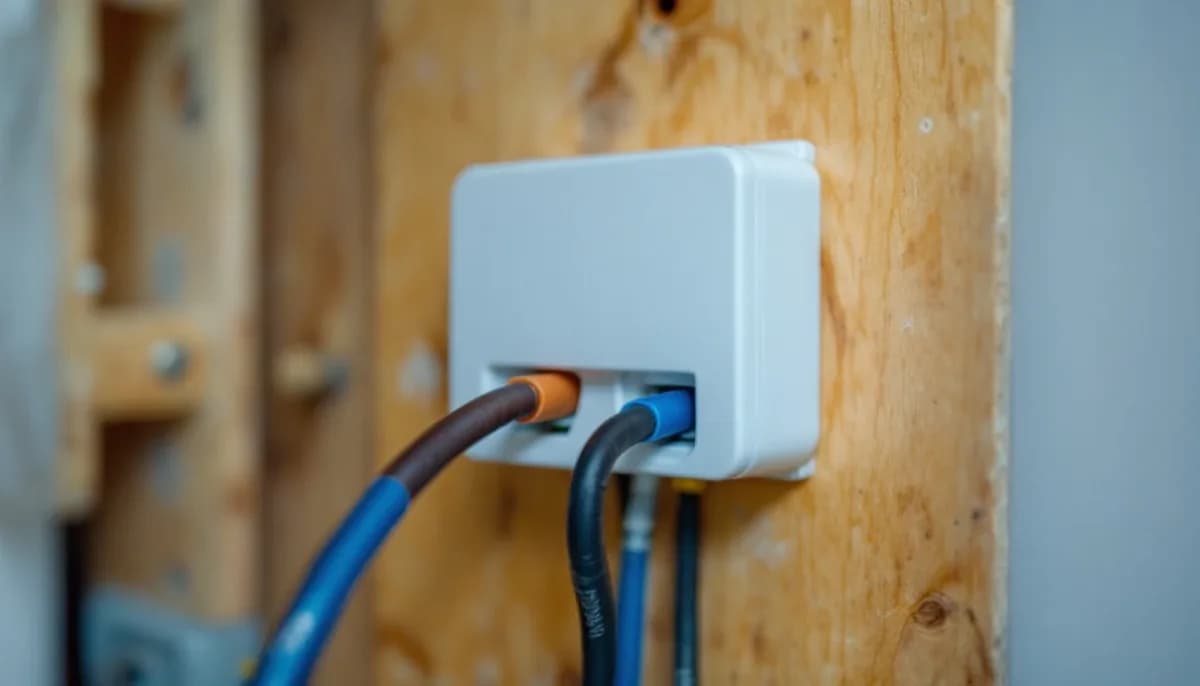
Meter Tails: What They Are, Who Owns Them and When to Upgrade
Meter tails are the thick cables between your electricity meter and your consumer unit, and they belong to you. Here is what size they should be and when to upgrade them.
Read more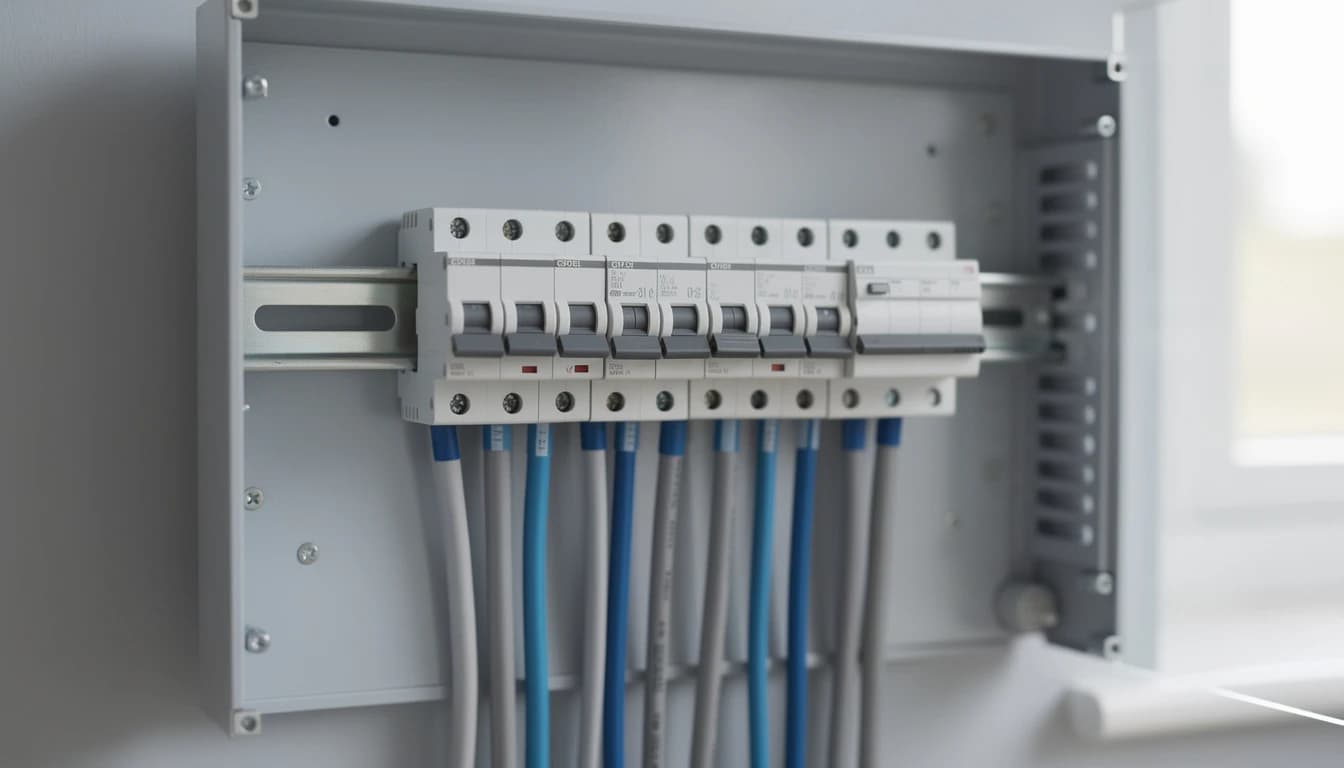
AFDDs and Surge Protection: What Modern Fuse Boxes Need
Arc fault detection and surge protection are the two devices changing what goes in a consumer unit. Here is what each does and whether your board needs them.
Read more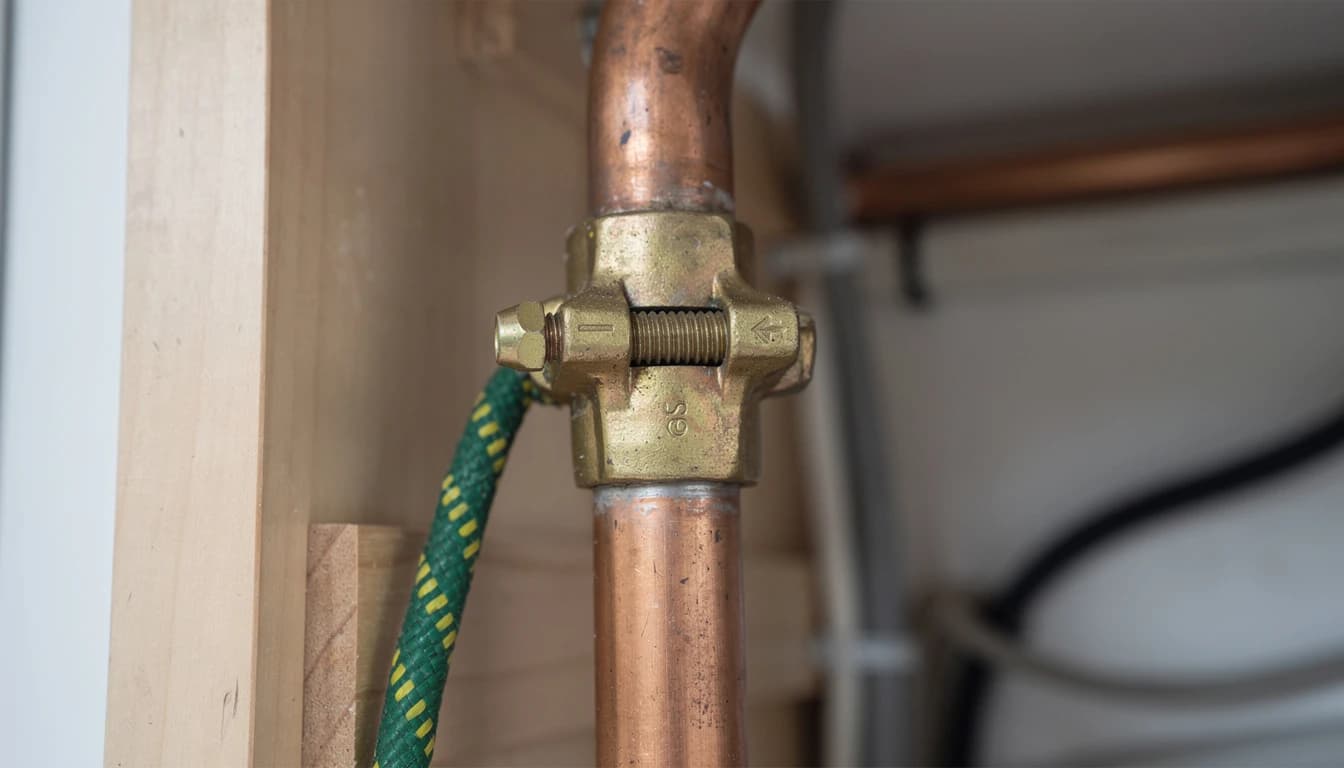
Earthing and Bonding Explained: What Yours Should Look Like
Earthing and bonding do two different jobs and both get flagged on inspections. Here is what each one is, what good looks like, and why yours may be missing.
Read more