
Fixed Wire Testing: What UK Businesses Actually Have to Do
No law sets a fixed testing interval for business premises. Here is what the Electricity at Work Regulations really require and how to build a defensible schedule.

By Ali Elm
Managing Director•29 July 2026
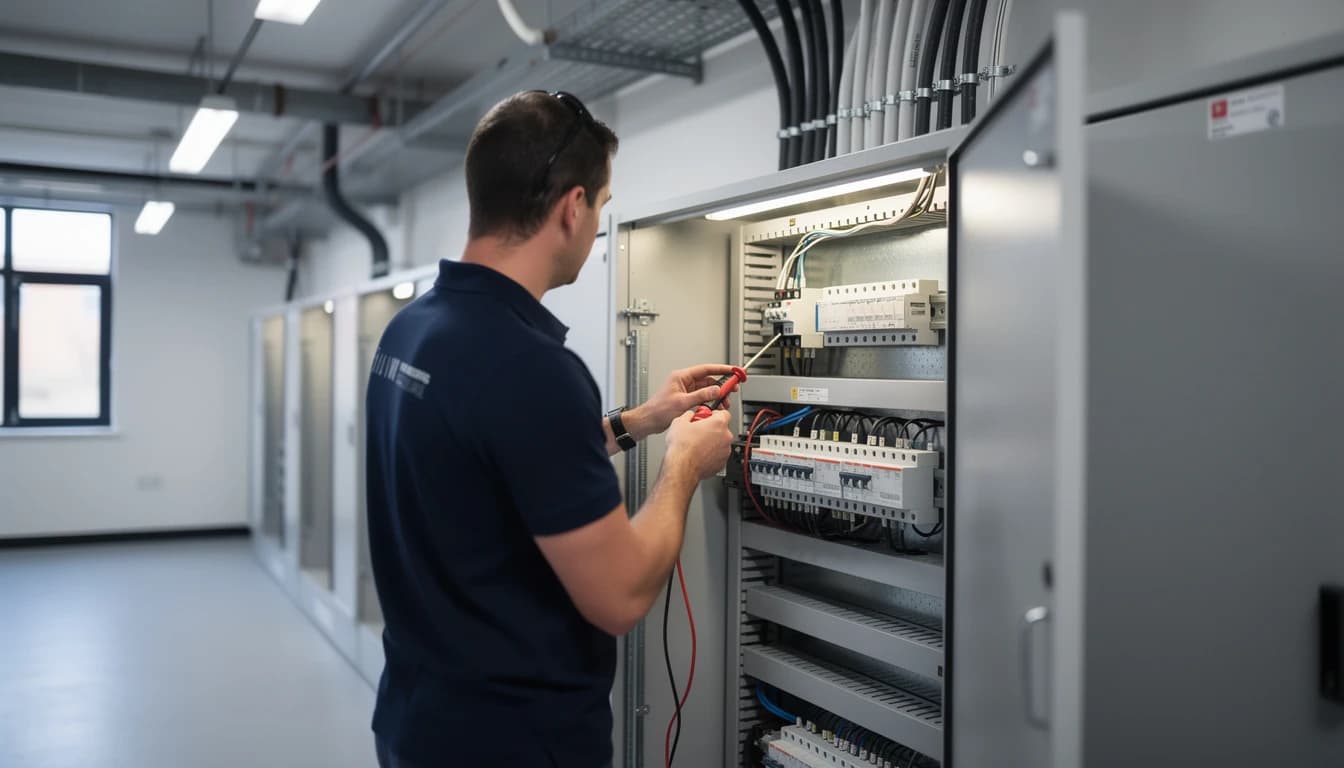
There is no legal interval for fixed wire testing in UK business premises. No statute says five years, or three, or any other number. What the law requires is that you maintain the electrical installation so it doesn't become dangerous, and that you can show how you decided what "often enough" means for your building.
Plenty of sites tell business owners that testing every five years is a legal requirement. It isn't, and getting this right changes both your budget and your position if something ever goes wrong.
What the law actually says
The duty comes from the Electricity at Work Regulations 1989. Regulation 4 requires that electrical systems are maintained so as to prevent danger, so far as is reasonably practicable.
The HSE puts the same duty in one sentence on its guidance: "the law requires electrical equipment to be maintained to prevent danger". Notice what's absent. No frequency, no test type, no certificate named.
That's deliberate. A dental practice, a warehouse with forklift traffic and a quiet accountancy office face different risks, and a single national interval would be too much for one and nowhere near enough for another.
So how often should you test?
The HSE's own answer is a principle rather than a number: "electrical installations should be tested often enough that there is little chance of deterioration leading to danger".
Where the familiar numbers come from is BS 7671 and its supporting guidance published by the IET, which sets out recommended maximum intervals between inspections by premises type. Those are recommendations from the industry standard, and they're the sensible default. They are not, in themselves, the law.
Commonly applied intervals:
- Commercial premises, offices and shops: 5 years, or at change of occupancy.
- Industrial premises: 3 years.
- Residential accommodation you let: 5 years, and here it genuinely is a legal requirement under separate regulations.
- Construction sites: 3 months.
- Restaurants, hotels and licensed premises: commonly 5 years, sooner where the environment is harsh.
- Swimming pools, laundrettes and similar wet or high-use environments: often annual.
The distinction matters practically. If your premises is a busy commercial kitchen with steam, grease and constant equipment changes, a five year interval that you never revisited is hard to defend after an incident. Conversely, a low-risk office that was tested three years ago and had a clean report doesn't automatically need testing again this year because someone quoted you for it.
Building a schedule you can stand behind
The HSE's guidance is that "it is good practice to make a decision on how often each piece of equipment should be checked, write this down, make sure checks are carried out accordingly and write down the results".
Four things make a schedule defensible:
- A written rationale. Why this interval, for this building, based on what.
- The previous report. A report full of defects should shorten your next interval, not leave it unchanged.
- A record of what changed. New machinery, a refit, a change of use, additional occupancy.
- Evidence the remedials were done. A report with unaddressed C2 items sitting in a drawer is worse than no report, because it proves you knew.
That last point is the one that bites. An inspection creates a record of what you were told. Acting on it is the whole purpose.
What a fixed wire test involves
Fixed wire testing produces an Electrical Installation Condition Report, the same document type as a domestic EICR but usually a much larger job. It covers everything from the incoming supply through the distribution boards to the final circuits: sockets, lighting, machinery connections, emergency lighting supplies.
Practical realities in a commercial building:
- Circuits have to be isolated to be tested properly. That means planning around trading hours, and most of our commercial work happens in evenings and weekends.
- Large installations are often sampled and phased, testing a proportion of circuits per visit across an agreed cycle rather than shutting the whole site down at once.
- Findings are coded the same way as domestic reports, and our guide to what C1, C2, C3 and FI mean applies exactly the same way here.
- Three phase distribution adds complexity, including load balance across phases, which frequently turns up as an issue in older London commercial units that have grown organically.
Expect a schedule of circuits, test results, an observations list and a clear satisfactory or unsatisfactory outcome. If a report arrives without circuit-by-circuit results, question it.
Fixed wire testing is not PAT testing
Two different things, routinely confused, and businesses sometimes buy one thinking they've covered the other.
Fixed wire testing covers the installation: the wiring in the walls, the distribution boards, the sockets and the fixed connections. Done every few years.
PAT testing covers what plugs into it: kettles, monitors, extension leads, power tools. Done far more often, and the frequency depends on the equipment and the environment. The HSE's position is the same risk-based one, that equipment should be tested "often enough that there is little chance the equipment will become dangerous between tests".
You need both, on different cycles. Our post on PAT testing explained covers the appliance side, and our portable appliance testing service runs alongside fixed wire work on most commercial sites.
Who is allowed to carry it out
A competent person. The HSE describes how that's demonstrated: someone "has successfully completed an assessed training course, run by an accredited training organisation, that included the type of work being considered".
For commercial testing, look for current inspection and testing qualifications, registration with a recognised scheme such as NICEIC, calibrated instruments with in-date certificates, and insurance appropriate to your premises. Asking to see the calibration certificate for the tester is a fair question, and any decent firm will have it to hand.
We're NICEIC registered and fully insured, and our commercial electrical work across London covers offices, retail units, restaurants and light industrial premises.
What it costs and how it's priced
Commercial testing is priced per circuit rather than per property, which is why a blanket quote over the phone is meaningless. Typical UK market ranges:
- Small office or retail unit, one board, up to about 20 circuits: commonly £350 to £700.
- Medium premises with several distribution boards: often £800 to £2,000 depending on circuit count.
- Out of hours or weekend working: usually a premium, and usually worth it against the cost of closing.
- Phased sampling across a large site: normally quoted as an annual programme rather than one visit.
Get the quote against a circuit count, not a floor area. If nobody has asked how many boards and circuits you have, they're guessing, and the number will change once they arrive.
What happens if you skip it
Nobody knocks on the door to check your test certificates. The consequences arrive later and from a different direction.
After an incident, the HSE will ask what you did to maintain the installation and what your basis was for the interval you chose. Insurers ask similar questions when assessing a fire claim. Commercial landlords increasingly require current reports as a lease condition, and a buyer's solicitor will ask during a sale or a lease assignment.
The pattern we see is a business that tested once when it moved in, then never again through eight years of fit-outs, added machinery and partition changes. The installation didn't fail because it aged. It failed because it grew.
Frequently asked questions
Is fixed wire testing a legal requirement in the UK?
Maintaining the electrical installation to prevent danger is a legal requirement under the Electricity at Work Regulations 1989. Periodic inspection and testing is how businesses demonstrate they've done it, but no law sets a specific interval for commercial premises.
How often should a shop or office be tested?
Five years is the commonly applied recommendation from the industry standard for commercial premises, and at change of occupancy. Adjust it against your environment, the findings of the last report and any changes to the installation.
Is it different for rented residential property?
Completely. For rented homes in England, a five year inspection interval is a hard legal duty with financial penalties attached, not a recommendation. Our landlord compliance work covers that side.
Can we test the building while we're still trading?
Partly. Some tests can be done live, but proving circuit integrity requires isolation. Most commercial sites end up with a phased programme or out of hours visits, which we plan around your opening times.
What's the difference between an EICR and fixed wire testing?
They're the same thing. Fixed wire testing is the industry term for the process, and the Electrical Installation Condition Report is the document it produces. Some firms use the terms as though they're different services. They aren't.
Our last report came back unsatisfactory. How long do we have?
For commercial premises there's no statutory 28 day clock like there is for rented homes, but the duty to prevent danger applies immediately. C1 items should be dealt with the same day, and the report will normally state timescales for the rest.
Due a test or unsure whether you are? See our commercial electrician service or call 020 3653 2600. We'll ask about your boards and circuits, quote against what's actually there, and work around your trading hours.
Related reading
Emergency Lighting Testing: What UK Businesses Must Do
The law says maintain it but never says how often. Here's where the monthly and annual tests actually come from, who carries the duty, and what inspectors check.
Read more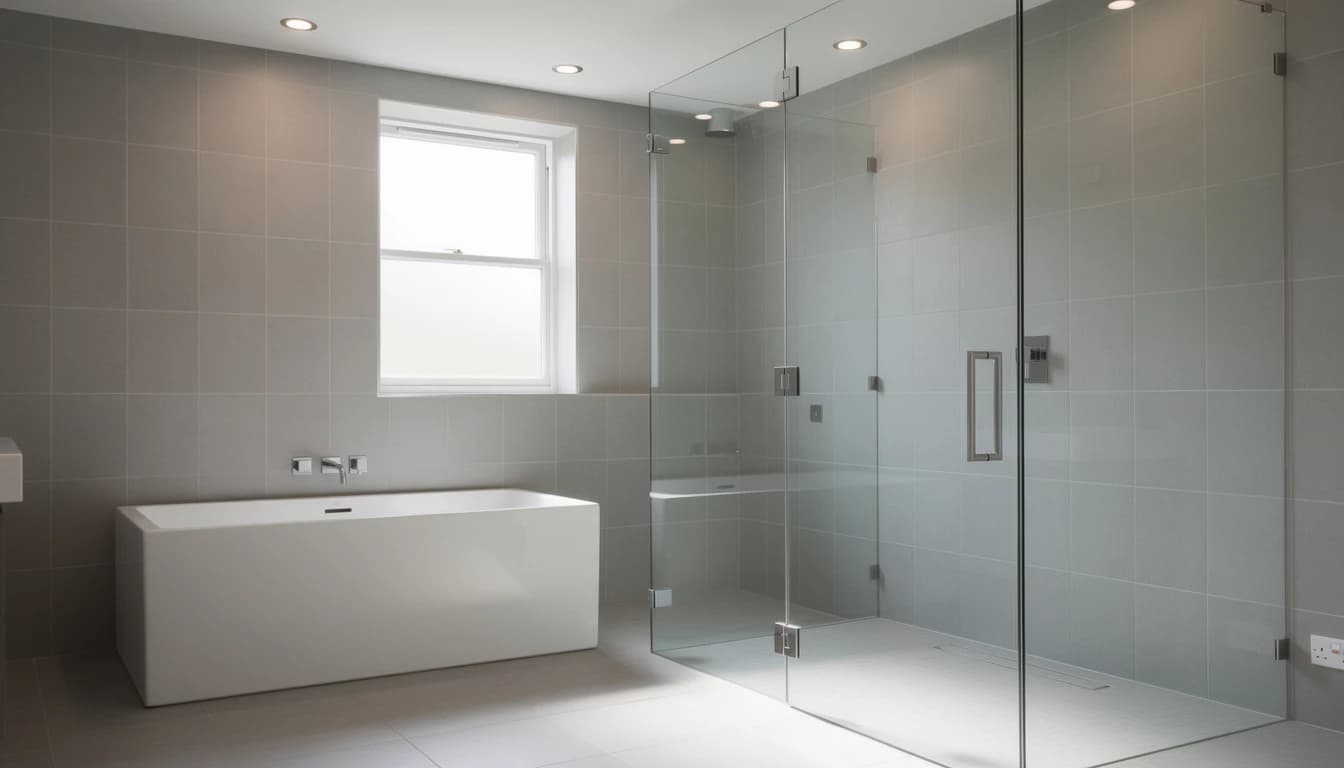
Bathroom Electrical Zones Explained: 0, 1, 2 and IP Ratings
Bathrooms are split into electrical zones by how close they are to water. Here is what goes where, which IP rating you need, and why sockets are banned.
Read more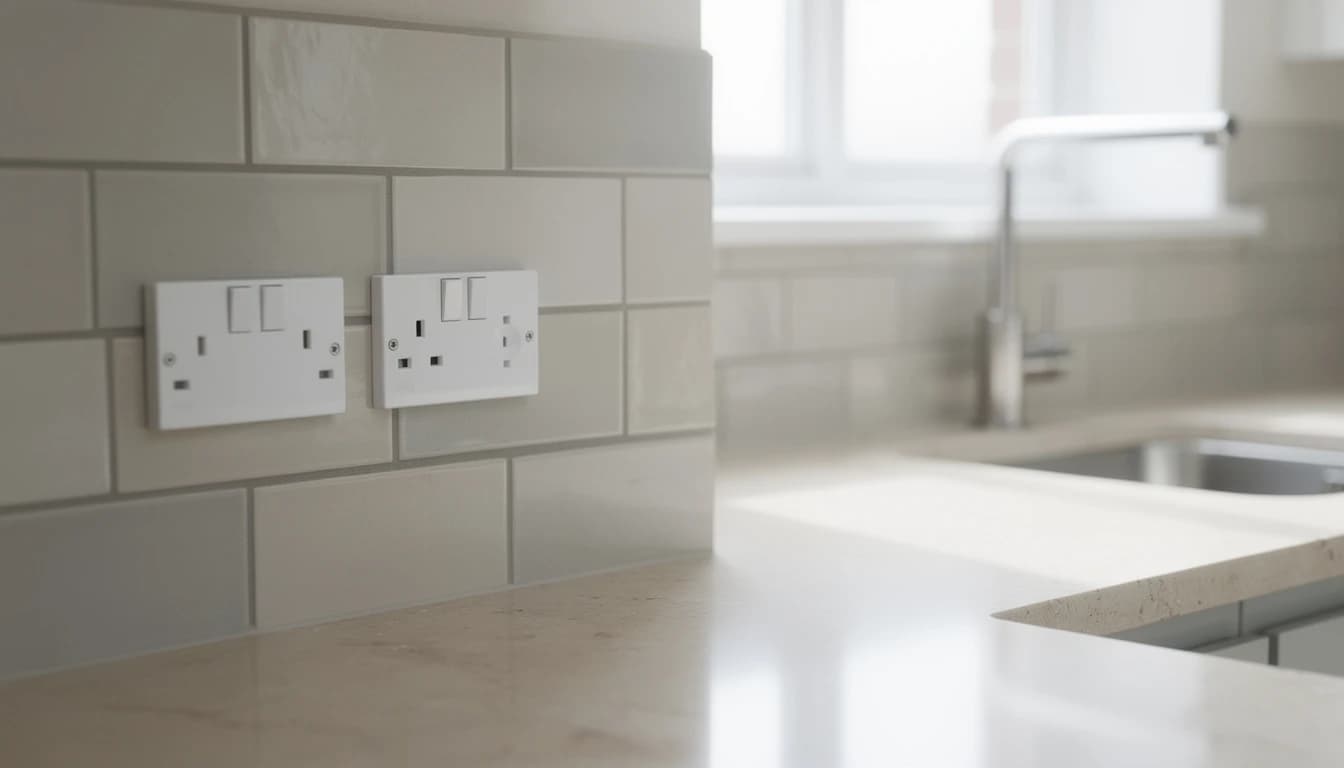
Kitchen Socket Rules: How Many, Where, and the Sink Myth
There is no legal minimum distance between a socket and your kitchen sink. Here is what the rules actually say, how many sockets you need and where to put them.
Read more