
Smoke Alarm Beeping? What the Chirp Means and How to Stop It
A single chirp every 30 to 60 seconds means a low battery or an alarm at the end of its life. Here's how to find the culprit, even on a mains-wired interlinked system.

By Yousif Al-Imari
Senior Engineer•12 August 2026
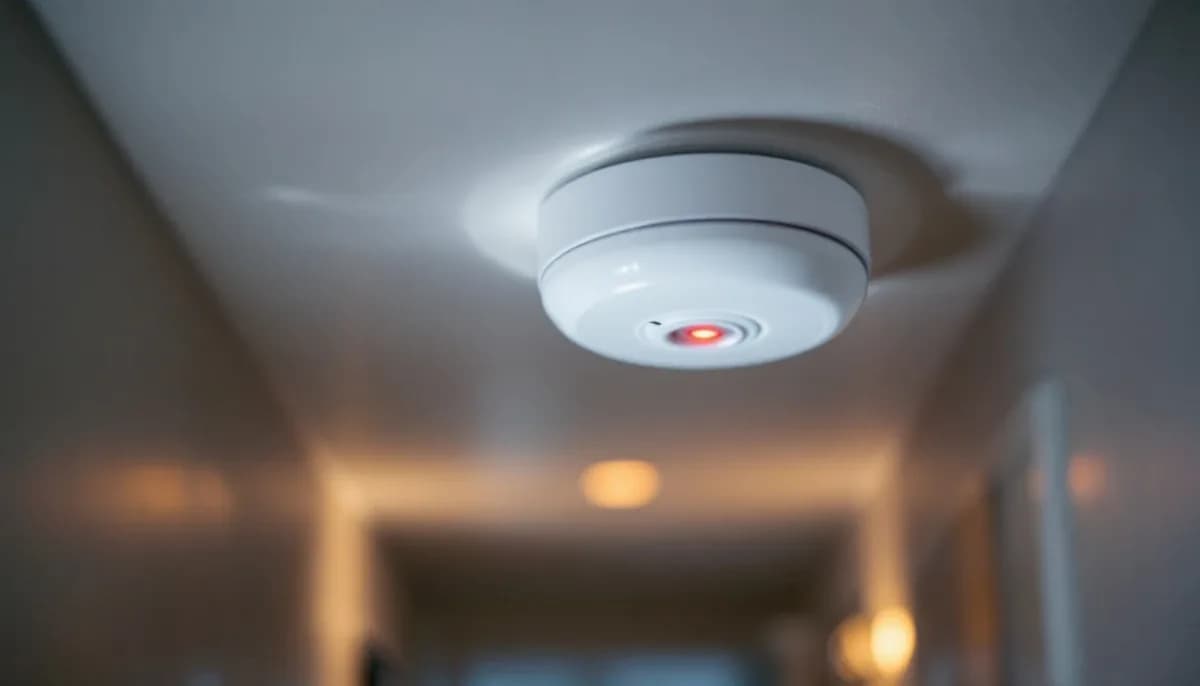
A smoke alarm beeping once every 30 to 60 seconds is almost always telling you one of two things: the battery is running low, or the alarm has reached the end of its life. That includes hard-wired mains alarms, because they have a backup battery inside them. A continuous, full-volume sounding is different. Treat that as a fire until you've checked it isn't.
The call usually comes after a bad night. The chirp starts at 3am, quiet enough that you can't place it, loud enough that you can't sleep through it. You stand in the hallway in your socks, head tilted, waiting a full minute for the next one. Nine times out of ten the fix takes ten minutes and costs less than a fiver. Here's how to get there.
Chirp or full alarm: learn the difference first
A smoke alarm makes two broad kinds of noise, and mixing them up causes real panic.
Continuous sounding, loud and unbroken, means the sensor thinks there's smoke. Check the house properly before you touch the alarm. If there's any sign of fire, get out and call 999. If it's burnt toast, open windows and use the hush button once you know that's all it is.
A single short chirp every 30 to 60 seconds is a maintenance signal. The alarm is working, but something needs attention. On most models that means a low battery. On others it can mean the sensor has failed or the unit has passed its replace-by date. Patterns vary between makes, so the leaflet that came with the alarm, or the maker's website, is worth a look if a fresh battery doesn't shut it up.
One thing worth knowing: the chirping often starts at night. Cooler air drops the voltage a tired battery can deliver, and the alarm crosses its warning threshold at 2am, then behaves itself all day. You're not imagining it, and it will not fix itself.
Change the battery, even on a hard-wired alarm
This is the bit that catches people out. A hard wired smoke alarm beeping is usually still a battery problem. Mains alarms run off the circuit but carry a backup battery so they keep working in a power cut. That battery, usually a 9V PP3 or a couple of AAs, needs changing every year or two.
The job, done properly:
- Isolate first if you're taking the alarm off its base. Most mains alarms have a battery drawer on the side you can open while it's mounted. If yours twists off the base plate, switch the circuit off at the consumer unit first, because the base is live.
- Use a fresh, in-date battery. Check the use-by date on the pack. A battery that's been in a drawer since 2019 can chirp again within weeks.
- Hold the test button for 15 to 20 seconds with the new battery out before fitting it. That drains the residual charge and clears the low-battery memory, which is why some alarms carry on chirping straight after a battery change.
- Fit the new battery, press test, and listen for a solid sound. On an interlinked system the other alarms should sound too.
Whatever you do, don't take the battery out and leave the alarm dead because the chirping annoyed you. The government's fire safety leaflet is blunt about it: "Never disconnect or take the batteries out of your alarm if it goes off by mistake." An alarm with no battery is decoration.
Sealed ten-year alarms have no battery to change
If your alarm is a sealed long-life model, there is no battery drawer. The lithium cell is built in and meant to last the life of the unit, which is why London Fire Brigade advises choosing "smoke alarms with a 10 year or long-lasting sealed battery". When one of these starts chirping, the message is different: the whole alarm is done.
Flip it round and look for the manufacture or replace-by date printed on the back. That date matters because the sensor inside deteriorates with age, which is why ten years is the working limit for almost every alarm on the market, mains-powered ones included. A chirping sealed unit past its date needs replacing, not resetting. There's no fix inside it.
Finding the one that's chirping on an interlinked system
This is where people properly get stuck, and it's the reason most of these calls come in. In a house with interconnected alarms, the sort installers call interlinked, smoke makes every alarm sound together, so people assume the chirp works the same way. It doesn't. The low-battery chirp only comes from the one alarm with the problem, and it's quiet, brief and maddeningly hard to locate. Sound bounces off landing ceilings and open doors, and by the time you've walked to the kitchen, the next chirp is 40 seconds away.
The method that works:
- Pick your moment and walk the circuit. When the chirping is active, stand under each alarm in turn and wait out the full interval. Tedious, yes, but one alarm will be noticeably louder than the rest when you're directly beneath it. Turn off the telly and any extractor fans first, because background hum masks it completely.
- Watch the LED, not just your ears. Most alarms flash a small red light regularly in normal operation. On many makes the chirping unit flashes in a different pattern, or the amber fault light shows. The manual for your model decodes the flashes.
- Press hush on your prime suspect. If the chirping stops for the hush period, usually 8 to 12 hours, you've found it. Change that alarm's battery or note its age.
- While you're up there, clean the vents. Dust and the odd small spider inside the sensing chamber cause chirps and false alarms. A vacuum with the soft brush attachment over the external vents is enough. Never spray anything into it.
- If you need to remove a mains unit, isolate the circuit at the consumer unit first, and label the breaker so nobody flips it back on while you're on the ladder.
If every alarm in the house is sounding together and there's no smoke, that's a different fault: one alarm is triggering the interlink. Same walk-round method finds the trigger unit, because on most systems the alarm that started it shows a different LED pattern from the ones merely following it.
Smoke alarm beeping after a power cut
Very common, and the logic is simple. During the cut, your mains alarms ran on their backup batteries. If one of those batteries was already tired, the cut flattened it, and the chirping starts when the power comes back. The fix is the same as any low battery: fresh battery, hold the test button to drain the residual charge, test.
A couple of related wrinkles. Some alarms chirp briefly right after power is restored while they reset themselves, and that stops on its own within a minute or two. And if the cut wasn't a real power cut but a breaker tripping in your consumer unit, our post on telling a power cut from an electrical fault will help you work out which you had, because a breaker that trips again needs looking at.
Steam, dust and the alarm above the kitchen door
If your alarm goes off when someone makes toast or has a long shower, the alarm is almost certainly in the wrong place or the wrong type for that spot. Smoke alarms near kitchens and bathrooms catch cooking fumes and steam, and the false alarms train everyone to ignore the sound, which is the worst possible outcome.
The kitchen answer is not a smoke alarm at all. London Fire Brigade's guidance is plain: "Smoke alarms are not suitable for kitchens but heat alarms are." A heat alarm ignores smoke and steam entirely and only triggers on a rapid temperature rise or a fixed high temperature, which is what a real kitchen fire produces. Swapping the hallway-edge smoke alarm that false alarms weekly for a heat alarm, and resiting the smoke detection properly, is one of those small jobs that changes how a household sleeps.
When to stop resetting it and replace the alarm
Batteries and cleaning solve most chirping. They don't solve age. The Home Office guidance puts it plainly: "If it is a ten year alarm, you will need to replace the whole alarm every ten years." That applies to mains-wired alarms too, because it's the sensor that wears out, not just the battery.
The signs an alarm is finished rather than just hungry:
- The date on the back is ten years or more ago. No argument, replace it.
- It keeps chirping with a brand new, in-date battery. That's the end-of-life warning on most models.
- False alarms are becoming frequent even after cleaning, in a position that never used to cause trouble.
- The casing has gone yellow or brittle. Cosmetic on its own, but a fair clue about age when the label has faded.
Replacing a hard-wired alarm is electrician work
Replacing a battery alarm is a DIY job. Replacing a mains-wired alarm isn't, because the base plate carries live terminals. London Fire Brigade's advice on mains alarms is to make sure they're "installed by a qualified electrician", and that covers swaps too. If your alarms are interlinked, it's usually worth replacing them as a matched set so the interlink keeps working properly, rather than mixing generations and hoping they talk to each other. Our smoke and heat alarm installation service covers exactly that.
If you're renting, a chirping alarm is your landlord's problem
If you rent the property, a chirping alarm is not your bill to sort. The government's guidance for landlords and tenants says landlords must "ensure smoke alarms and carbon monoxide alarms are repaired or replaced once informed and found that they are faulty", so report it in writing and let them handle it. The full picture of who must fit what, and where, is in our post on smoke alarm regulations in the UK, and landlords juggling several compliance jobs will find the electrical side covered in our guide to landlord electrical safety certificate requirements.
Frequently asked questions
Why does my smoke alarm beep every 30 seconds?
That's the classic low-battery warning pattern: one short chirp every 30 to 60 seconds. Change the battery, even on a mains-wired alarm, because it has a backup battery inside. If a fresh in-date battery doesn't stop it, the alarm is likely at end of life and needs replacing.
Why is my hard wired smoke alarm beeping if it runs on mains power?
Mains alarms carry a backup battery so they work during power cuts, and that battery runs down like any other. The chirp means the backup needs changing. On sealed ten-year models there's no battery to change, and the chirp means the whole unit is due for replacement.
How do I stop my smoke alarm beeping after a power cut?
Wait two or three minutes first, because many alarms chirp briefly while they reset when power returns. If it carries on, the cut flattened an already weak backup battery. Fit a fresh battery, hold the test button 15 to 20 seconds to clear the low-battery memory, then test.
Can I just take the battery out to stop the chirping?
No. Government fire safety guidance says never to disconnect or remove the battery to silence an alarm. A silent alarm gives you nothing in a fire. Fix the cause instead: new battery, clean the vents, or replace the unit.
How do I know if my smoke alarm is too old?
Take it down or look at the back and find the manufacture date or replace-by date. Ten years is the working limit, because the sensor deteriorates. Chirping that survives a fresh battery, rising numbers of false alarms, and yellowed plastic all point the same way.
Should I call an electrician about a beeping smoke alarm?
For a battery change on a battery alarm, no. For anything involving a mains-wired unit coming off its base, repeated chirping you can't trace across an interlinked system, or a full replacement of hard-wired alarms, yes. Live terminals and ladders don't mix well at midnight.
Tired of chasing a chirp round the house, or know your alarms are past their date? See our smoke and heat alarm installation service or call 020 3653 2600. We'll find the culprit, replace what's finished, and leave you a system that only makes noise when it matters.
Related reading

Extension Lead Safety: 13 Amps, Daisy Chaining and Heaters
An extension lead shares one socket's 13 amps between everything plugged into it. Here's the simple maths, why daisy chaining causes fires, and when you need more sockets instead.
Read moreBS 7671 Amendment 3 and the 19th Edition: What Changed
Amendment 3 to BS 7671 took effect on 31 July 2024, Amendment 4 becomes the sole standard on 15 October 2026, and the 19th Edition has no announced date. Here's what any of it means for your home or rental.
Read moreEmergency Lighting Testing: What UK Businesses Must Do
The law says maintain it but never says how often. Here's where the monthly and annual tests actually come from, who carries the duty, and what inspectors check.
Read more