
PAT Testing Explained: The Law, The Cost and How Often You Need It
What PAT testing actually is, what UK law really requires, how often to do it, and what it costs as a general London range for landlords and businesses.

By Ali Elm
Managing Director•24 June 2026
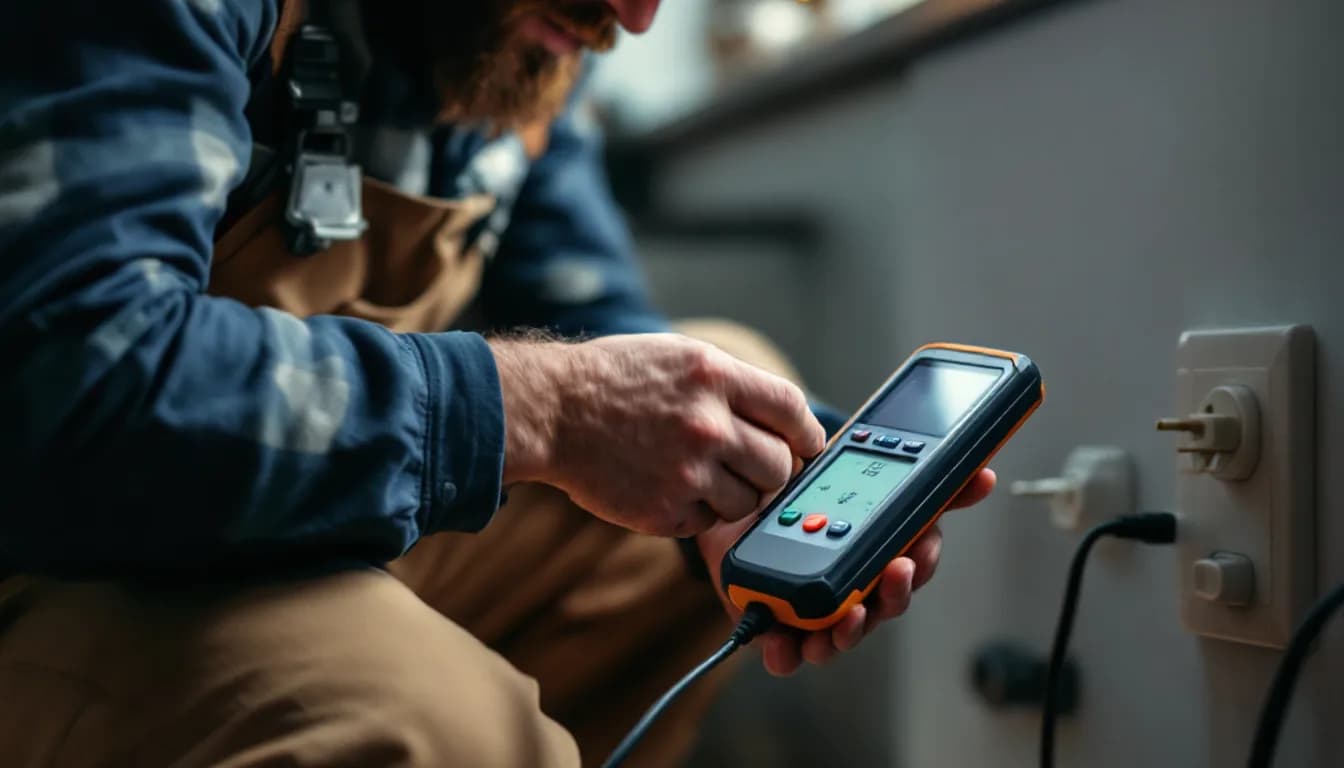
Short version: there is no law in England and Wales that says "you must PAT test every year". What the law actually requires is that electrical equipment is kept safe, and for most landlords, letting agents and small businesses a routine of portable appliance testing is the simplest way to prove you have done that. This guide explains what PAT testing is, what the rules genuinely say, how often you should do it, and what it costs as a general London range.
I am Ali Elm. I am a landlord myself and I look after compliance and quoting here, so I spend a lot of my week explaining this exact topic to letting agents and office managers who have been told conflicting things by three different people.
What is PAT testing?
PAT testing, short for portable appliance testing, is the inspection of electrical appliances to check they are safe to use. It combines a visual check of the appliance, plug and cable with an instrument test that measures things like earth continuity and insulation resistance.
A "portable appliance" is broadly anything that plugs into a socket. Kettles, toasters, monitors, PCs, printers, chargers, extension leads, vacuum cleaners, power tools, washing machines and fridges all count, even the heavy ones that rarely move.
According to Electrical Safety First, the process should be carried out by a competent person who checks the appliance, plug and cable for visible damage and then runs electrical tests on the items that need them. You get a record of what was tested, the results, and a pass or fail label on each item. That label is what a fire officer, insurer or incoming tenant tends to look for.
Is PAT testing a legal requirement?
This is where most of the confusion comes from, so let me be precise. PAT testing is not named in any UK statute, and no law sets a fixed interval for it.
The Health and Safety Executive puts it plainly. The Electricity at Work Regulations 1989 "do not specify what needs to be done, by whom or how frequently", and they do not make annual testing a legal requirement. What the regulations do require is that any electrical equipment that could cause injury is maintained in a safe condition.
That duty comes from Regulation 4 of the Electricity at Work Regulations 1989, which states that "all systems shall be maintained so as to prevent, so far as is reasonably practicable, such danger." Notice the wording. It tells you the outcome you must achieve, not the method. PAT testing is simply the recognised, documented way of achieving it.
So the honest position is this. You are not legally obliged to book a PAT test on a specific date. You are legally obliged to keep your appliances safe, and if something goes wrong, a records file showing regular testing is your evidence that you took reasonable care.
Who is responsible: landlords, agents and businesses
Responsibility falls on whoever supplies the appliances or controls the workplace. For a rented home, that is the landlord for any appliance provided as part of the tenancy. For an office, shop or café, it is the employer or duty holder. The same person usually carries the duty for emergency lighting testing, which runs to a separate schedule.
A few things worth knowing if you let property in London:
- The rules differ across the UK. Scotland and licensed HMOs have stricter, mandatory duties around appliance safety, so if you let those, treat testing as non-optional.
- PAT testing is separate from your fixed wiring check. The five-yearly EICR that landlords now need covers the property's installation, not the toaster you left in the kitchen. You need to think about both.
- If you use a managing agent, confirm in writing who is actually booking the tests. I have lost count of the number of times each side assumed the other had it covered.
If you want the full picture of what paperwork a compliant tenancy needs, our guide to landlord electrical safety certificate requirements lays it out alongside the EICR, and our work for landlords and letting agents page shows how we bundle testing with the rest.
How often should PAT testing be done?
There is no legal interval, so the HSE tells you to take a risk-based approach. As it says, a power tool on a construction site should be examined far more often than a lamp in a hotel bedroom. Frequency depends on the type of equipment and the environment it lives in.
In practice, most landlords and offices work to sensible defaults rather than reinventing a risk assessment every time. A common pattern looks like this:
- At every change of tenancy for rented homes. It is the cheapest moment to catch a dodgy kettle before a new tenant plugs it in.
- Annually for higher-risk items that move around and have a flex, such as kettles, irons, hoovers and portable heaters, and for anything on a building site or in a commercial kitchen.
- Every two to four years for lower-risk, rarely-moved items like fridges, TVs and washing machines in a normal office or home environment.
Between formal tests, the HSE also recommends simple user checks and visual inspections. As it notes, most electrical safety defects can be found by looking, though some faults can only be picked up by testing. A quick glance for scorched plugs, cracked casings and frayed cables costs nothing and catches a surprising amount.
What actually happens during a test
A proper PAT visit is not just someone waving a gadget at your kettle. There are three layers to it.
- Visual inspection. The tester checks the plug, fuse, cable and casing for damage, poor repairs, overloading and signs of overheating. Roughly speaking this catches the majority of everyday faults.
- Instrument testing. The appliance is connected to a PAT tester that measures earth continuity, insulation resistance and, where relevant, lead polarity. This finds the hidden faults you cannot see.
- Recording and labelling. Each item gets a pass or fail label with a date, and you receive a register listing every appliance, its result, and notes on anything that failed and why.
An item fails if it has damaged insulation, a broken earth, incorrect wiring, a wrong or missing fuse, or physical damage that makes it unsafe. A fail does not always mean the bin. Often it is a rewireable plug or a replaced fuse and the item is back in service the same visit.
How much does PAT testing cost?
Costs are usually quoted per item, with the price per item dropping as the quantity goes up. As a general London market range, expect roughly £1 to £3 per item once you are testing a reasonable batch, with many firms setting a minimum call-out or small-site fee of around £50 to £90 to make a visit worthwhile.
What that means in real terms:
- A furnished flat with a handful of appliances often falls into the minimum call-out fee rather than being priced per item.
- A small office of 30 to 50 items typically lands somewhere in the region of £80 to £180 as a general range, depending on volume and location.
- Larger sites are almost always cheaper per item because the tester is not paying travel and setup against a tiny job.
Those are ballpark figures to help you budget, not a fixed quote. The honest way to price it is to count your appliances first. If you want an exact number for your building, our PAT testing service quotes on the item count and site, and for offices with kit spread across floors our commercial electrician team can fold it into a wider safety visit so you are not paying two call-outs.
Can I do PAT testing myself?
You can do the visual checks yourself, and honestly you should, as often as you like. Looking for damaged cables and burnt plugs needs no equipment and no certificate.
The instrument testing is different. It has to be done by a competent person who has the right equipment, knows how to use it and can interpret the readings. Buying a cheap tester off the internet and guessing at the results is not competence, and it will not stand up if an insurer or the HSE asks questions after an incident. For a handful of items the DIY route rarely saves enough to be worth the risk.
Frequently asked questions
Is PAT testing a legal requirement for landlords?
Not as a named, dated requirement in England and Wales. However, landlords have a legal duty to keep supplied appliances safe, and PAT testing is the standard way to show you have. In Scotland and in licensed HMOs the expectations are stricter, so treat testing as effectively mandatory there.
How often should office equipment be PAT tested?
There is no fixed interval. For a typical low-risk office, IT and rarely-moved equipment is often tested every two to four years, while portable items with a flex are checked annually. The HSE wants a risk-based judgement rather than a blanket rule.
What is the difference between PAT testing and an EICR?
An EICR inspects the fixed wiring of the building, the consumer unit, circuits, sockets and switches. PAT testing checks the appliances that plug into that wiring. Landlords generally need both, and you can read more in our EICR cost guide linked above.
Do new appliances need PAT testing?
Brand-new equipment is presumed safe and does not need a formal test straight out of the box. A quick visual check on arrival is sensible, and it then joins your normal testing schedule from the next round.
What happens if an appliance fails?
It gets a fail label and is taken out of use until repaired or replaced. Many fails are minor, such as a wrong fuse or a damaged plug, and can be fixed on the spot. The failure and the fix are both recorded on your register.
If you let property, run an office, or manage sites across London and you would rather someone competent handled the counting, testing, labelling and paperwork in one visit, we are NICEIC registered and every job is carried out to BS 7671 and Part P standards. Call Capital Electricians on 020 3653 2600 and we will give you a straight price based on your actual item count.
Related reading
Emergency Lighting Testing: What UK Businesses Must Do
The law says maintain it but never says how often. Here's where the monthly and annual tests actually come from, who carries the duty, and what inspectors check.
Read more
Bathroom Electrical Zones Explained: 0, 1, 2 and IP Ratings
Bathrooms are split into electrical zones by how close they are to water. Here is what goes where, which IP rating you need, and why sockets are banned.
Read more
Fixed Wire Testing: What UK Businesses Actually Have to Do
No law sets a fixed testing interval for business premises. Here is what the Electricity at Work Regulations really require and how to build a defensible schedule.
Read more