
How Much Does It Cost to Install Downlights in London?
What downlights really cost to fit in London, from per-light prices to a kitchen of six, plus the factors and fire-rating rules that affect the price.

By Yousif Al-Imari
Senior Engineer•8 May 2026
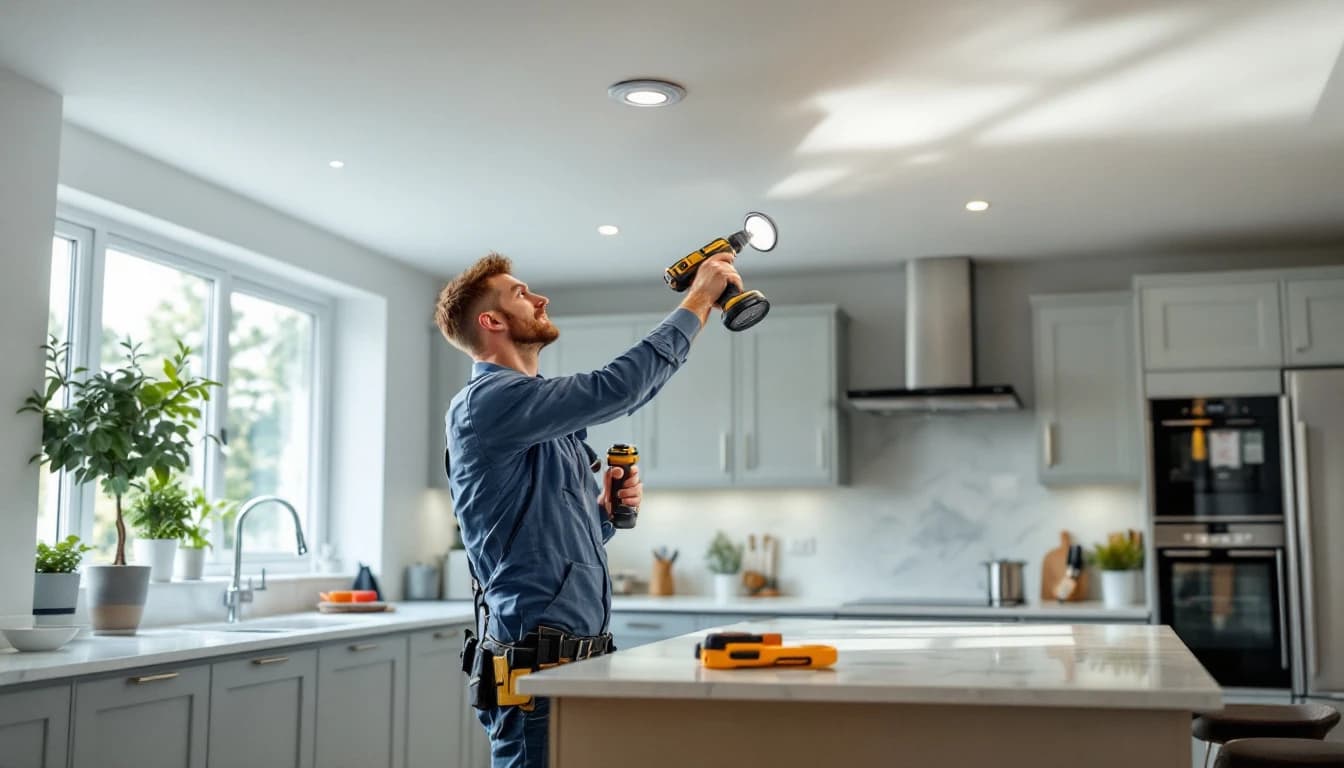
In most London homes the cost to install downlights lands somewhere between £50 and £90 per light once you include the fitting and the labour. A typical job, say a set of six downlights in a kitchen, usually comes in around £300 to £500 when the ceiling is straightforward and there is already a lighting point to work from. We are NICEIC registered electricians covering every London borough, and below we explain exactly what those numbers buy you, and the things that quietly push them up.
Treat every figure here as a general UK and London market range, not a quote. Two kitchens of the same size can price differently depending on the ceiling, the wiring, and whether anyone has touched it before. We will always look at the actual ceiling before committing to a price.
How much does it cost to install downlights in London?
Here is the honest spread we see, drawing on published UK trade-price guidance and adjusting for the fact that London labour sits at the upper end of national rates.
- Per downlight (part of a full room): roughly £50 to £75 each, fitting and labour included
- Adding just one or two extra lights: around £60 to £90 each, because the setup and access time is the same whether it is one light or six
- Replacing existing downlights like for like: roughly £40 to £80 each, as the holes and cabling are already there
- A set of 6 in a kitchen (supply and install, simple ceiling): about £300 to £500 in total
- The downlights themselves (supply only): usually £20 to £75 each depending on quality and whether they are fire-rated and dimmable
For context, the published UK trade-price guides broadly agree: a supply-and-install job for a room comes in around £350 to £500, with single lights at £60 to £90 and full rooms nearer £50 to £75 per point. London quotes tend to sit at the higher end of those ranges rather than the lower.
What actually drives the price?
The light fitting is the cheap part. What you are really paying for is access, cabling, and certification. These are the factors that move a quote up or down.
New install or replacing existing
Swapping old downlights for new ones is the cheapest job on the list. The holes are cut, the cable is in place, and we are essentially disconnecting and reconnecting. A fresh install is a bigger task because we have to plan the layout, cut new holes, run cable through the ceiling void, and make good afterwards.
Number of fittings
More lights cost more, but not in a straight line. The first light carries most of the setup and access time. By the time we are fitting the fifth and sixth in the same ceiling, the per-light cost drops, which is why a six-light room is far better value per point than adding one light on its own.
Fire-rated downlights and the Building Regs
Cutting a hole in your ceiling for a recessed light punches a hole in the fire protection between floors. Fire-rated downlights are built to seal that gap back up. They contain an intumescent layer that expands in heat and restores the ceiling's fire resistance, typically for 30, 60 or 90 minutes, in line with Part B of the Building Regulations.
In a normal two-storey house a 30-minute rating is usually what is needed. In a London flat or a converted house in multiple occupation, you are often into 60-minute territory. Fire-rated fittings cost a little more to buy than the cheapest non-rated ones, but in any habitable ceiling between floors we will fit them as standard. It is not the place to save a few pounds.
GU10 LED versus integrated LED
You are choosing between two main types, and it changes both the upfront and the long-term cost.
- GU10 fittings: take a replaceable LED bulb. When the bulb dies in a few years, you change it yourself for a couple of pounds. Slightly cheaper and far easier to maintain.
- Integrated LED: the LED is built into the fitting as one sealed unit. Often slimmer and tidier, but when the LED eventually fails you replace the whole fitting, which means an electrician back out.
For most London homes we lean towards GU10 for the simple reason that you are not paying a callout every time a light goes.
Dimmable or not
Dimmable downlights and a compatible dimmer switch add a bit to the cost, both in the fittings and in making sure the dimmer is rated for LED loads. Mismatched LED dimmers are a common cause of flickering, which we cover in our guide to why your lights keep flickering.
Ceiling type and access
This is the big one in London, and it is the factor that most online cost guides skip over. Plasterboard ceilings are quick to cut and route through. The trouble is the older housing stock.
- Plasterboard: straightforward, clean holes, easy cable runs above
- Lath and plaster: common in Victorian and Edwardian London homes, far messier to cut, prone to cracking, and slower work
- Concrete: seen in some flats and new builds, often means surface conduit or a different lighting approach entirely, as you cannot recess into solid concrete
If you live in a period property, expect the access and making-good side of the job to add to the bill compared with a modern plasterboard ceiling.
New circuit, new switch, or scaffolding
If your existing lighting circuit can take the load and there is a switch in a sensible place, we work with what is there. If you need a brand new circuit run back to the consumer unit, a new switch position chased into the wall, or access to a stairwell or double-height ceiling that needs a tower or scaffold, all of that adds time and cost. High hallway and landing ceilings in London townhouses are a classic example.
Making good
We leave the wiring safe and tidy, but plastering and decorating around new holes, especially in lath and plaster, is sometimes a separate trade. Worth clarifying who is handling the filling and painting before work starts so there are no surprises.
Part P, certification and why it matters
Lighting work in your home can fall under Part P of the Building Regulations. Installing a brand new circuit is notifiable, and so is any addition or alteration to a circuit in a special location such as a room containing a bath or shower, according to the official Approved Document P and Electrical Safety First.
In plain terms, downlights in a bathroom, or any job that needs a new circuit, must be done and certified properly. As NICEIC registered electricians we self-certify this work and issue the relevant certificate, whether that is a Minor Works Certificate for a small addition or an Electrical Installation Certificate for new circuits, without you having to involve Building Control separately. That paperwork matters if you ever sell or remortgage.
You can see how we approach this on our LED spotlights and downlights and wider lighting installation pages.
How to keep the cost sensible
A few practical ways to get good downlighting without overpaying.
- Do whole rooms at once. Six lights together is far better value per point than dribbling them in one at a time.
- Choose GU10 over integrated if low long-term maintenance matters to you.
- Combine jobs. If we are already in your ceiling, it is often the right moment to sort out related work like adding extra plug sockets on the same visit.
- Be realistic about period ceilings. If you are in a Victorian terrace, budget for the extra access and making good rather than expecting plasterboard prices.
- Get the layout right first. Moving lights after plastering is expensive. A quick plan on paper saves money.
Frequently asked questions
How much does it cost to install 6 downlights in a kitchen?
For a simple plasterboard ceiling with an existing lighting point, expect roughly £300 to £500 in total for supply and installation in London. A lath and plaster ceiling, a new circuit, or fancier dimmable fittings will push that higher.
Do downlights need to be fire-rated?
In any ceiling that separates floors in a home, yes, we fit fire-rated downlights as standard so the ceiling keeps its fire resistance under Part B. Non-rated fittings might be acceptable only where there is no fire-separation requirement above, which is rare in a normal house or flat.
Can I install downlights myself?
You can buy the fittings, but the wiring is the issue. Any new circuit, and any electrical work in a bathroom, is notifiable under Part P and must be certified. Cutting into a fire-rated ceiling and getting the cabling safe is electrician's work, and doing it without certification can cause real problems when you sell.
GU10 or integrated LED downlights, which is better?
GU10 lets you swap a failed bulb yourself for a couple of pounds. Integrated units are slimmer but mean replacing the whole fitting, and another callout, when the LED fails. For most homes we recommend GU10 for the easier maintenance.
Get a proper quote
Every ceiling is different, and the only honest way to price downlights is to look at yours. If you want neat, certified downlighting anywhere in London, our LED spotlights and downlights team is happy to take a look and give you a clear price. Call us on 020 3653 2600 and we will sort it properly, fire-rated and certified, with the paperwork to match.
Related reading
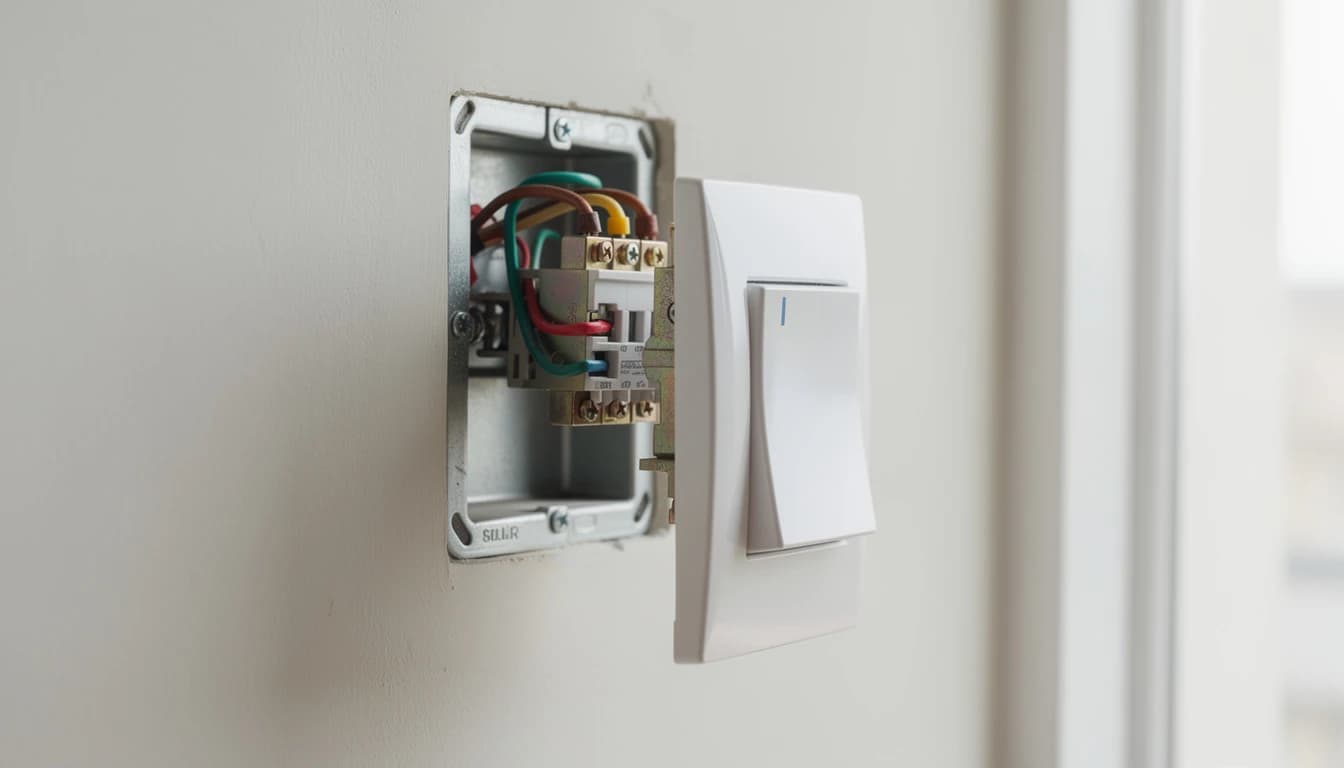
Smart Light Switches and the Missing Neutral Wire
Most UK light switches have no neutral, which is why smart switches fail. Here are the four ways round it and which one suits your house and your lights.
Read more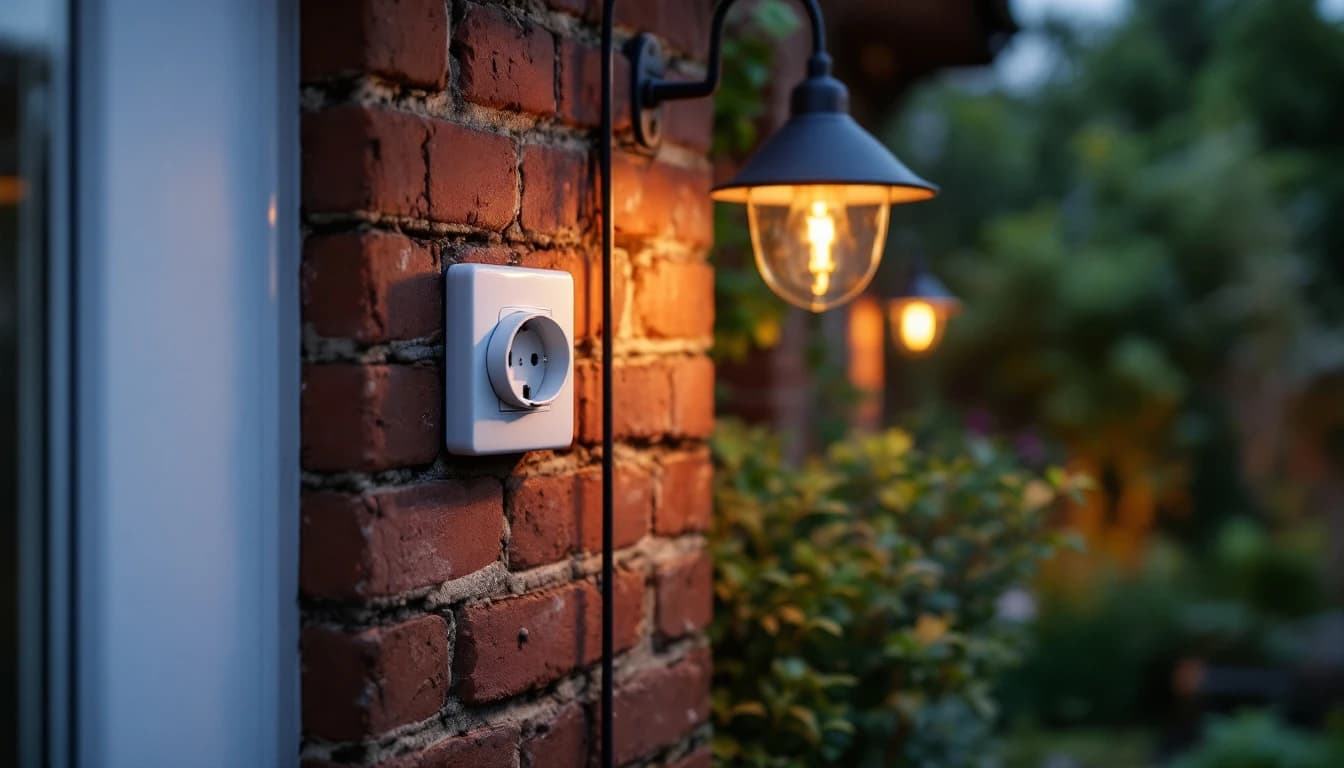
Outdoor Socket Installation and Garden Lighting: A Safe Guide
Adding an outdoor socket or garden lighting isn't a weekend DIY job. Here's the safe, legal way to do it, from RCDs and IP66 sockets to SWA cable and Part P.
Read more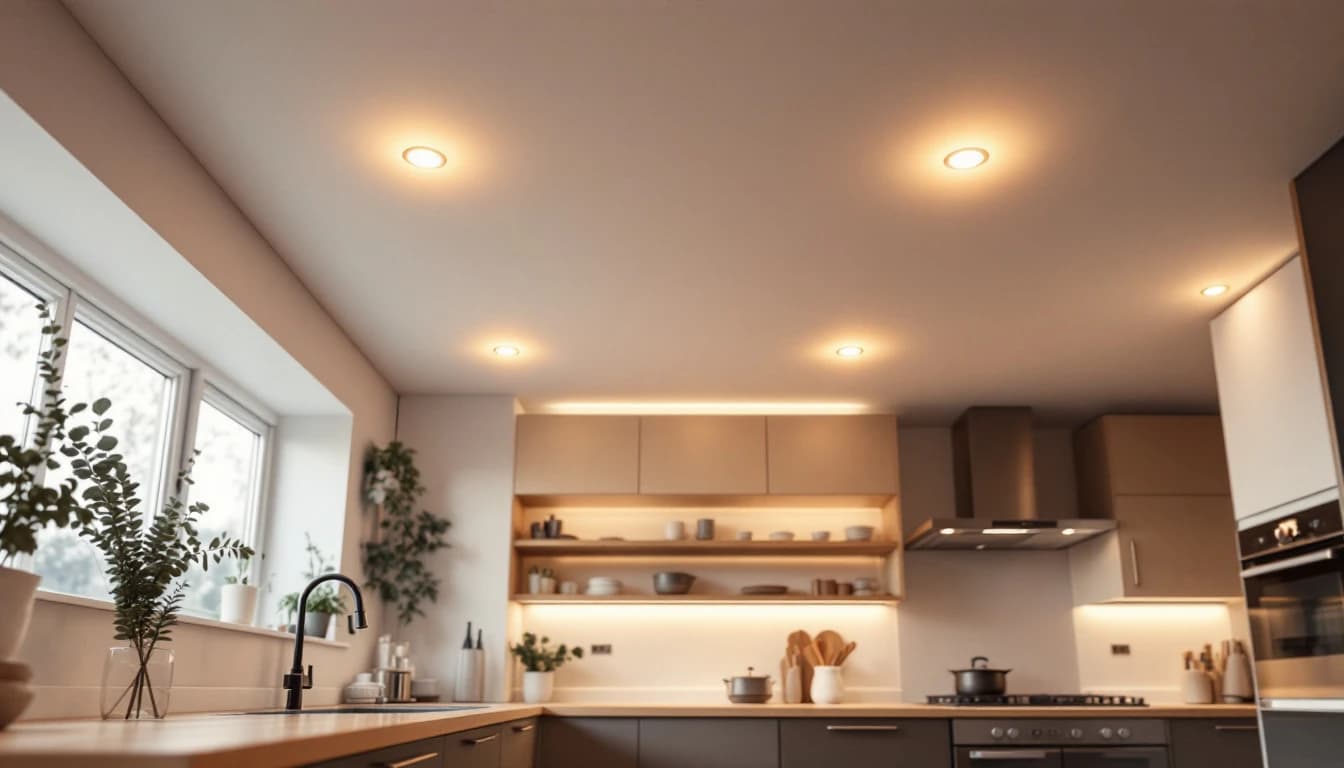
How Many Downlights Do I Need Per Room? A Spacing Guide
Work out how many downlights you need per room with a simple spacing rule, a lumens-per-square-metre guide by room, and a worked example for a London kitchen.
Read more