
How Much Does It Cost to Add Extra Plug Sockets in London?
What it really costs to add plug sockets in a London home, from a simple spur to a new circuit, plus what drives the price and why it beats extension leads.

By Yousif Al-Imari
Senior Engineer•19 June 2026
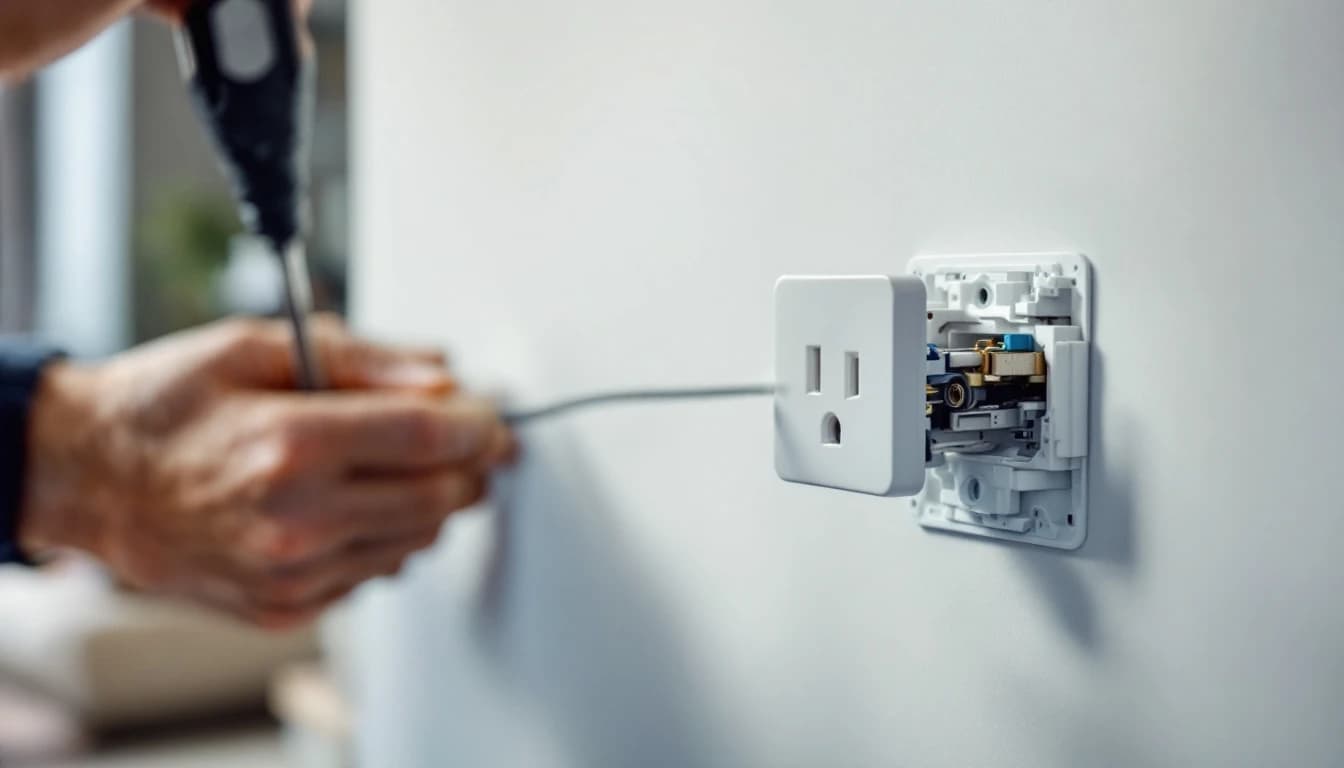
For most London homes, the cost to add plug sockets lands somewhere between roughly £100 and £250 per socket, fitted and certified. A straightforward one, spurred off a nearby socket on an easy stud wall, sits at the lower end. A socket on a solid wall in a Victorian terrace, or one that needs a new cable run back to the fuse board, climbs towards the top and sometimes past it. We are NICEIC registered electricians working across every London borough, so this is the conversation we have on doorsteps most weeks. Here is what actually drives the number.
How much does it cost to add a plug socket?
Here are the general UK and London market ranges. Treat these as guidance to set your expectations, not a quote. The materials are cheap. You are mostly paying for skilled labour, time, and making the wall good afterwards.
- A new single or double socket, easy run: roughly £100 to £200 fitted, including labour and the socket itself.
- A new socket in a fresh location (longer cable run): roughly £120 to £250, depending on distance and wall type.
- Converting a single socket to a double: around £75 to £100, as the back box often needs swapping.
- USB sockets: the unit costs more (around £15 to £25), with the job usually totalling £100 to £170.
- An outdoor or garden socket: around £120 on average, from about £85 for an easy install up to £245 for an awkward run.
London tends to sit at the higher end of every range. Electrician hourly rates here run roughly £50 to £80 an hour in London and the South East, which is close to double what some other regions pay. That is not a markup for the sake of it. It reflects the cost of working in the capital and, frankly, the wall types we deal with here. More on that below.
Spur off an existing circuit, or a new circuit from the consumer unit?
This single decision moves the price more than anything else, so it is worth understanding before you get quotes.
Adding a spur
A spur takes power from a nearby socket on an existing ring or radial circuit and extends it to your new one. When there is a socket close by with capacity to share, this is quick, tidy, and the cheaper option. A short spur on an accessible wall is the job that sits at the bottom of the ranges above.
The catch is that a spur has rules. You generally get one unfused spur per existing socket, and the circuit has to have the capacity to take it. An electrician will check what is already on that ring before committing. We will not hang three new sockets off one tired old circuit just to save you forty quid, because that is how you end up with a circuit that keeps tripping.
Running a new circuit
If you want several sockets, a heavy load like a home office or a kitchen full of appliances, or the nearest circuit is already maxed out, the right answer is a new circuit run from the consumer unit. That means a new cable all the way back to the fuse board and its own breaker. More cable, more labour, more making good, so a higher price.
It can also flush out a second cost. If your fuse board is old or full with no spare ways, a new circuit may need the fuse board upgrading first, which is a separate job in the region of £300 to £500. A good electrician tells you this at the quote stage, not halfway through. If you are weighing that up, our guide to consumer unit replacement cost breaks it down.
Why London period homes cost more
If you live in a Victorian terrace, an Edwardian semi, or a converted flat, you have already met the reason your quote might be higher than your cousin's in a 1990s new-build.
- Solid walls: chasing a channel into solid brick or block for a flush socket is slow, dusty work. Stud walls let us drop a cable down a cavity in minutes. Solid walls do not, and that time shows up on the bill.
- Lath and plaster: older London walls and ceilings are often lath and plaster, which is fragile and unpredictable to cut into. It needs care, and it needs making good properly afterwards.
- Making good: chasing means plastering over the chase and, often, a touch of redecoration. Expect roughly £50 to £150 added for solid walls that need plastering, depending on the run.
This is also where the surface-mount versus flush decision comes in. A surface-mounted socket sits on the wall in its own box with the cable in trunking. It looks less neat but it skips all the chasing and plastering, so it is cheaper and quicker. Flush mounting, sunk into the wall, is what most people want in a living room or bedroom but it is the pricier route in a solid-wall London property. Neither is wrong. It is a budget and looks call, and we will talk you through it.
Kitchen and outdoor sockets are a special case
Kitchens and gardens are not ordinary rooms in the eyes of the wiring regulations, and that affects both safety and cost.
Kitchens carry heavy loads, kettles, microwaves, washing machines, and often need dedicated arrangements rather than a casual spur. Sockets near a sink have positioning rules too. Outdoor sockets must be properly weatherproofed and protected by an RCD, which is a device that cuts the power fast if there is a fault, the kind of protection that matters a great deal when water and electricity are in the same garden.
Under Part P of the Building Regulations, electrical work in dwellings in England and Wales must meet the rules, and kitchens, bathrooms and outdoor spaces are treated as higher-risk locations. That is one reason these jobs cost a little more and absolutely should be done by a registered electrician, not a weekend DIY attempt. Our sockets and switches work covers all of these, indoors and out.
What you are paying for: certification
Part of every honest quote is the paperwork, and it is worth knowing why it is there. Since 2005, all electrical installation work in dwellings in England and Wales has had to comply with Part P, whether a professional or a DIYer does it. The homeowner is the one who has to be able to prove it was done correctly.
For adding a socket, that usually means a Minor Works Certificate, confirming the work was tested and meets BS 7671, the UK wiring regulations. A larger job, like a new circuit, gets an Electrical Installation Certificate. If you ever sell the house or rent it out, that certificate is the proof a buyer's solicitor or a tenant will want. A cheap cash job with no paperwork is not a saving. It is a problem you have bought for later.
Why this beats living on extension leads
Plenty of people put off adding a socket and reach for a four-way adaptor instead. We understand the logic. We also see where it ends.
Overloading is one of the most common causes of electrical fires in the home. Electrical Safety First is clear that you should never plug appliances into an extension lead or socket that together draw more than 13 amps or 3000 watts, and you should never daisy-chain one extension lead into another. A lead stacked with high-draw appliances can make the plug in the wall socket overheat and, in the worst case, catch fire.
The warning signs are worth knowing: a smell of hot plastic, buzzing or sparking, or scorch marks around a plug. If you ever notice a burning smell from a socket, switch it off at the consumer unit and stop using it. Do not wait. A proper, fitted socket where you actually need power, on a circuit that can carry the load, removes the whole problem. That is the real value here, not just tidiness.
Frequently asked questions
Can I add a plug socket myself?
You can buy the parts, but in England and Wales electrical work in a home falls under Part P, and a socket in a kitchen, bathroom or outdoors is notifiable work that should be certified. Doing it yourself without the right testing and paperwork can cause problems when you sell, and a wiring mistake is a genuine fire and shock risk. For the cost of a socket fitted, it is rarely worth it.
Is it cheaper to add a double socket than two singles?
Yes. Two sockets share one back box and one bit of labour, so a double is far cheaper than fitting two separate singles. If you think you will need more capacity in a spot, ask for a double from the start rather than going back later.
How long does it take to fit an extra socket?
A simple spur on an accessible wall can be done in well under an hour. A flush socket chased into a solid London wall, or a new circuit run back to the consumer unit, takes longer once you add chasing, cable runs, testing and making good. Most single jobs are comfortably done in a morning.
Why is my socket sparking or not working?
Light sparking as a plug goes in can be normal, but persistent sparking, heat, buzzing or a socket that has stopped working points to a loose connection or a fault that needs looking at. That is a job for a proper fault trace rather than something to ignore.
Get a proper quote
Every property is different, and the only way to know your real number is to have someone look at the wall, the circuit and the route. Prices vary with wall type, distance from the existing circuit and your fuse board's spare capacity, so a quick on-site look saves guesswork. If you want a fuller picture of trade rates first, our guide to how much an electrician costs in London is a good place to start.
We are NICEIC registered electricians covering every London borough, and we fit, test and certify sockets and switches day in, day out, from a single spur to a full kitchen rewire. For a straightforward quote, call us on 020 3653 2600 and tell us what you are trying to power.
Related reading
Electric Shower Installation: Cost, Circuits and the Catch
What an electric shower install actually involves in a London home, why the consumer unit decides half the price, and the questions to ask before you book.
Read more
Does an Electric Cooker Need Its Own Circuit?
Most electric cookers and every electric hob need a dedicated circuit. Here is how to work out whether yours does, and what a proper cooker circuit involves.
Read more
Running Power to a Garden Office, Shed or Garage
A garden office needs a proper buried supply and its own small board, not an extension lead. Here is what the job involves, what it costs and what the rules are.
Read more