
Why Do My Lights Keep Flickering? Causes and When to Worry
From loose bulbs and old dimmers to a dangerous loose neutral, here are the real causes of flickering lights and when to call an electrician.

By Mo Elm
Lead Engineer•29 April 2026
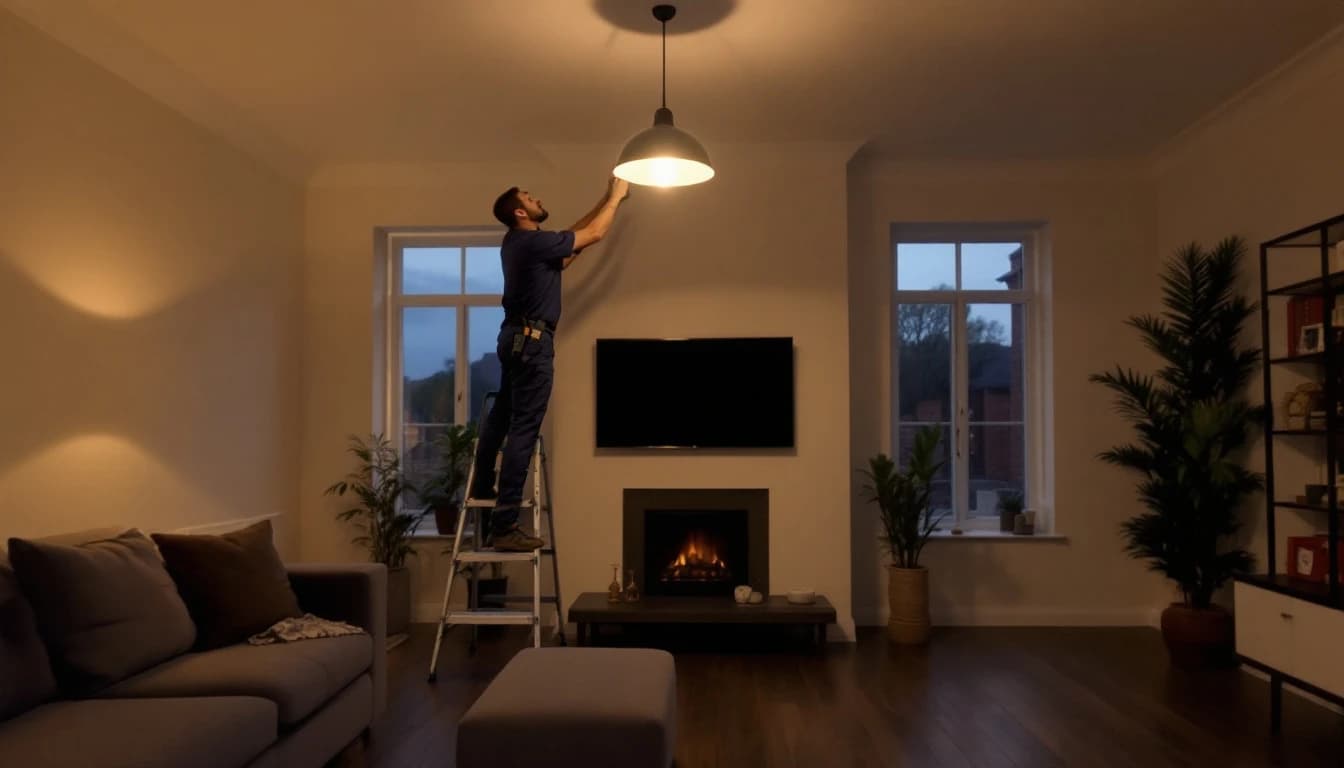
Most flickering lights in a London home are harmless. A loose bulb, the wrong type of LED in an old dimmer, or the kettle and shower briefly pulling power will all make lights blink, and none of those will burn your house down. The flickering that should worry you is the kind that happens in several rooms at once, comes with a burning smell, warmth, or buzzing, or makes some lights dim while others brighten. That pattern can mean a loose connection or a failing neutral, and that is a real fire risk. If you have any of those signs, switch the affected circuit off at the consumer unit and call an electrician now rather than reading to the end.
Below we walk through the real causes, roughly in order from "you can probably sort this yourself" to "stop and phone someone". We fix flickering lights across every London borough, so this is the same checklist we run through on the phone before we drive out.
The harmless causes you can usually fix yourself
Plenty of flickering comes down to the bulb or the fitting, not the wiring behind it. Start here before you panic about anything serious.
A loose or wrong bulb
A bulb that is not screwed or pushed in fully makes intermittent contact, and intermittent contact looks exactly like flickering. Turn the light off, let it cool, and reseat the bulb firmly. While you are there, check it is the right type and wattage for the fitting. An old bulb on its way out will also flicker and flash before it finally goes.
LED bulbs on an old dimmer
This is the single most common LED flicker we get called about in London. Older dimmer switches were built for halogen and incandescent bulbs, which draw a lot of power. Modern LEDs draw a fraction of that, and the old "leading edge" dimmer cannot regulate such a small load smoothly. The result is flickering, shimmering, or buzzing, usually worst at the lower end of the dial.
The fix is a trailing edge (LED-compatible) dimmer, which is designed for low-wattage electronic loads. If your bulbs flicker only when dimmed, this is almost certainly the cause. It is a quick swap, and our lighting installation team handles it regularly. You also want every bulb on the dimmer to be marked dimmable. Mix dimmable and non-dimmable LEDs, or use cheap non-dimmable bulbs on a dimmer, and they will flicker no matter what switch you fit.
Cheap LEDs
Not all LEDs are equal. Budget bulbs often have a poor internal driver, and a poor driver passes the small ripples in mains voltage straight through to the light. Swapping a bargain-bin bulb for a reputable brand can stop the flicker on its own. It is the cheapest test you can run.
When flickering points to a wiring or circuit problem
If you have ruled out the bulb and the dimmer, the next suspects sit inside the fittings, the switches, and the circuit itself. This is where a homeowner should stop poking around and start watching for warning signs.
A loose connection in the fitting, switch, or socket
Over years of use, the terminal screws holding wires inside a light fitting, a switch, or a socket can work loose. Heat and the constant tiny expansion and contraction of the metal do it. A loose connection makes poor contact, poor contact makes heat, and that is genuinely dangerous. Electrical Safety First lists buzzing or crackling sounds, scorch marks, and sockets or switches that feel hot to touch as warning signs that need a registered electrician straight away. If a single light or socket flickers and the faceplate is warm or smells of hot plastic, turn that circuit off and book proper fault finding.
An overloaded or failing circuit
Too many high-demand appliances on one circuit can dip the voltage enough to flicker the lights. If you also keep losing power, the breaker may be tripping under load, which is a separate but related problem we cover in our guide to why your fuse box keeps tripping. A circuit that consistently struggles is telling you it is either overloaded or has a developing fault.
Large appliances causing a momentary dip
You switch on the electric shower, the oven, or the kettle, the lights dim for a second, then settle. A brief, occasional dip like this when a big appliance kicks in is usually normal, especially in older properties with a tired supply. What is not normal is the lights dipping noticeably every time, or staying dimmer than they should. Frequent, heavy dips can point to an undersized circuit or a loose connection somewhere upstream, and they are worth getting checked.
The flickering that means stop and call now
Some patterns are not a nuisance, they are a warning. Treat the following as urgent.
A loose neutral
The neutral wire carries current back from your circuits. If it works loose at the consumer unit, a junction, or where the supply enters the house, the voltage across your circuits becomes unbalanced. The classic sign is some lights brightening while others dim, often changing as different things switch on and off around the house. A loose neutral can over-volt one part of the installation, damage appliances, and start a fire. This is not a DIY job and not one to leave overnight. Switch off at the consumer unit and call an electrician.
A problem at the consumer unit
If flickering is tied to a particular breaker, or you can hear buzzing or smell heat at the fuse board itself, the fault may be in the unit. Loose busbar connections and worn breakers both cause flickering and both overheat. An old board with rewireable fuses or no RCD protection is more prone to this, and it may be due a new board. Do not open the consumer unit yourself.
Flickering across multiple rooms
One flickering light is usually local. Lights flickering all over the house at once is a shared cause: the main supply, the meter tails, the consumer unit, or a loose neutral. Combine whole-house flicker with any burning smell, warmth, or buzzing and you have a stop-everything situation. Our fault finding and repairs service exists exactly for this, and if there is any smell of burning we would treat it as an emergency.
What if the whole street is flickering?
Here is the one cause that is genuinely not your problem to fix. If your neighbours' lights are flickering too, or the dimming follows a pattern across the area, the fault is on the supply network rather than inside your home. In London the distribution network operator is UK Power Networks. They confirm that voltage fluctuations can cause lighting that is very dim, very bright, or flickers, and they will investigate, sometimes fitting a recording device to your supply for a couple of weeks.
To report it, contact UK Power Networks online, or call 105, the free national number that connects you to your local network operator across England, Scotland, and Wales. There is no point paying an electrician to investigate a fault that sits beyond your meter. A quick check with the neighbours, or a glance at the UK Power Networks live fault map, tells you which side of the meter the problem is on.
A quick step-by-step before you call us
- Is it one light or many? One light points to the bulb, fitting, or switch. Many points to the circuit, the supply, or a loose neutral.
- Reseat or swap the bulb. Check it is the right type, fully seated, and not on its way out.
- Does it only flicker when dimmed? If so, you likely need an LED-compatible trailing edge dimmer and dimmable bulbs.
- Check for heat, smell, or buzzing. Any of these means switch the circuit off at the consumer unit and call an electrician, do not keep testing.
- Ask the neighbours. If the street is affected, it is a supply fault. Report it to UK Power Networks on 105.
Frequently asked questions
Are flickering lights a fire risk?
They can be. Flickering from a settled bulb or a brief appliance dip is harmless. Flickering caused by a loose connection or a failing neutral generates heat at the fault point, and heat is what starts electrical fires. If flickering comes with any burning smell, warmth, or buzzing, treat it as urgent.
Why do my lights flicker when I turn on an appliance?
A short, occasional dim when a shower, oven, or kettle starts is usually normal, because those appliances pull a heavy load for a moment. If it happens every time, the dip is severe, or it affects lights on other circuits, that points to an overloaded circuit, an undersized supply, or a loose connection that should be checked.
Can I fix flickering LED lights myself?
Some of it, yes. You can reseat or replace bulbs, switch cheap LEDs for a better brand, and confirm the bulbs are dimmable. Replacing a dimmer switch, or anything involving the fitting, switch wiring, circuit, or consumer unit, should be done by an electrician and certified under Part P.
Who do I call if my whole street's lights are flickering?
That is a supply fault, not a job for a domestic electrician. In London, report it to UK Power Networks, the local distribution network operator, online or by calling 105 free of charge.
Get flickering lights checked properly in London
If your lights are flickering in more than one room, the faceplate is warm, or you can smell or hear anything off, do not wait it out. Our NICEIC registered electricians cover every London borough and can trace the cause, whether it is a tired dimmer, a loose connection, or a fault at the consumer unit, and certify the repair to BS 7671. Call us on 020 3653 2600 or read more about our electrical repair work service, and we will get to the bottom of it.
Related reading
Immersion Heater Not Working? How to Find the Fault
No hot water from the immersion? The thermostat trips out far more often than the element fails. Here's how to tell them apart before you pay for the wrong part.
Read moreElectric Shower Not Working? Here's What's Usually Wrong
Dead shower, cold water or one that cuts out mid-wash. The faults behind each symptom, the two safe checks you can do, and when to stop and call someone.
Read more
Power Cut or Your Own Fault? How to Tell in Two Minutes
Lights out and no idea why? Here is the two minute check that tells you whether it is a network power cut or a fault inside your own home, and who to call.
Read more