
Burning Smell From a Socket or Plug? What It Means and What to Do
A burning smell from a socket can be an early sign of an electrical fire. Here is what to do right now and what is causing it.

By Yousif Al-Imari
Senior Engineer•22 May 2026
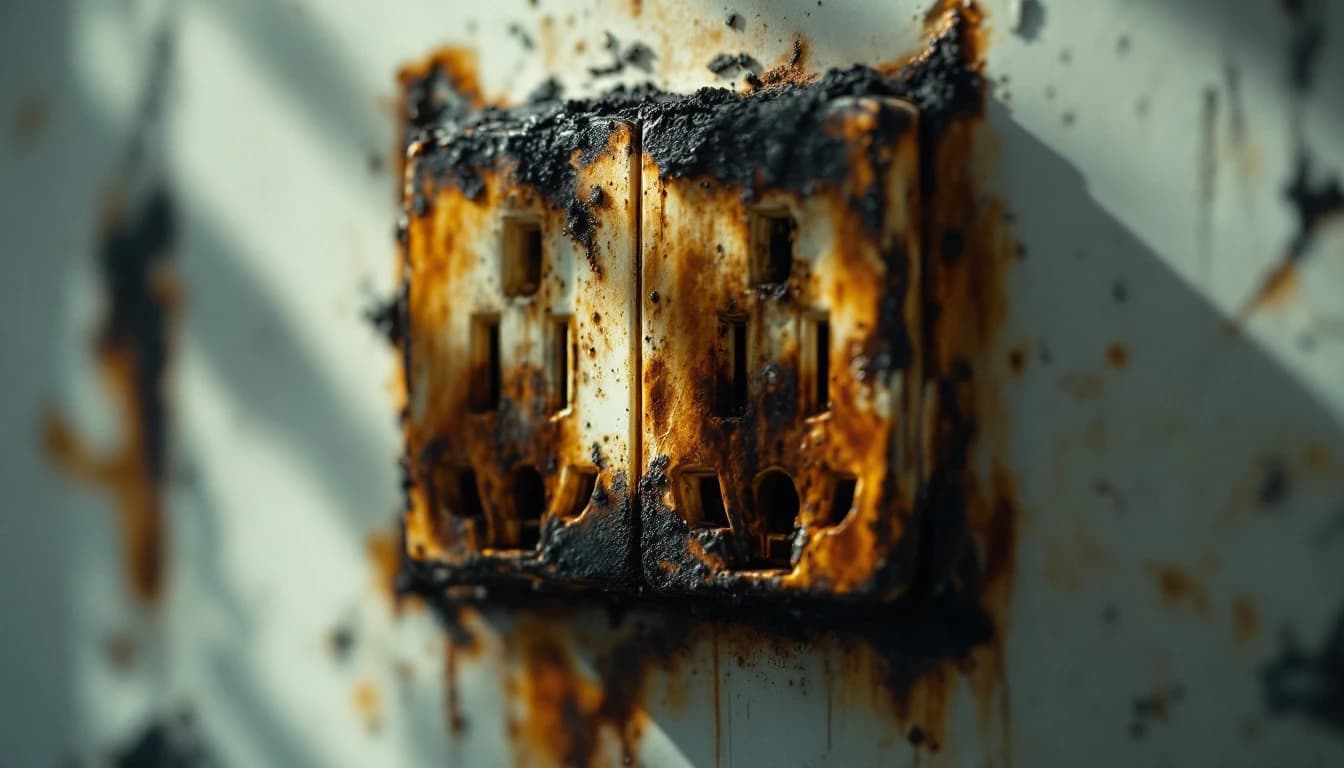
If you can smell burning from a socket or plug, treat it as an emergency. Stop using it, switch that circuit off at the consumer unit, and do not plug anything back in until an electrician has looked at it. A burning smell from a socket is one of the clearest early warnings of an electrical fire, and it is not something to leave until the morning. We cover every London borough, and this is one of the most common urgent calls we get, so here is exactly what to do and what is likely going on.
What to do right now
The order matters. Do these steps calmly and in sequence. If at any point you see smoke, flames, or scorching spreading, skip straight to step five and get everyone out.
- Stop using the socket. Switch off the appliance that is plugged in and do not touch the metal pins.
- Unplug it, but only if it is safe. If the plug or faceplate is hot, sparking, buzzing, or visibly scorched, do not touch it. Leave it.
- Switch the circuit off at the consumer unit. This is the fuse board. Flip the breaker that feeds that room, or turn off the main switch if you are not sure which one it is. Killing the power at the board is safer than wrestling with a hot plug. Do not wait for a quote, turn it off.
- Do not use water. Never throw water on an electrical fault or fire while the power is on. If there is a small fire and you have already isolated the supply, a CO2 or dry powder extinguisher is the right tool, not a glass of water.
- Call for help. If there is any smoke, flame, or scorching, get everyone out, close the door behind you, and call 999. If it is just a smell with no flame and you have isolated the circuit, call an electrician to come out the same day.
That smell is heat damaging plastic and insulation. It means something behind that faceplate is getting hot enough to be dangerous, and the only safe assumption is that it could ignite. The Health and Safety Executive is blunt about it: stop using equipment immediately if it appears faulty, and have it checked by a competent person. Burn marks or stains are a direct sign of overheating.
Why a burning smell from a socket is so serious
Electrical faults are not a minor inconvenience, they are a leading cause of house fires. According to Electrical Safety First, there are around 14,186 accidental electrical dwelling fires in England, which is over half of all accidental house fires. Many of them start exactly the way yours might be starting now: quietly, behind a faceplate or inside a wall, where you cannot see it.
The London picture is stark. The London Fire Brigade says it has attended 26,376 electrical fires in London since 2017. A burning smell is the warning you actually get before one of those happens. Ignoring it is the single most expensive mistake you can make.
What causes the burning smell? The usual suspects
In our experience across London homes, a burning or hot-plastic smell from a socket almost always comes down to one of these. Knowing which it is helps, but none of them are safe to leave running.
A loose connection or terminal arcing
This is the most common one we find, especially behind older faceplates. A screw terminal works slightly loose over the years, the wire no longer makes solid contact, and the gap starts to arc. Arcing is tiny, repeated sparking, and it gets surprisingly hot. It scorches the back of the faceplate and gives off that sharp burning smell long before anything visible appears on the front.
An overloaded socket, extension lead, or adaptor
A standard UK socket is rated to 13 amps. Daisy-chain a block adaptor, plug a heater into the same strip as a kettle, and you push more current through the socket than it was built for. Heat builds at the weakest point. Electrical Safety First specifically warns that overloading can cause the plug in the wall socket to overheat and possibly cause a fire, and lists a smell of hot plastic, scorch marks, and melted plastic as the signs. Their advice, and ours, is to use a fused multi-way bar rather than a stacked block adaptor, and to get extra sockets properly installed if you keep running out.
A damaged or worn-out socket
Faceplates do not last forever. The internal contacts lose their grip, plastic goes brittle, and a plug that wobbles in the socket creates a poor, hot connection every time you use it. Kitchens and bathrooms suffer worst because of heat and moisture. If a socket is decades old and a plug feels loose in it, that is a fault waiting to happen.
Moisture or a foreign object
Water and electricity behind a faceplate is a fast route to arcing and a burning smell. We see this with condensation, a spilled drink that ran down the wall, or a leak from above. Children pushing objects into a socket can do the same. If moisture is involved, isolate the circuit and do not touch it.
Old or aluminium wiring
Plenty of London properties still have decades-old wiring behind perfectly modern-looking sockets. Older cable, deteriorated insulation, or aluminium connections that expand and contract over time all create the loose, hot joints that produce a smell. If your home has not had a proper inspection in years, the socket is often just the symptom. Our guide on whether your fuse board is safe is worth a read if your consumer unit is old too.
Is it the socket or the appliance?
This is the question most people ask, and there is a simple way to narrow it down safely once the power is off and the area is cool.
- Unplug the appliance and smell the plug. If the burning smell and any scorch marks are on the plug or the appliance lead, the fault is likely the appliance. Bin a charger or device with a melted plug, do not keep using it.
- Check the socket itself. If the faceplate is discoloured, warm to the touch, scorched, or smells even with nothing plugged in, the fault is in the socket or the wiring behind it. That is electrician territory, not a job for a new plug.
- Try the same appliance in a different socket. If a second socket also gets hot or smells, you may have a wider wiring or circuit problem, not a one-off.
Either way, a scorched plug going into a scorched socket usually means both have been damaged by the same overheating, and both need replacing. Do not just swap the plug and carry on.
The warning signs you should never ignore
A smell is rarely the only clue. The London Fire Brigade lists scorch marks, flickering lights, hot plugs and sockets, and fuses that blow or circuit breakers that trip for no obvious reason as signs of loose or dangerous wiring. Watch for these too:
- A fishy or hot-plastic smell. Burning electrical components and overheating plastic often smell sharp and slightly fishy. That is melting insulation, and it is your earliest warning.
- Buzzing or crackling. A socket should be silent. A faint buzz or crackle is the sound of arcing.
- A hot faceplate. A socket should never be warm to the touch. If it is hot, heat is backing up behind it.
- Brown or black scorch marks. Any discolouration around the pins or the edge of the faceplate means it has already been overheating.
- Lights flickering when you use it. If using the socket makes nearby lights dim or flicker, that points to a loose connection drawing too much. Our post on why your lights keep flickering goes into this.
Any one of these on its own is worth a call. Two or more together, switch the circuit off and get a professional out.
What an electrician will actually do
When we come out to a burning smell, we are not just swapping a faceplate. We isolate the circuit, open up the socket, and look for the real cause. That means checking the terminals for arcing and heat damage, testing the wiring on that circuit, and inspecting the connections back at the consumer unit. This is proper diagnostic work work, because fitting a shiny new socket onto a faulty circuit just moves the problem.
If the wiring behind it is degraded or the whole circuit is suspect, we will tell you straight. Sometimes it is a five-minute fix of a loose terminal. Sometimes the socket is the tip of an ageing installation that needs more attention. Either way, all our work is carried out to BS 7671, the UK wiring regulations, and certified properly.
How much does it cost to sort a burning socket in London?
Costs vary a lot depending on what we find, so treat these as general London market guidance rather than a fixed price, and always get a proper quote.
- Replacing a single damaged socket: often in the region of £80 to £150 once labour and the faceplate are included.
- An emergency or out-of-hours callout: London callout rates are typically higher, frequently £90 to £150 or more just to attend, then the repair on top.
- Tracing and repairing a wider circuit fault: this depends entirely on what is causing it, which is why fault finding is quoted after we have diagnosed the problem.
What you should not do is treat the bill as a reason to delay. The cost of a callout is nothing next to the cost of a fire.
Frequently asked questions
Is a burning smell from a socket always dangerous?
Yes, treat it as dangerous every time. A genuine burning or hot-plastic smell from a socket means something is overheating, and overheating is the start of an electrical fire. Even a faint, occasional smell is worth switching the circuit off and getting checked the same day.
Can I just put a new plug or socket on myself?
We would not. Even if the plug looks like the obvious culprit, a burning smell can be a symptom of a loose connection or damaged wiring behind the faceplate, which a new socket will not fix and which is risky to work on live. Socket and wiring repairs in the home fall under Part P of the Building Regulations, so it is safest and properly certified work for a qualified electrician.
The smell has gone, do I still need someone to look?
Yes. The smell going does not mean the fault has gone, it usually means the appliance was switched off or the load dropped. The loose connection, scorched terminal, or overloaded circuit is still there, waiting for the next time you draw current. Get it inspected.
What if I can smell burning but cannot find which socket?
Switch off the main switch at your consumer unit to kill the power to the whole property, then call an electrician. A hidden burning smell can be a fault inside the wall or at the fuse board itself, and that needs tracing with proper testing equipment, not guesswork.
Get it checked before it becomes a fire
A burning smell from a socket is the warning you get before things go badly wrong, so use it. If you are anywhere in London and you have switched the circuit off and want it sorted properly, call us on 020 3653 2600. We are NICEIC registered, we cover every borough, and our emergency electrician service is built for exactly this. Better a callout today than the fire brigade tomorrow.
Related reading
Emergency Lighting Testing: What UK Businesses Must Do
The law says maintain it but never says how often. Here's where the monthly and annual tests actually come from, who carries the duty, and what inspectors check.
Read more
Bathroom Electrical Zones Explained: 0, 1, 2 and IP Ratings
Bathrooms are split into electrical zones by how close they are to water. Here is what goes where, which IP rating you need, and why sockets are banned.
Read more
Fixed Wire Testing: What UK Businesses Actually Have to Do
No law sets a fixed testing interval for business premises. Here is what the Electricity at Work Regulations really require and how to build a defensible schedule.
Read more