
The Best Downlights for a Kitchen: 2026 Buyer's Guide
A 2026 buyer's guide to the best kitchen downlights by type: fire-rated, IP65 over sinks, integrated LED vs GU10, dimmable and CCT, plus how many you need.

By Yousif Al-Imari
Senior Engineer•30 June 2026
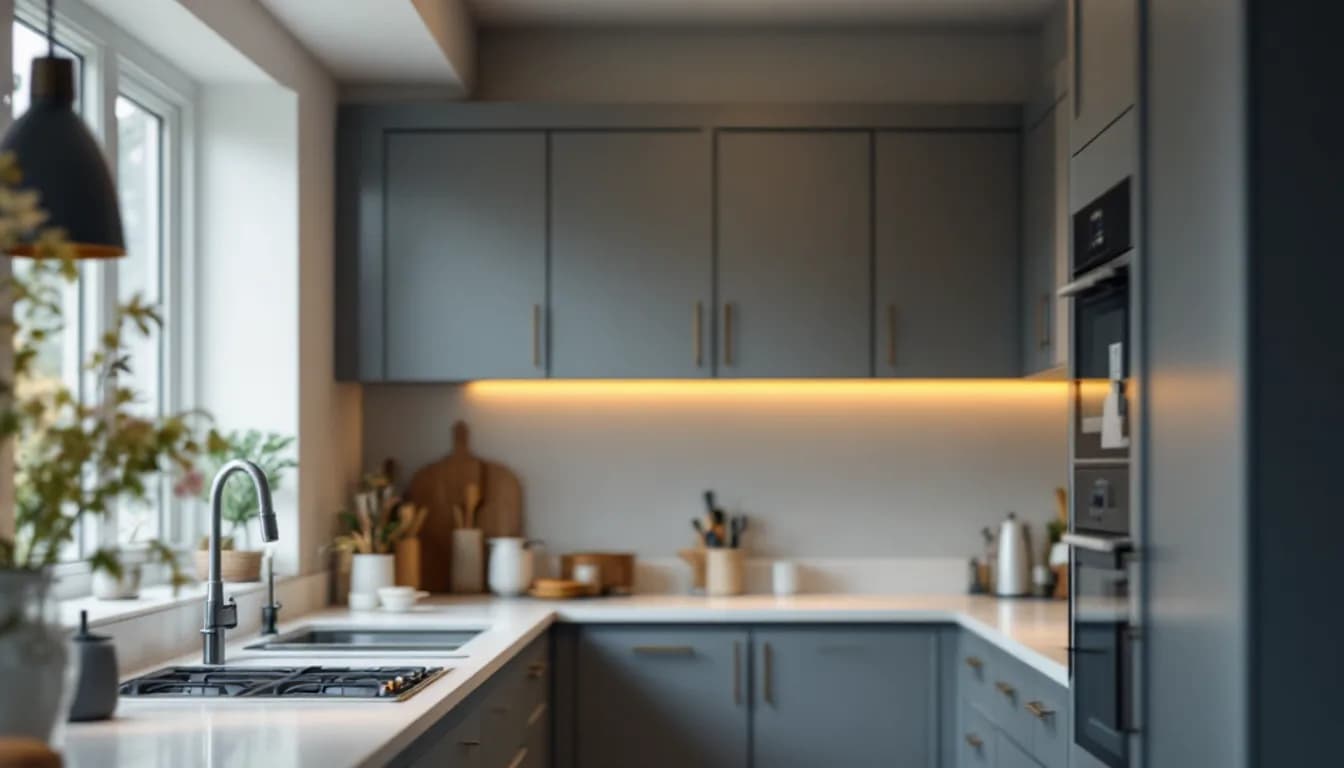
If you only take one thing from this guide, take this: the best downlights for a kitchen are fire-rated as standard, IP65 above the sink, and matched to a layout that actually lights your worktops rather than the middle of the floor. The fitting on the box matters far less than where it goes and how it is wired.
I fit downlights in London kitchens most weeks, domestic and commercial, and the same mistakes keep coming up. Too few lights. Shadows on the worktop because every light sits over the walkway. Non fire-rated tins pushed into a ceiling that has a room above it. So this is a buyer's guide organised by type and use, not a list of part numbers that will be discontinued by next spring.
I'm Yousif Al-Imari, and I handle domestic and commercial installs at Capital Electricians. Here is how I'd choose kitchen downlights for 2026, and why.
What actually matters when choosing kitchen downlights
Before we get to the picks, four things decide whether a kitchen downlight is right for the job. Everything else is preference.
Fire rating. A fire-rated downlight has an intumescent pad or gasket built in. When it gets hot enough, that pad expands and seals the hole you cut in the ceiling, so the ceiling keeps doing its job of slowing a fire between floors. Most guides quote a rating of 30, 60 or 90 minutes. If there's a room, loft or roof void above your kitchen ceiling, fire-rated is the sensible default. It's cheap insurance and it's what a good installer will fit without being asked.
IP rating. IP tells you how protected the fitting is against dust and water. Over and directly next to a sink, where you get splashes and steam, you want a sealed fitting, and IP65 is the common choice there. Across the rest of the kitchen ceiling a lower rating is usually fine. The same logic applies in wet rooms, which is why bathroom zones and ventilation rules lean on IP ratings too.
Dimmable, and CCT or colour-select. A dimmable downlight lets you drop from bright task light to something softer for the evening, but only if the fitting and the dimmer are both LED-compatible. Mismatch them and you get flicker or buzz. Many modern fittings are also CCT-selectable, meaning a small switch lets you pick a warmer or cooler white (often 3000K, 4000K and 6500K) before it goes up. Handy, but it's set at install, not from the sofa.
Integrated LED versus replaceable GU10. This is the big fork in the road, so it gets its own picks below.
Integrated LED downlights: best for a clean, modern kitchen
Best for: new kitchens, low ceilings, and anyone who wants the neatest possible finish and the longest service life.
An integrated downlight has the LED built into the fitting. There's no bulb to swap, which is why they tend to be slim, sit flush, and give a very even wash of light. When the LED eventually fails you replace the whole unit, but that's usually years away.
- Shallow bodies suit low or joist-tight ceilings where a bulb holder won't fit.
- Better heat management and a sealed design, so fewer early failures.
- Widely available fire-rated and IP65 versions for kitchen use.
Ranges like the Aurora R6 fire-rated downlight and Collingwood's fire-rated integrated fittings are the sort of thing I fit for a clean modern look. If you want a proper install rather than a DIY punt, our LED spotlight and downlight service covers the planning and the wiring.
Fire-rated GU10 downlights: best for easy future swaps
Best for: retrofits, rentals, and people who like being able to change a bulb themselves.
A GU10 downlight is a fire-rated tin that takes a replaceable GU10 LED lamp. The obvious advantage: when a lamp goes, you twist in a new one instead of pulling the whole fitting down. That flexibility is why they're still everywhere.
- Replaceable lamps mean cheap, quick maintenance with no electrician needed for a swap.
- Easy to change colour temperature later by choosing a different GU10 lamp.
- You still get full fire protection from the tin itself.
The Aurora EFD Pro is a well-known fire-rated GU10 fitting with push-fit wiring. If you go this route, use dimmable, LED-compatible lamps and a dimmer to match, or you'll chase flicker forever.
IP65 downlights: best for over the sink and any splash zone
Best for: the ceiling directly above a sink, hob or anywhere steam and splashes gather.
You don't need IP65 across the whole ceiling, but you do want it where water is in play. A sealed IP65 fitting keeps moisture out of the electrics, which is exactly why the same rating is standard in bathroom zones.
- Sealed against jets of water and steam, so safe above a sink or kettle station.
- Often sold as fire-rated and IP65 in one fitting, which is ideal for kitchens.
- Look for a solid gasket, not just a marketing sticker.
JCC are one of the go-to names for fire-rated downlights, with IP65 options in their V50 range. Mixing IP65 over the wet spots and standard fire-rated fittings elsewhere is a normal, sensible layout, and it's the kind of detail we sort during a full lighting installation.
CCT-selectable downlights: best for getting the white right
Best for: anyone unsure whether they want warm or cool light, or who wants the same fitting to work in different homes.
Kitchens usually suit a crisp, clean white for food prep. Cooler around 4000K feels bright and hygienic, warmer around 3000K feels cosier. A CCT-selectable downlight lets you (or your installer) pick the temperature at install with a small switch, so you're not committed to one look before you've lived with it.
- One product, several colour temperatures, chosen on the day.
- Great for open-plan kitchens where the dining end wants something warmer.
- Remember it's set at install, not adjustable from a switch on the wall.
Aurora's colour-and-wattage switchable fire-rated downlights and Ansell's Prism Pro XM are examples of fittings that give you that flexibility while staying fire-rated.
How many downlights does a kitchen need, and how far apart?
We cover the maths properly in our guide to how many downlights you need per room.
The honest answer is that it depends on your ceiling height, worktop positions and how bright you like things. But there are useful rules of thumb the trade uses to get close.
- Start with the room. A common guide is roughly one downlight per 1.5 to 2 square metres of floor, adjusted for how much light each fitting throws.
- Use ceiling height for spacing. A rough starting point is to divide ceiling height by two. On a standard 2.4m ceiling that puts lights around 1.2m apart, and keep them about 0.5m off the walls.
- Light the worktops, not the floor. Position a row over the front edge of your worktops and units, not down the centre of the room, so you aren't working in your own shadow.
- Aim for enough light. Kitchens generally want a good, bright level for a work space, and most LED downlights sit somewhere around 400 to 800 lumens each, so more, dimmer lights often beat a few glaring ones.
- Mind the beam angle. A wider beam of roughly 40 to 60 degrees gives more even coverage across a worktop than a tight spot.
None of this replaces a proper plan. Ceilings hide joists, pipes and existing cables, and the switching and any extra sockets and switches need thinking about at the same time. If you want a realistic figure before committing, our guide to the cost to install downlights gives you a sense of what's involved.
Frequently asked questions
Do kitchen downlights have to be fire-rated by law?
There's no blanket law saying every kitchen downlight must be fire-rated, but if your ceiling separates floors or a habitable space above, fire-rated fittings maintain that fire barrier and are the right choice. A registered electrician will fit fire-rated where the ceiling calls for it as a matter of good practice.
Do I need an IP65 downlight everywhere in the kitchen?
No. IP65 matters directly above and next to water, like over a sink, hob or kettle area. Across the rest of the ceiling a standard fire-rated fitting is usually fine. Mixing the two is completely normal.
Is downlight installation notifiable under Part P?
It depends on the work. Under the Building Regulations in England, installing a brand-new circuit or working in a special location is notifiable, while altering an existing lighting circuit may not be. A registered electrician can self-certify the job and issue the right certificate, so you don't have to deal with building control yourself.
Are integrated LED or GU10 downlights better for a kitchen?
Integrated fittings look neatest, sit shallowest and tend to last longest, but the whole unit is replaced when the LED fails. GU10 fittings let you swap the lamp yourself. For a new kitchen I usually lean integrated, for a rental or a quick refresh GU10 makes sense.
Can I dim any kitchen downlight?
Only if it's marked as dimmable and paired with an LED-compatible dimmer. Fit a non-dimmable light on a dimmer, or mismatch the dimmer, and you'll get flicker, buzz or a shortened life. Get the pairing right and dimming is one of the best things you can add.
Get the layout and the wiring right the first time
The best downlight in the world still needs cutting into the right spot, wired safely, and certified. Capital Electricians is a NICEIC registered London firm, and every install is carried out to BS 7671 and made Part P compliant, with fire-rated fittings where the ceiling needs them and IP65 over the wet zones. We plan the layout around your worktops before a single hole is cut, so you get even light and no regrets.
If you're planning a new kitchen or upgrading tired old spotlights, call us on 020 3653 2600 and we'll talk through the right fittings and layout for your space.
Related reading
Smart Light Switches and the Missing Neutral Wire
Most UK light switches have no neutral, which is why smart switches fail. Here are the four ways round it and which one suits your house and your lights.
Read more
Outdoor Socket Installation and Garden Lighting: A Safe Guide
Adding an outdoor socket or garden lighting isn't a weekend DIY job. Here's the safe, legal way to do it, from RCDs and IP66 sockets to SWA cable and Part P.
Read more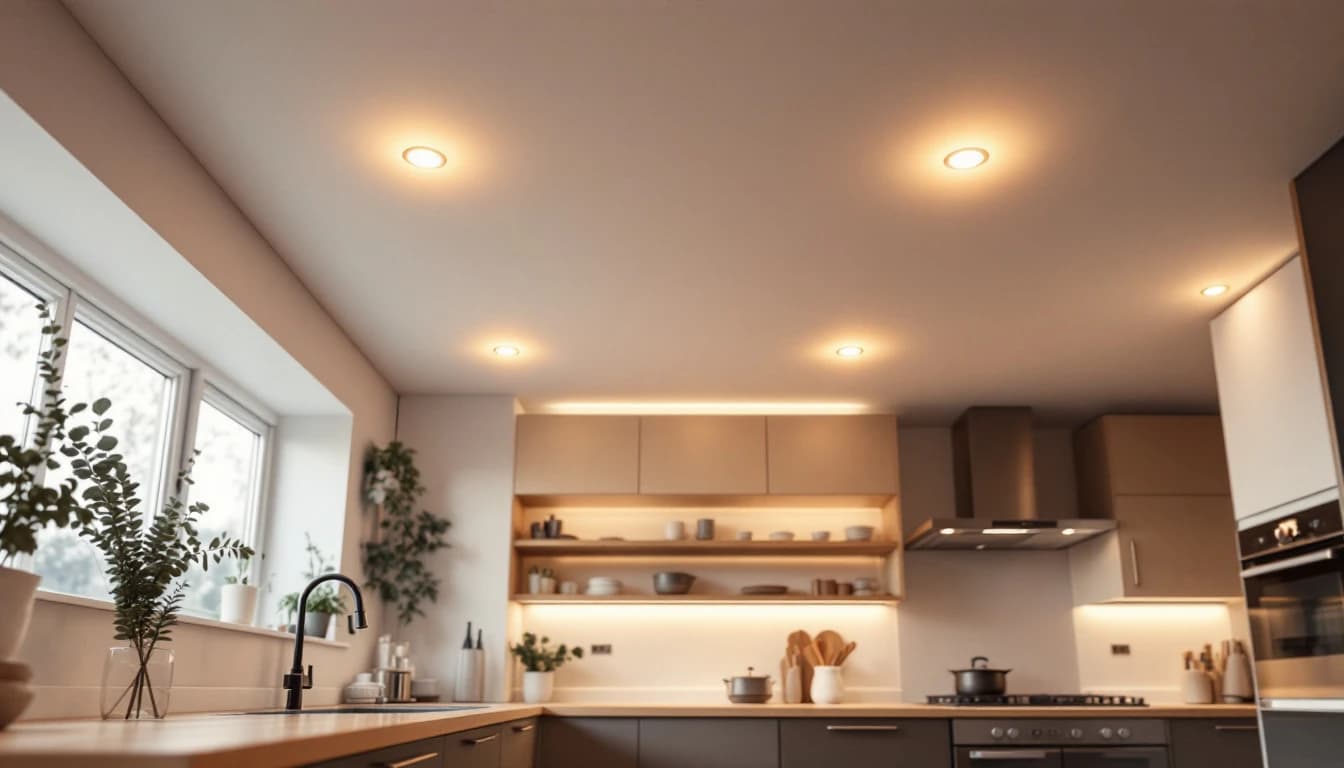
How Many Downlights Do I Need Per Room? A Spacing Guide
Work out how many downlights you need per room with a simple spacing rule, a lumens-per-square-metre guide by room, and a worked example for a London kitchen.
Read more