
Bathroom Extractor Fan Regulations: Zones, Ventilation and the Rules
What UK law actually requires for bathroom extractor fans: Part F ventilation rates, Part P notifiable wiring, and the BS 7671 zones and IP ratings that decide what goes where.

By Yousif Al-Imari
Senior Engineer•1 July 2026
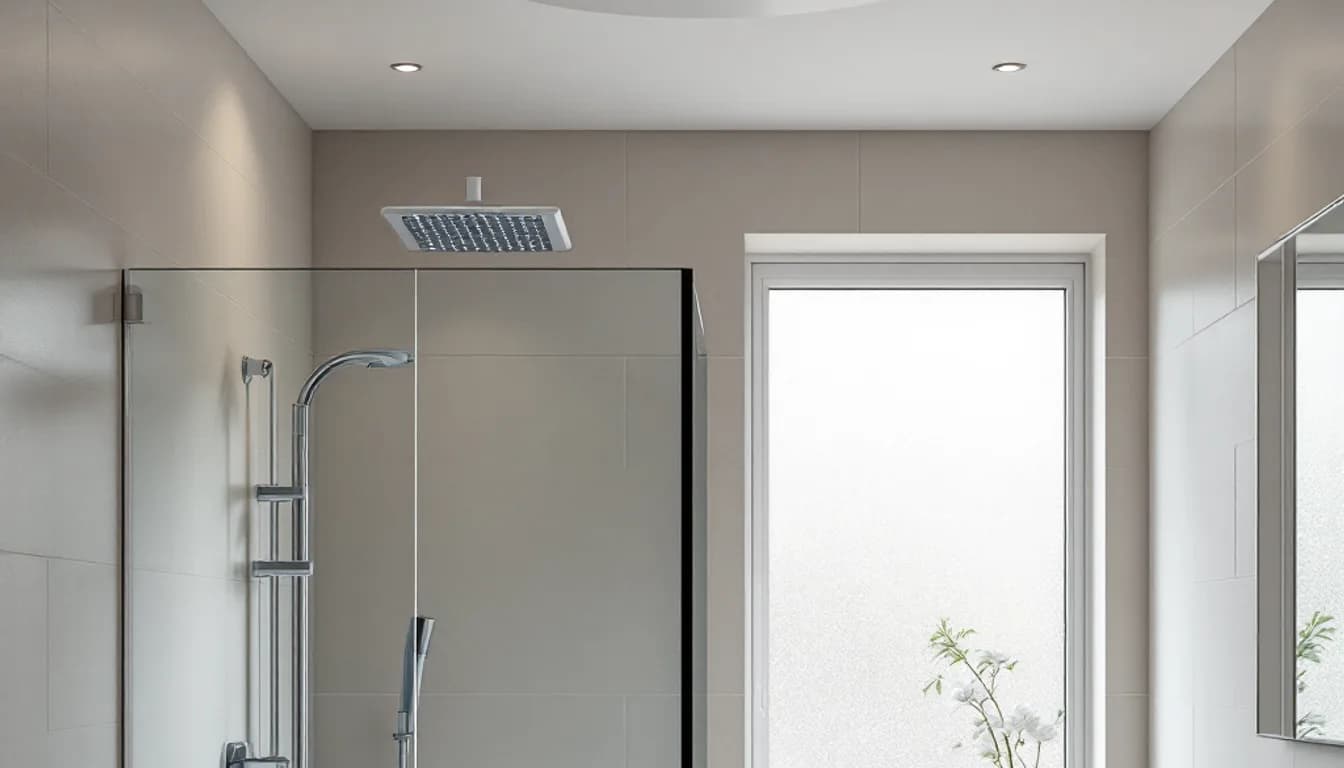
Short version: bathroom extractor fan regulations come from two places at once. Building Regulations Part F sets the ventilation your bathroom needs, and Part P makes the wiring notifiable, while BS 7671 decides what electrics can go where. If your bathroom has no openable window, a fan is effectively required, because you still need a working means of extract to clear steam and stop condensation.
I fit and replace bathroom fans across London most weeks, and the same questions come up. Is a fan a legal requirement? Where can the fan actually sit above a shower? Why does swapping a fan sometimes count as notifiable work? Here is what the rules genuinely ask for, in plain English.
Do you need an extractor fan in a bathroom by law?
The honest answer is that the law asks for adequate ventilation, and a fan is usually how you provide it. Under Building Regulations Part F, any new bathroom or shower room must have a means of extract ventilation to control moisture and remove smells. An extractor fan is the normal way to hit that requirement.
Whether you strictly need a fan depends on the room. According to the Planning Portal guidance on bathroom ventilation, a new bathroom, shower room, utility or WC should be given a means of extract ventilation. If you are refurbishing and there is already extract ventilation, it must be retained or replaced.
In practice, a bathroom with no window that opens to outside will need a fan, full stop. There is no other realistic way to get the air out. A bathroom with a bath or shower and heavy steam will usually want one too, even where a window exists, because a window alone rarely clears humidity fast enough to stop mould forming. If you are weighing up a new install, our team can advise on the right unit during an extractor fan installation.
Part F ventilation rates: how much air a bathroom fan must move
Numbers matter here, because a fan that is too weak fails Part F even if it spins. For an intermittent bathroom fan (one that runs while you are in the room and for a short time after), the general guide is a minimum extract rate of around 15 litres per second. A continuous extract system runs slower but all the time, so its baseline rate is lower with a boost step.
Positioning affects performance as much as the fan rating does. Part F expects the extract point to sit as high as practicable in the room, so it catches rising steam near the ceiling. Fitting it close to the shower or bath, and away from the door where fresh air comes in, gives the fan the best chance of pulling damp air straight out.
The official technical detail lives in the government's Approved Document F (Ventilation). It is worth knowing that newer, more airtight homes are increasingly steered towards continuous mechanical extract rather than the old on-off fans, a shift the manufacturer Vent-Axia explains in its Part F update. For a typical retrofit in an existing London bathroom, a good intermittent fan sized correctly is usually still fine.
Part P: why bathroom fan wiring is notifiable
A bathroom counts as a special location under the wiring rules, and that changes what you are allowed to do yourself. Part P of the Building Regulations covers electrical safety in dwellings, and a lot of bathroom electrical work is notifiable, meaning it must be signed off by a registered competent person or approved by building control.
The Planning Portal's guidance on electrical work explains that qualifying installations must conform to Approved Document P, and that registered electricians can self-certify their work through a competent person scheme. As a NICEIC registered firm, we certify to BS 7671 and self-certify Part P, so you get the paperwork without a separate building control visit.
Here is the rough rule of thumb for a bathroom fan:
- Running a brand new circuit or new wiring to power a fan in a bathroom is notifiable work.
- Installing a fan where there was none before, in a special location like a bathroom, generally needs certification.
- A straight like-for-like swap of an existing fan, on the same wiring and in the same spot, is usually not notifiable, provided it is done safely.
Even a simple swap involves working live-adjacent near water, so if you are unsure, get an electrician in. Electrical Safety First advises always using a registered electrician to install or replace a fan.
Bathroom electrical zones and IP ratings
This is where BS 7671 gets specific. The bathroom is split into zones, and each zone limits what electrical equipment can go there and how well it must resist water. The zones exist because water and 230V electrics are a genuinely dangerous mix.
What are bathroom electrical zones?
Bathroom electrical zones are defined areas around the bath and shower, set out in BS 7671, that dictate the minimum IP rating and voltage allowed for any fitting. There are three: Zone 0, Zone 1 and Zone 2.
- Zone 0: inside the bath or shower tray itself. Only very low voltage SELV fittings belong here, and they need a high IP rating suited to immersion, typically IPX7.
- Zone 1: above the bath or shower, up to 2.25m from the floor. Fittings here need at least IPX4 (splash resistant), and anything at 230V must be RCD protected. A fan rated for Zone 1 is fine directly over a shower.
- Zone 2: the area extending 0.6m outside Zone 1, and around a washbasin. IPX4 is the general minimum here too.
Beyond the zones, the general rules of BS 7671 apply, and the IP rating simply needs to suit the conditions. The IET, which publishes the BS 7671 Wiring Regulations, is the national standard body for this. IP stands for Ingress Protection, and the second digit is the one that matters near water: IPX4 resists splashing from any direction, IPX7 resists temporary immersion.
Sockets, switches and RCD protection
All circuits in or passing through a bathroom must now be RCD protected. Standard 13A sockets are not permitted inside the zones. Per Electrical Safety First's bathroom safety guidance, sockets are not allowed in bathrooms unless they can be fitted at least 2.5m from the edge of the bath or shower, with shaver units the usual exception. A ceiling-mounted pull-cord is safer than a wall switch for wet hands. If you are updating switching or adding a shaver point, that is covered under our sockets and switches work.
Choosing and positioning a bathroom fan
Get the fan right and you rarely think about it again. Get it wrong and you get a steamed-up mirror, peeling paint and black mould in the grout within a year. A few things I check on every job:
- Extract rate: match or beat the Part F guide of around 15 l/s for an intermittent bathroom fan.
- IP rating for the zone: if it is going over or near the shower, it must carry the right IP rating for that zone.
- Duct run: the shorter and straighter the duct to outside, the better the real-world airflow. Long flexible runs kill performance.
- Noise: quieter fans get left running, which is the whole point of an overrun.
Ceiling fans usually work best because they sit high where the steam gathers, and they pair neatly with recessed lighting. If you are planning a full refit, it is worth coordinating the fan with your LED spotlights and downlights so the ceiling layout is clean, and our lighting installation service handles both together. If you want a sense of budget, our guide to the cost to install downlights gives a realistic London range.
Timer overrun and humidistat control
An overrun timer keeps the fan running for a set period after you have flicked the light off or left the room. That trailing run is what actually clears the lingering steam, so it matters more than people think. As a general guide, a bathroom with a bath or shower wants an overrun in the region of 15 minutes, and most timer fans let you adjust this on the unit.
A humidistat model takes it further by sensing moisture in the air and switching the fan on itself once humidity climbs, then off once it drops. That is handy for a shared family bathroom that gets used at odd hours, or a room where nobody remembers to leave the fan on. Both approaches are compliant as long as the extract rate and installation meet Part F and BS 7671. The wiring differs (a timer fan usually needs a permanent live plus a switched live), which is another reason to have an electrician wire it correctly.
Frequently asked questions
Is it a legal requirement to have an extractor fan in a bathroom?
The law requires adequate extract ventilation in a new bathroom, and a fan is the standard way to provide it. If the room has no window that opens outside, a fan is effectively required because there is no other means of extract. In an existing bathroom being refurbished, any extract ventilation already there must be kept or replaced.
Can I put an extractor fan directly above the shower?
Yes, as long as the fan carries the correct IP rating for that position. Above a shower falls in Zone 1, so the fan needs at least IPX4 and, if it runs at 230V, RCD protection. Many fans are specifically rated for Zone 1, and fitting high above the shower is often the best spot for catching steam.
Do I need Building Regulations approval to fit a bathroom fan?
New wiring for a fan in a bathroom is notifiable under Part P and needs certification, either self-certified by a registered electrician or signed off by building control. A true like-for-like replacement on existing wiring is generally not notifiable, but a new install almost always is.
What IP rating does a bathroom extractor fan need?
It depends on the zone. In Zone 1, above the bath or shower, IPX4 is the minimum. In Zone 0, inside the shower or bath, you need a much higher rating and low voltage SELV only. Outside the zones, the general rules apply and a standard rating usually suffices.
How long should a bathroom fan run for?
A timer overrun of around 15 minutes is a sensible target for a bathroom with a bath or shower, enough to clear the steam that lingers after use. Humidistat fans handle this automatically by running until the air dries out.
Bathroom electrics are one of those jobs where the rules exist for a real reason, and cutting corners near water is not worth it. If you want a fan sized and fitted properly, wiring that meets Part F and BS 7671, and certified Part P paperwork, our NICEIC registered electricians handle it start to finish. Call Capital Electricians on 020 3653 2600 for a straight answer and a fair quote.
Related reading
Electric Shower Installation: Cost, Circuits and the Catch
What an electric shower install actually involves in a London home, why the consumer unit decides half the price, and the questions to ask before you book.
Read more
Does an Electric Cooker Need Its Own Circuit?
Most electric cookers and every electric hob need a dedicated circuit. Here is how to work out whether yours does, and what a proper cooker circuit involves.
Read more
Running Power to a Garden Office, Shed or Garage
A garden office needs a proper buried supply and its own small board, not an extension lead. Here is what the job involves, what it costs and what the rules are.
Read more