
Three Phase Electricity Supply: Does Your Home Need It?
What three phase power actually is, which loads push a London home towards it, how UK Power Networks upgrades work, and the cheaper fixes that often make one unnecessary.

By Mo Elm
Lead Engineer•21 October 2026
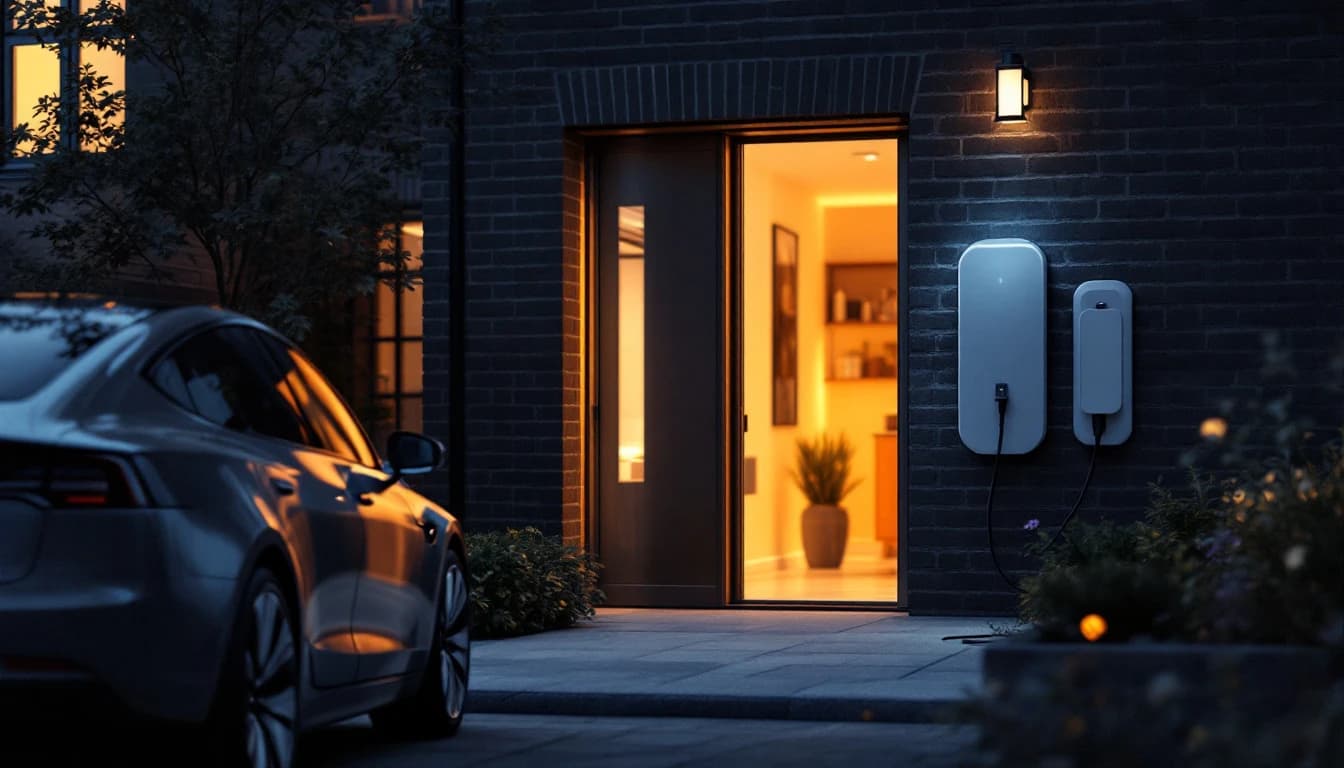
A three phase electricity supply brings three live conductors into your home instead of one. Each runs at 230V to neutral, with 400V between them, and UK Power Networks says an upgrade gives up to 70kVA, against the 23kVA most gas-heated homes have. Most London homes don't need it. A 22kW EV charger or a house split into flats usually does.
When you do need it, it's a proper job, with digging in the street and a new meter box. So it pays to rule out the cheaper fixes first. Here's how to tell which camp you're in.
Single phase vs three phase, without the jargon
A normal home supply is single phase: one live conductor and a neutral. Under the Electricity Safety, Quality and Continuity Regulations, the declared voltage is 230 volts between phase and neutral at 50Hz, allowed to drift 10% above or 6% below. A three phase supply adds two more live conductors, each at the same 230V to neutral but staggered so they peak at different moments. Measure between any two of them and you get 400V. Your sockets and lights don't change, because they still connect between one phase and neutral.
- Single phase voltage: 230V between phase and neutral
- Three phase voltage: 230V from each phase to neutral, 400V between phases
- Standard home supply: 23kVA, what most homes with gas central heating have
- Three phase upgrade from UKPN: up to 70kVA
- Main fuses at the cut-out: typically one on single phase, three 100A fuses on three phase
Sources: Electricity Safety, Quality and Continuity Regulations 2002, regulation 27, the IET's Wiring Matters, and UK Power Networks on supply types, upgrades and its upgrade application form.
The capacity figures line up with simple arithmetic. A 100A fuse at 230V is 23,000VA, or 23kVA. Three phases at 100A each is 69kVA, close to UKPN's 70kVA ceiling.
What supply does a typical London home have?
Almost always single phase. UKPN says most houses with gas central heating need single phase and have it as standard. It also says it's common for older properties to have a 30 or 60 amp main fuse, which it can upgrade to 80 or 100 amps.
You can check without touching anything. Find the cut-out, the sealed box where the street cable arrives, usually next to the meter. UKPN's rule of thumb is one fuse for single phase and three for three phase. Leave the seals alone, because that equipment belongs to the network operator. Our guide to meter tails explains who owns what in that cupboard.
Flats are a different story. In a converted London house, the meters often sit together in a communal cupboard. UKPN says that if you need two or more electricity meters, you need a three phase supply, and anyone fitting an EV charger in a block of flats needs the building owner's permission first.
Which loads actually push a home towards three phase
It's rarely one appliance. It's the total current when several big loads run at once. Here's what some common ones draw, from the manufacturers' own data sheets:
- 7kW EV charger (myenergi zappi, single phase): up to 32A
- 22kW EV charger (the same zappi, three phase): up to 32A on each phase at 400V, which a single phase supply can't deliver
- 10kW or 12kW air source heat pump (Vaillant aroTHERM plus, 230V version): 23.3A maximum, on a 25A fuse
- The same heat pump, 400V three phase version: 15A maximum, on a 16A fuse
- 9.5kW electric shower: about 41A (9,500W ÷ 230V)
Sources: myenergi zappi datasheet and the Vaillant aroTHERM plus technical sheet. The shower figure is our own arithmetic.
Now add them up on a 100A single phase supply. A 7kW charger (32A), a 12kW heat pump (23.3A) and a 9.5kW shower (41A) come to 96.3A before anyone turns the oven on. In real life they rarely all peak together, which is why an electrician works out maximum demand rather than adding up nameplates. UKPN can now also use 12 months of smart meter readings to see the most your home has actually drawn.
UKPN's own list of when a three phase upgrade is typically needed includes converting a house into flats and installing high power equipment such as ground source heat pumps. EV chargers and air source heat pumps, by contrast, sit on its list of reasons for a simple fuse upgrade.
One check before you set your heart on 22kW: a wallbox only charges as fast as the car's on-board charger accepts on AC. That figure is in your handbook or the car's spec sheet. If it's well below 22kW, three phase buys you nothing at the charger.
Cheaper alternatives to try first
Before anyone books a trench, these often get you there:
- A main fuse upgrade: UKPN upgrades 30 or 60A fuses to 80 or 100A free of charge, once your meter tails and fuse board are sized for it, and aims to contact you within 10 working days to book the visit.
- Load management: chargers like the zappi come with a clip-on grid sensor and a grid limit setting. If the house draws more than the limit, the charger turns itself down straight away, and some network operators want this set up to the ENA's G100 principles.
- Smart charging overnight: new home chargers sold in Great Britain since 30 June 2022 must come with pre-set, off-peak default charging hours, so the car charges while the cooker and shower are off.
- A single phase heat pump: even the 12kW aroTHERM plus comes in a 230V version.
- Splitting a looped supply: if your service cable is shared with next door, UKPN can separate it. A looped supply means a fuse upgrade has to be re-planned with your neighbour, and there may be a charge.
Sources: UK Power Networks on fuse upgrades and looped supplies, myenergi on the zappi grid limit function, and gov.uk on smart charge point regulations.
Most of these come with a board or earthing check of their own. Our guide to what you need to install an EV charger at home walks through them in order.
How to apply to UK Power Networks
UKPN runs the network across London. The route depends on why you need the power.
- Get the load assessed. UKPN recommends asking a qualified electrician first, who can look at everything you'll run and work out how much power you need.
- EV chargers and heat pumps go through your installer. Only installers can notify UKPN, using its Smart Connect portal. If the supply copes, they notify within 28 days of installing. If it doesn't, UKPN quotes your installer for the upgrade.
- Anything else, apply direct. Online or on UKPN's PDF form, which asks how much power you have and need in kVA, whether you want three phase, how many meters and the ratings of any big equipment.
- Choose a budget estimate or a formal quote. A budget estimate comes without a surveyor's visit, may vary considerably from the real price and can't be accepted. A formal quote follows a survey.
- The street work. UKPN finds the nearest cable, usually under the road or pavement, and lays a new one to a meter box on your outside wall. You can dig the trench on your own land yourself, using ducting it supplies.
- The meter. Your energy supplier owns the meter, so it has to come and move and connect it before you can use the new supply.
What affects the cost and the wait
UKPN doesn't publish a price list for three phase upgrades. Its online cost indicator gives a figure based on what other customers have paid, and the firm price comes after it reviews your application. From UKPN's own pages, these are what move the number:
- Permissions: working on private land, or working in the public highway
- Parking: UKPN needs two vans outside, and resident bays may need a council suspension
- Digging: whether UKPN digs the trench on your land or you do
- The meter box: flush or surface mounted, or your own (slim-fit boxes don't meet UKPN's standards)
Sources: UK Power Networks on cost and time, what's involved and EV charger upgrades.
The electrical work on your side of the meter is a separate quote. Get both in writing before you commit to anything.
What changes at the consumer unit
A three phase supply arrives at a cut-out with three fuses, and your energy supplier moves and connects the meter. From there, tails for each phase and the neutral run to your side of the installation, and that's where our work starts.
Your existing consumer unit is single phase, so it can't just take all three. One answer is a three phase distribution board feeding the heavy loads, like a 22kW charger, with your house circuits staying on a consumer unit fed from one phase. The other is a three phase consumer unit that spreads circuits across all three. Either way, the electrician balances the load so one phase isn't doing all the work.
Two worries come up a lot. The first is the 400V. The IET explains that BS 7671 (the IET Wiring Regulations) calls for a warning label where equipment has more than 230V to earth inside, meaning 400V between lines, and nobody could reasonably be expected to know. The second is the old rule that sockets on different phases must sit 2 metres apart. The IET calls that a myth, a rule dropped from the regulations back in 1981.
Replacing a consumer unit and adding new circuits are both notifiable under Approved Document P, so this is registered electrician work, certified at the end. Our consumer unit upgrade service covers the board, and our EV charger installation service covers the charger.
Frequently asked questions
How do I know if I have three phase power at home?
Look, without touching, at the cut-out where the supply cable comes in. UKPN's rule of thumb is one fuse for single phase and three fuses, typically 100A each, for three phase. Most London houses have one.
How much does it cost to get three phase electricity?
There's no fixed price. UKPN offers an online cost indication, a budget estimate without a visit, or a formal quote after a survey. Permissions, highway work and digging drive the figure. Main fuse upgrades to 80 or 100A are free, though a charge can apply if your supply is shared with a neighbour or the incoming cable needs upgrading.
Do I need three phase for a 22kW EV charger?
Yes. A 22kW charger needs three phases at 400V. A 7kW charger runs on single phase at up to 32A, so it never needs three phase on its own.
Do heat pumps need three phase?
Usually not. UKPN lists air source heat pumps among the reasons for a fuse upgrade, and big models like the 12kW aroTHERM plus come in single phase versions. Ground source heat pumps are on UKPN's list for a full three phase upgrade.
Do I need three phase to convert a house into flats?
Usually, yes. UKPN says that if you need two or more electricity meters, you need a three phase supply, so each flat can have its own meter.
Wondering whether your London home needs three phase, or just a smarter use of the supply it has? See our consumer unit upgrade service or call us on 020 3653 2600 for a straight answer and a fixed quote.
Related reading
Meter Tails: What They Are, Who Owns Them and When to Upgrade
Meter tails are the thick cables between your electricity meter and your consumer unit, and they belong to you. Here is what size they should be and when to upgrade them.
Read more
AFDDs and Surge Protection: What Modern Fuse Boxes Need
Arc fault detection and surge protection are the two devices changing what goes in a consumer unit. Here is what each does and whether your board needs them.
Read more
Earthing and Bonding Explained: What Yours Should Look Like
Earthing and bonding do two different jobs and both get flagged on inspections. Here is what each one is, what good looks like, and why yours may be missing.
Read more