
Smoke Alarm Regulations UK: What Homes and Landlords Must Do
What UK smoke and heat alarm law requires in 2026, where alarms must go, and why mains-wired interlinked units beat battery ones for homeowners and landlords.

By Ali Elm
Managing Director•26 June 2026
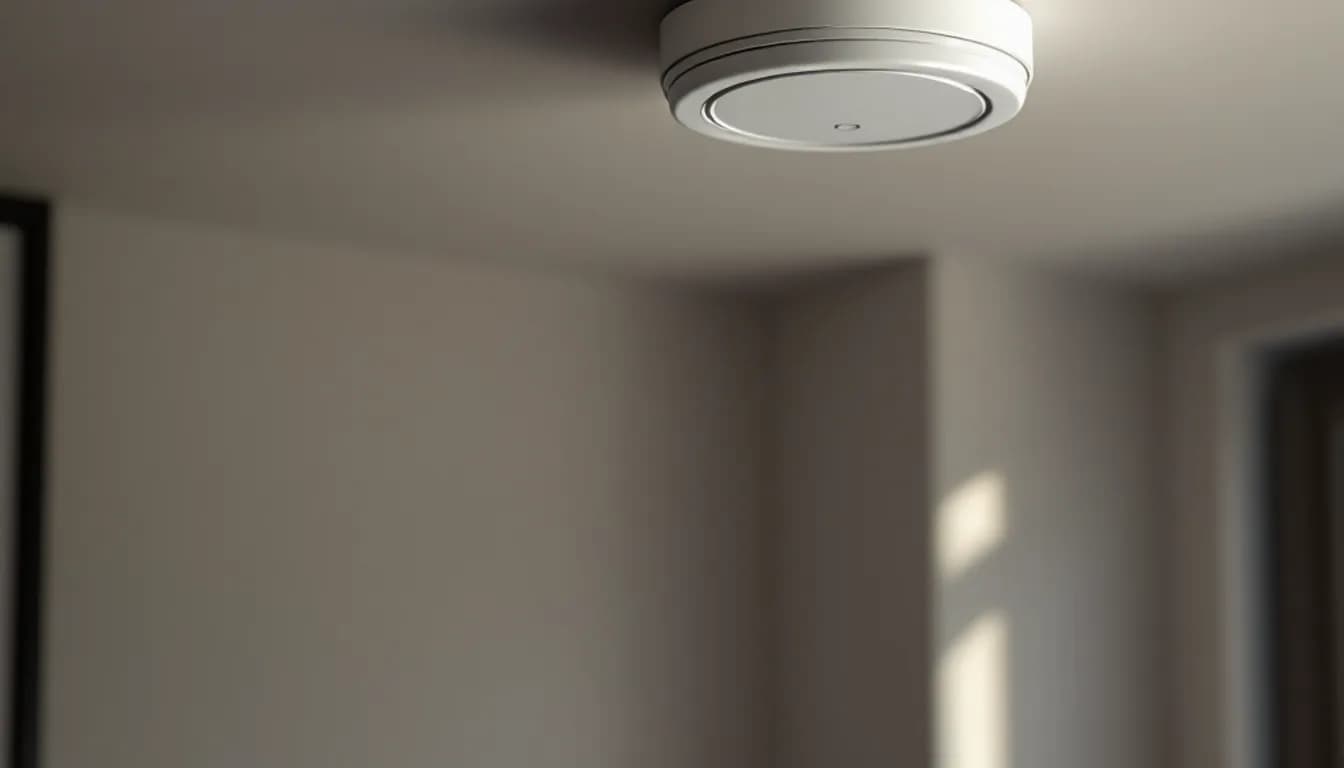
The short version: if you live in England, the law says you need at least one smoke alarm on every storey of your home that has a room used as living accommodation, plus a carbon monoxide alarm in any room with a fixed combustion appliance like a boiler or wood burner (gas cookers are exempt). Landlords have carried that duty since 2015, and the rules were tightened again on 1 October 2022. Homeowners are covered by separate building rules when they build, extend or rewire. This is the part of home safety people put off, right up until a chip pan reminds them why it matters.
I'm Ali, and I look after compliance here as well as running rental property of my own, so I've seen both sides of this. Below is the plain-English version of what the smoke alarm regulations in the UK actually require, where alarms have to go, and why mains-wired interlinked units are worth the extra fuss.
What do the smoke alarm regulations UK homes must follow actually say?
There are really two rulebooks, and people mix them up constantly.
The first is The Smoke and Carbon Monoxide Alarm (England) Regulations 2015, which applies to rented homes. It was strengthened by The Smoke and Carbon Monoxide Alarm (Amendment) Regulations 2022, which came into force on 1 October 2022. That amendment extended the duties to social housing and added a big one: if a tenant reports an alarm as faulty and it's found not to be working, the landlord has to repair or replace it.
The second is Building Regulations, specifically Approved Document B. This is what kicks in for everyone, owner-occupiers included, when you build a new home or do notable work such as an extension, loft conversion or a full or partial rewire. That's where the recognised standard BS 5839-6 comes in, and it usually means mains-wired, interlinked alarms rather than the battery units you buy in a supermarket.
So an existing owner-occupied home isn't forced by law to retrofit anything today. But the moment work is done, the newer wiring has to bring the alarm system up to standard. And frankly, "not legally required" is a poor reason to leave your family with a single ten-year-old battery alarm on the landing.
Where should smoke alarms be placed?
Position matters as much as having them. An alarm in the wrong spot either misses smoke or nags you every time you make toast.
The headline rule from the regulations is one smoke alarm per storey with living space. In practice, and following Aico's positioning guidance, that means:
- Fit smoke alarms on hallways and landings, ceiling-mounted and as central as possible.
- Keep them at least 300mm away from walls, light fittings and anything that blocks airflow.
- Add smoke alarms in rooms where fires often start, like a living room with a real fire or a bedroom with lots of chargers on the go.
- Avoid bathrooms and kitchens for standard smoke alarms, because steam and cooking fumes cause endless false alarms.
For a longer explainer on how faults show up before a fire does, our piece on what a burning smell from a socket means is worth a read alongside this.
Do you need a heat alarm in the kitchen?
Yes, and this is the bit people skip. A smoke alarm in a kitchen will scream at burnt toast, so you fit a heat alarm instead. It triggers on a sharp rise in temperature, around 58°C, rather than on smoke, which is why London Fire Brigade recommends one heat alarm in the kitchen and smoke alarms in most other rooms. Mount it on the ceiling, again 300mm off the walls, and not directly over the hob.
Hardwired vs battery smoke alarms: which do you need?
People assume battery alarms are banned. They aren't, for existing rented and owner-occupied homes. But there's a clear pecking order.
- Standalone battery alarms. Cheap, DIY, and fine as a bare minimum in an existing home. The weakness is obvious: batteries die, and people pull them out when they beep at 3am.
- Sealed ten-year battery alarms. Better. The battery can't be removed and lasts the life of the unit. Every individual alarm you buy should carry the BS EN 14604 mark, and heat alarms should meet the relevant British Standard too.
- Mains-wired alarms (Grade D). Hardwired into your electrics with a battery backup for power cuts. This is what BS 5839-6 expects for new builds and major work, typically Grade D1 with a sealed backup battery.
If you're already having electrical work done, wiring in proper alarms is the sensible moment to do it. We often pair it with upgrading the consumer unit so the alarm circuit sits on a modern, properly protected board. All of this is installed and certified to BS 7671 by our NICEIC registered electricians, and you can see the detail on our smoke and heat alarm installation page.
Why interlinked smoke alarms are the real upgrade
Here's the scenario that keeps me up at night. A fire starts in a downstairs kitchen at night. A single alarm goes off in the hall. Nobody upstairs hears it over a closed bedroom door.
Interlinked smoke alarms fix exactly that. When one alarm senses smoke or heat, every alarm in the house sounds at once. So a kitchen fire wakes the people asleep two floors up, which is the whole point.
They can be linked by hardwiring or by a wireless radio signal between units, and both are accepted. New builds and homes undergoing major work should have an interlinked system under BS 5839-6, and it's the setup I'd fit in any home with children, elderly relatives or multiple floors, regulations or not. It costs more than a handful of standalone alarms, but it's the difference between one room being warned and the whole household being warned.
Landlords vs homeowners: who has to do what
The duties split cleanly, so let's be precise.
If you're a landlord in England, the current smoke and carbon monoxide alarm regulations require you to:
- Fit at least one smoke alarm on every storey with a room used as living accommodation.
- Fit a carbon monoxide alarm in any room with a fixed combustion appliance, such as a gas boiler, oil boiler or solid-fuel stove (a gas cooker doesn't count).
- Make sure every alarm is in working order at the start of each new tenancy.
- Repair or replace any alarm a tenant reports as faulty, once it's found not to be working.
Miss it and your local authority can issue a remedial notice and, according to the government's landlord guidance, fine you up to £5,000 per breach. That sits alongside your other obligations, which we cover in our guide to landlord electrical safety certificate requirements. If you'd rather hand the whole lot to one team, our rental property electrical work handle alarms, EICRs and certification together.
If you're a homeowner, there's no law forcing you to retrofit alarms into an unchanged home. The regulations bite when you carry out building work. Do a loft conversion or a rewire and the electrician has to bring your alarm coverage up to the current standard. Outside of that, treat London Fire Brigade's advice as the benchmark rather than the legal floor.
Frequently asked questions
How many smoke alarms do I need in a house?
At least one smoke alarm on every storey that has living space, plus a heat alarm in the kitchen. Electrical Safety First puts it simply: a minimum of one smoke alarm per floor with a heat detector in the kitchen, and enough alarms to cover anywhere a fire could realistically start.
Are hardwired smoke alarms a legal requirement?
Not for an existing home you're simply living in. Hardwired, interlinked alarms to BS 5839-6 become the requirement for new builds and when you do major work such as an extension or a rewire under Building Regulations. In existing rented homes, the type of alarm isn't fixed by law, but it must be working.
Where do carbon monoxide alarms have to go?
In any room used as living accommodation that contains a fixed combustion appliance, like a boiler, wood burner or gas fire. Gas cookers are excluded from the requirement. Ideally fit the CO alarm at head height, roughly 1 to 3 metres from the appliance, following the manufacturer's instructions.
How often should I test and replace smoke alarms?
Test every alarm at least once a month, and ideally weekly, using the test button. Replace the whole unit around every ten years, or by the date printed on it, because the sensor degrades over time whether it's battery or mains powered.
What happens if a landlord ignores the rules?
The local authority can serve a remedial notice giving a deadline to put things right. Ignore that and you face a financial penalty of up to £5,000 per breach, applied per property and per rule broken, not once per landlord.
Alarms are one of the cheapest bits of safety kit you'll ever buy and the one you're most likely to neglect. Whether you need a single heat alarm fitted, a full interlinked mains-wired system, or a landlord property brought properly up to standard, our NICEIC registered electricians can specify and install it certified to BS 7671. Call Capital Electricians on 020 3653 2600 and we'll sort your smoke and heat alarm setup properly.
Related reading
Emergency Lighting Testing: What UK Businesses Must Do
The law says maintain it but never says how often. Here's where the monthly and annual tests actually come from, who carries the duty, and what inspectors check.
Read more
Bathroom Electrical Zones Explained: 0, 1, 2 and IP Ratings
Bathrooms are split into electrical zones by how close they are to water. Here is what goes where, which IP rating you need, and why sockets are banned.
Read more
Fixed Wire Testing: What UK Businesses Actually Have to Do
No law sets a fixed testing interval for business premises. Here is what the Electricity at Work Regulations really require and how to build a defensible schedule.
Read more