
The Electrical Checklist for Buying a House in London
A standard survey won't test the wiring. Here's the electrical checklist to run before buying a house in London, the red flags in older homes, and why an EICR pays for itself.

By Ali Elm
Managing Director•22 July 2026
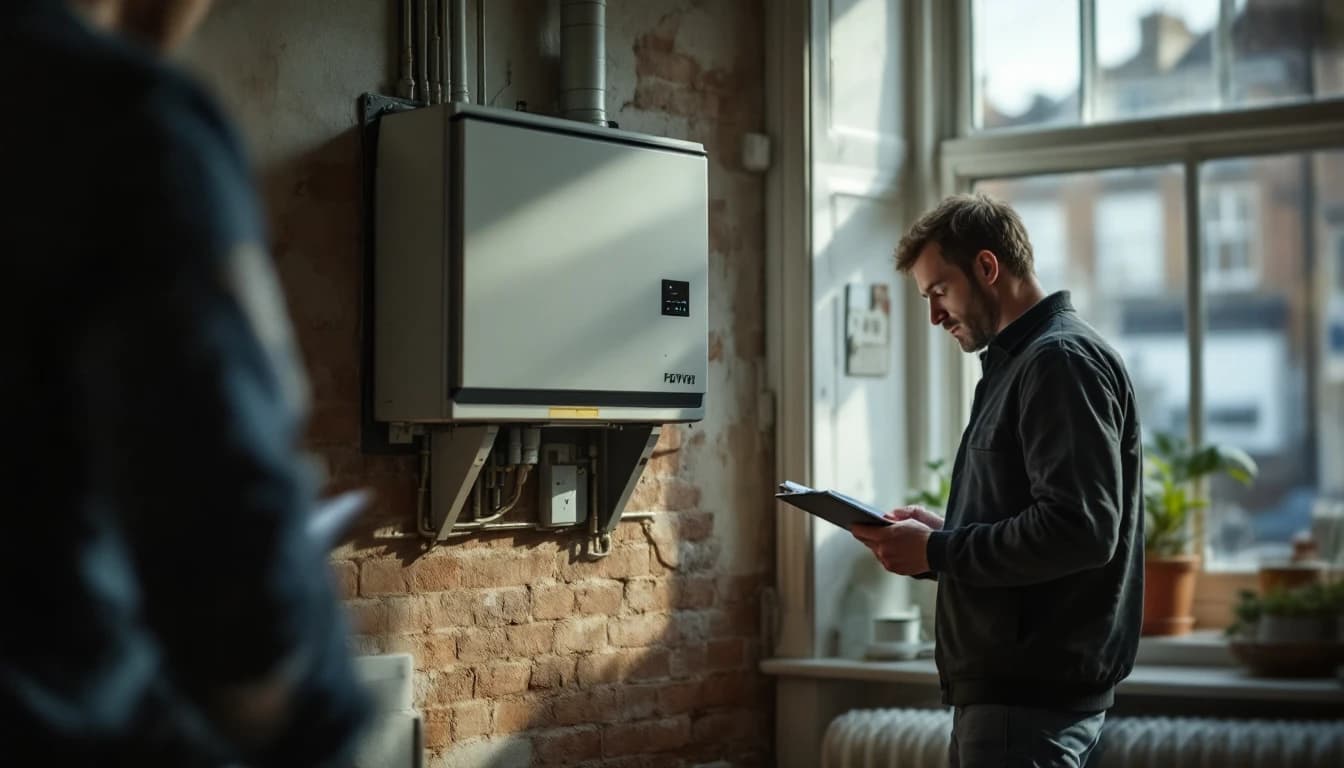
Buying a house in London and worried about the wiring? Start here. A standard homebuyer survey will not test the electrics. The surveyor takes a visual look, notes anything obvious, then writes "get this checked by a qualified electrician" and moves on. To actually know what you are buying, get an EICR done before you exchange.
That gap catches people out every week. So here is the electrical checklist we would run through ourselves before buying a house in London: what your survey misses, the red flags hiding in older housing stock, and how a proper inspection can save you thousands at the negotiating table.
What a homebuyer survey does not check about the electrics
A RICS Level 2 or Level 3 survey is a visual, non-invasive inspection. The surveyor looks. They do not test. No floorboards get lifted, the consumer unit stays shut, and no meter goes anywhere near a live circuit.
So a surveyor can flag a tired-looking fuse box or a scorched socket, but they cannot tell you whether the cable behind the plaster is safe. Electrical Safety First is blunt about this: electrical checks are not included in the standard home survey, and buyers should not rely on it for electrical safety. Their advice is to look for a recent report and, if there isn't one, arrange your own. You can read the charity's own guidance for home buyers for the full version.
What you usually get on the survey instead is a line like "the electrical installation appears dated, we recommend a full test by a registered electrician." Useful as a warning. Useless as an answer.
Should you get an electrical inspection before buying?
Short answer: yes, especially on anything built or last wired before the 1980s. An electrical inspection, properly called an EICR, is the only way to know the real condition of a property's wiring before you sign.
What is an EICR?
An Electrical Installation Condition Report is a full test of the fixed wiring by a registered electrician. Circuits are measured, the consumer unit is opened up, and every fault gets graded and written down. It turns "the electrics look old" into a page-by-page account of what is safe, what needs attention, and what is dangerous right now.
It is not a legal requirement to have one when buying your own home. It is simply the difference between guessing and knowing. As a rough guide, an EICR on a London flat or small terrace tends to run into the low hundreds of pounds, more for a larger property with lots of circuits. Every home is different, so get a fixed quote for the exact address rather than a headline figure. You can see how we handle these on our EICR and electrical certificates service.
Electrical red flags in older London houses
London runs old. Victorian terraces, Edwardian semis, 1930s suburban homes, all lovely to live in, plenty still carrying wiring that belongs in a museum. Here are the things that should make you reach for the phone.
- Rubber or lead-sheathed cabling: roughly 1910s to 1960s vintage. The rubber insulation goes brittle and crumbles, and lead sheathing hides the same ageing cable underneath. If you spot black rubber cable or dull grey lead-covered runs, budget for a full rewire.
- Cloth-covered flex: woven fabric flex on old pendant lights, immersion heaters or wall fittings. Same era, same crumbling problem.
- Round-pin sockets: the older sockets with round holes rather than three rectangular pins. A dead giveaway that the circuit has not been touched in decades.
- An old rewireable fuse box: a wooden or Bakelite board with ceramic holders and bits of fuse wire. It gives basic overload protection and nothing else, which is where a modern replacement board comes in.
- No RCD protection: if the consumer unit has no test button, there is probably no residual current device cutting the power fast enough to stop a shock or a fire.
Any one of these on its own is worth a proper look. Together they usually point one way. Our guide on whether your fuse board is safe breaks down the consumer unit in more detail, and the signs a house needs rewiring covers the cable itself. As a benchmark, Electrical Safety First suggests that wiring more than 50 years old should be checked by a professional before you rely on it.
Your walk-round electrical checklist for a viewing
You will not get a full test at a viewing, and you should not pretend to. But five quiet minutes with your eyes open tells you whether to bother with an offer at all. Run through this on the second viewing, phone torch handy.
- Find the consumer unit, usually by the front door, under the stairs, or in a hallway cupboard. Look for a Test or T button. No button, likely no RCD.
- Check the fuse box type. Modern plastic or metal unit with rows of switches is reassuring. Ceramic fuses and fuse wire are not.
- Look at the sockets. Loose ones hanging out of the skirting, cracked faceplates, or burn marks and scorching around the pins are a clear warning sign.
- Count sockets per room. One or two per room usually means an old circuit and a house that runs on extension leads.
- Check light fittings and switches for discolouration, curled labels or scorch marks, and listen for any crackling when you flick a switch.
- Sniff near the fuse box and any warm socket. Hot plastic or a fishy, burning smell is never normal.
- Ask the agent two questions: when was it last rewired, and are there any electrical certificates? Vague answers tell you plenty.
None of this replaces a test. It just tells you whether the wiring is a footnote or the whole story before you spend money on a survey.
Period conversions and flats with shared supplies
London has a housing type that trips buyers up more than any other: the big Victorian or Edwardian house carved into flats. Half of it might have been rewired in a 1990s conversion, half left as it was. You can end up with two eras of wiring feeding one flat.
Then there is the shared supply. Communal landing and stair lighting, an entry system, sometimes a shared meter arrangement, all often sitting on the freeholder's or management company's electrics rather than yours. A dangerous communal board is not technically your circuit, but it is still above your front door. If you are buying a flat, ask who maintains the communal electrics and whether there is a recent inspection for the shared areas, not just your unit.
Buying to let changes the picture completely. Once you rent a property out in England, the law says you must have the electrics inspected and tested at least every five years by a qualified person, set out in the government's guide for landlords on electrical safety standards. So an old installation is not just a safety worry, it is a bill you are legally committed to from day one.
How an EICR before exchange gives you leverage
This is the part buyers sleep on. An EICR grades every fault, and those grades are your bargaining chips. Get the report done before you exchange and any problem is the seller's to fix or discount. Get it done after, and every fault is yours.
The codes are simple once you know them:
- C1: danger present, a real risk of injury right now. Needs sorting immediately.
- C2: potentially dangerous. Not shocking anyone this second, but it will if left.
- FI: further investigation required. Something needs opening up before it can be judged.
- C3: improvement recommended. Not a failure, just below the current standard.
Any C1, C2 or FI makes the report "unsatisfactory." That is your opening to ask the seller to put it right or knock the repair cost off the price. A rewire or a new consumer unit runs into the hundreds or low thousands, so this is not loose change you are haggling over.
While you are at it, check that past work was actually certified. Replacing a fuse box, or any electrics near a bath or shower, is notifiable work under the building regulations. The government's own building regulations approval guidance warns that without approval "you will not have the certificates of compliance you may need when you want to sell your home." Missing paperwork is both a safety question and a resale headache waiting for you. The standard behind all of this is Approved Document P, which covers electrical safety in dwellings.
If the report does turn up a fault, the job is finding the root cause rather than patching the symptom, which is exactly what our electrical fault diagnosis work is for. And if you ever end up on the selling side of this, our guide on whether you need an EICR to sell your house covers that angle too.
Frequently asked questions
Does a house survey include an electrical check?
No. A standard homebuyer survey is a visual inspection only. The surveyor may note that the electrics look dated and recommend a specialist test, but they do not open the consumer unit or test any circuits. For that you need an EICR from a registered electrician.
Should I get an electrical inspection before buying a house?
On any older property, yes. An EICR is the only way to know the true condition of the wiring before you commit, and it flags anything dangerous while you still have room to renegotiate. Electrical Safety First recommends buyers arrange one if there is no recent report on file.
How much does an EICR cost when buying a house?
As a rough guide it tends to be in the low hundreds of pounds for a typical London flat or small house, and more for larger properties with lots of circuits. Price depends on the size and layout, so ask for a fixed quote for the specific address rather than working off an average.
Is an EICR a legal requirement when buying a house?
Not for buying your own home to live in. It becomes a legal duty once you let the property out, where the electrics must be tested at least every five years by a qualified person. Either way, having one before you exchange is the sensible move.
Do old London houses always need rewiring?
Not always. Plenty of Victorian and Edwardian homes were partly or fully rewired years ago and test out fine. The trigger is the condition of the cable and the fuse board, not the age of the bricks. Rubber or lead-sheathed cable and a rewireable fuse box usually do point towards a rewire, though.
Can I use an electrical report to negotiate the house price?
Yes, and it is one of the better reasons to get one early. An unsatisfactory EICR gives you a documented list of faults you can ask the seller to fix, or use to reduce the offer by the cost of the repairs, as long as it is done before you exchange contracts.
Buying somewhere in London and want to know exactly what the wiring is doing before you commit? Book our EICR inspection before you exchange, or call us on 020 3653 2600 for a straight answer and a fixed quote.
Related reading

Extension Lead Safety: 13 Amps, Daisy Chaining and Heaters
An extension lead shares one socket's 13 amps between everything plugged into it. Here's the simple maths, why daisy chaining causes fires, and when you need more sockets instead.
Read moreBS 7671 Amendment 3 and the 19th Edition: What Changed
Amendment 3 to BS 7671 took effect on 31 July 2024, Amendment 4 becomes the sole standard on 15 October 2026, and the 19th Edition has no announced date. Here's what any of it means for your home or rental.
Read more
Smoke Alarm Beeping? What the Chirp Means and How to Stop It
A single chirp every 30 to 60 seconds means a low battery or an alarm at the end of its life. Here's how to find the culprit, even on a mains-wired interlinked system.
Read more