
Do You Need Planning Permission for an EV Charger?
Most home EV chargers are permitted development, so no planning permission is needed. But London listed buildings, conservation areas and flats are the catch.

By Yousif Al-Imari
Senior Engineer•22 July 2026
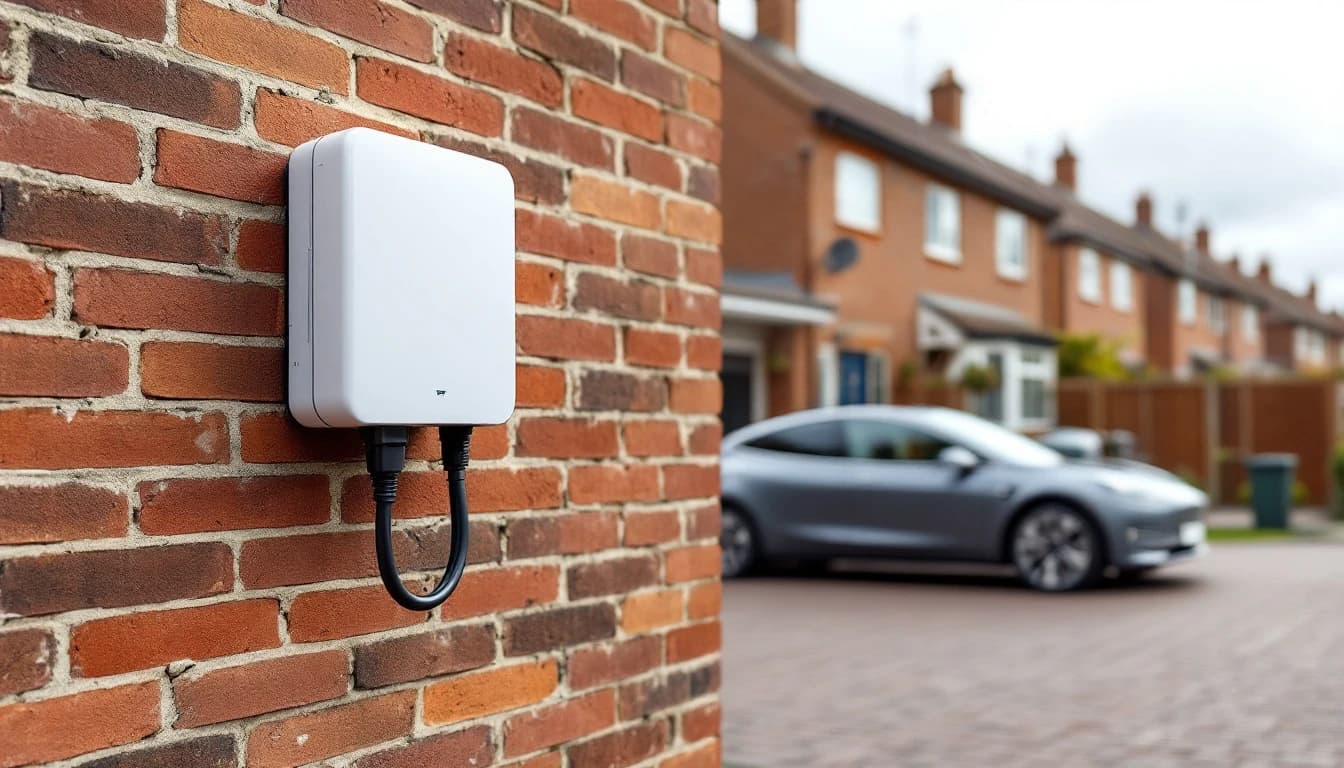
Short answer: for most London homes, no. If you've got off-street parking and you're fitting a standard wall unit, an EV charger normally counts as permitted development, so you won't need planning permission. The install still has to meet building regulations, though, and that part isn't a DIY job.
So there are really two questions here, and people mix them up. One is planning permission (can I put the thing on my property?). The other is building regs (is the electrical work safe and certified?). We'll take them one at a time, and we'll be honest about the London catches, because there are a few.
Do you need planning permission for an EV charger?
For a typical house with a driveway, no. Fitting a home chargepoint sits under permitted development rights, which means you can crack on without a planning application, as long as you stay inside the limits.
According to the Planning Portal's guidance on EV charging, your installation stays permitted development when it ticks these boxes:
- Unit size: the charger and its casing don't exceed 0.2 cubic metres. Every domestic wall box on the market is well under this.
- Upstand height: if it sits on a ground post rather than a wall, that post is no higher than 1.6 metres within your property's boundary.
- One per space: you don't fit more than one charge point or upstand per parking space.
- Not a heritage unit: a wall-mounted charger isn't on a listed building or within a scheduled monument.
- Off-street parking: you're fitting it within the curtilage of your home, next to your own parking.
Nearly every standard home install clears all of that without breaking a sweat. If you want the full picture of what the job actually involves before you book anyone, we've written a plain rundown of what you need to install an EV charger at home.
When you DO need planning permission in London
This is where London is different from a new-build estate in the suburbs. A big chunk of the capital's housing is period stock, and a lot of it carries extra rules. Here's where permitted development stops applying.
Listed buildings
If your home is listed, the easy route is off the table. A wall unit on a listed building is specifically excluded from permitted development, and you'll usually need both planning permission and listed building consent before anything gets drilled into the wall. That's true even for a small, discreet box round the side. Talk to your borough's conservation officer first, because unauthorised work on a listed building is a criminal offence, not just a paperwork slip.
Conservation areas
Conservation areas are everywhere in London, from Georgian terraces in Islington to Victorian streets in Wandsworth. A tidy wall box can often still go up in a conservation area, but the Planning Portal warns that permitted development rights "may be removed through an article 4 directive." Some councils have exactly that in place. So the honest answer is: check with your local planning team before you assume you're covered, especially if the charger would sit on a front wall facing the street.
Flats and shared parking
Permitted development rights are written around a house and its own parking. If you're in a flat, the wall and the parking usually aren't yours to alter alone. You'll need the freeholder or managing agent to sign off, and the electrical supply route from the communal board to your bay has to be worked out. It's doable, but it's a different conversation.
No driveway, on-street only
If you park on the street with no off-street space, the permitted development route for a fixed home charger doesn't apply, and trailing a cable across a public pavement is a trip hazard your council won't thank you for. Some boroughs run cross-pavement channel schemes or lamp-post charging trials, so that's worth a call to the local authority rather than a homemade fix.
EV charger building regulations: Part P and Part S
Even when you don't need planning permission, the electrical work is covered by the building regulations. This is the part people underestimate. A charger draws a serious, sustained load, often 7kW pulling around 32 amps for hours, so it isn't a plug-in gadget. It needs its own dedicated circuit, correct protection, and sign-off.
What is Part P?
Part P is the section of the building regulations covering electrical safety in dwellings. Fitting a new EV charger means running a new circuit, and that's notifiable work. The government's own list of jobs that need building regulations approval includes replacing fuse boxes and connected electrics, which is exactly the kind of work a charger install can trigger. The Approved Document P guidance is clear that whoever does the work must be competent, and that notifiable work has to be certified, either by a registered competent person who self-certifies or through a building control body.
In practice that means a registered electrician does the job, tests it, and issues you a certificate that gets notified to building control for you. You don't file anything yourself. We break down how this fits with your wider setup in our guide to Part P building regulations. If your existing board is already full or old, the charger circuit is often the moment upgrading the board makes sense too.
What about Part S?
Part S is the newer one, and it's often misquoted. It sets EV chargepoint requirements for buildings, and per the Approved Document S guidance it took effect on 15 June 2022. Here's the bit competitors gloss over: Part S applies to new residential buildings and buildings undergoing major renovation, not to a homeowner bolting a charger onto an existing house. So if you're retrofitting, Part S is why new builds now come with a charge point already, but the rules that actually bite on your job are Part P and the wiring standard, BS 7671.
Is installing an EV charger notifiable work?
Yes. Adding a new dedicated circuit for a charger is notifiable under Part P, which is why it has to be certified rather than done on a weekend with a socket kit. A proper installer also notifies your local electricity network operator (the DNO) where the connection needs it and handles that paperwork. The certificate matters later too, for your home insurance and when you sell.
Flats, renters and the grant that actually helps
If you rent, or you own a flat, there's real money on the table that most house-with-a-driveway articles skip over. The EV chargepoint grant for renters and flat owners gives you 75% off the cost of buying and installing a socket, up to a maximum of £500.
The catch is that you still need designated, private off-street parking, and you need to own an eligible vehicle. Landlords have their own separate grant route for kitting out rental properties, which ties into wider landlord electrical work. If you want to see how the grants stack against the real install price, we've put the numbers together in our guide to EV charger installation cost and grants.
How to get an EV charger fitted the right way
Rushing this is how people end up with a charger they can't legally use or a nasty surprise at resale. Work through it in order.
- Check your property's status. Listed? In a conservation area? A flat? If yes to any of those, contact your borough's planning team before you book anything.
- Check your parking. A fixed home charger needs off-street parking. On-street means a different route through the council.
- Get a real survey. A good installer checks your consumer unit's spare capacity, your main fuse rating, the cable run, and where the unit should sit for a clean, safe install.
- Use a registered electrician. The work must be certified to Part P and installed to BS 7671. That's the difference between a certificate and a fire risk.
- Apply for any grant first. If you're a flat owner or renter, sort the grant eligibility before the install, not after.
- Keep the paperwork. File your electrical certificate. You'll want it for insurance and when you sell the house.
Not sure which unit to buy before any of that? Our roundup of the best home EV chargers in the UK covers the tethered versus untethered question and which brands are worth the money.
Frequently asked questions
Do I need planning permission for an EV charger if I have a driveway?
Usually not. A standard wall unit on a house with off-street parking is permitted development, as long as the charger is under 0.2 cubic metres and your home isn't listed. Building regulations still apply to the electrical work.
Can I install an EV charger on a listed building?
Not under permitted development. A wall-mounted charger on a listed building is excluded, so you'll typically need planning permission and listed building consent first. Speak to your council's conservation officer before any work starts.
Do I need planning permission for an EV charger in a conservation area?
Often you're still covered, but not always. Councils can remove permitted development rights in a conservation area through an article 4 direction, so check with your local planning team, especially for a charger on a wall facing the street.
Is installing an EV charger notifiable under building regulations?
Yes. A new charger needs its own circuit, and that's notifiable work under Part P. A registered electrician certifies it and notifies building control on your behalf, so you don't file anything yourself.
Can I fit my own EV charger to save money?
You shouldn't. The install involves a new high-load circuit that's notifiable under Part P and must meet BS 7671. Uncertified work can void your insurance, fail a resale survey, and put your home at risk. This is one to leave to a registered installer.
Do I need permission to install a charger at a flat?
Usually yes, from the freeholder or managing agent, because the wall and parking are shared. You'll also need private off-street parking to qualify for the flat owner and renter grant.
Based anywhere in London and want an EV charger fitted properly, certified and without the guesswork? See our EV charger installation service or call us on 020 3653 2600 for a straight answer and a fixed quote.
Related reading
The Best Home EV Chargers in the UK for 2026 (7 Units Compared)
The best home EV charger for 2026, ranked by what each one is genuinely best at, from smart tariff units to solar diversion, plus how to pick the right one.
Read more
EV Charger Installation Cost in London (Plus the £500 Grant)
What a home EV charger costs to install in London, the £500 government grant for renters and flat owners, and what the job actually involves.
Read more
What You Need to Install an EV Charger at Home in London
Off-street parking, board capacity, open-PEN earthing, a DNO notification and a registered installer: what a London home EV charger really needs.
Read more