
The Best Home EV Chargers in the UK for 2026 (7 Units Compared)
The best home EV charger for 2026, ranked by what each one is genuinely best at, from smart tariff units to solar diversion, plus how to pick the right one.

By Yousif Al-Imari
Senior Engineer•20 June 2026
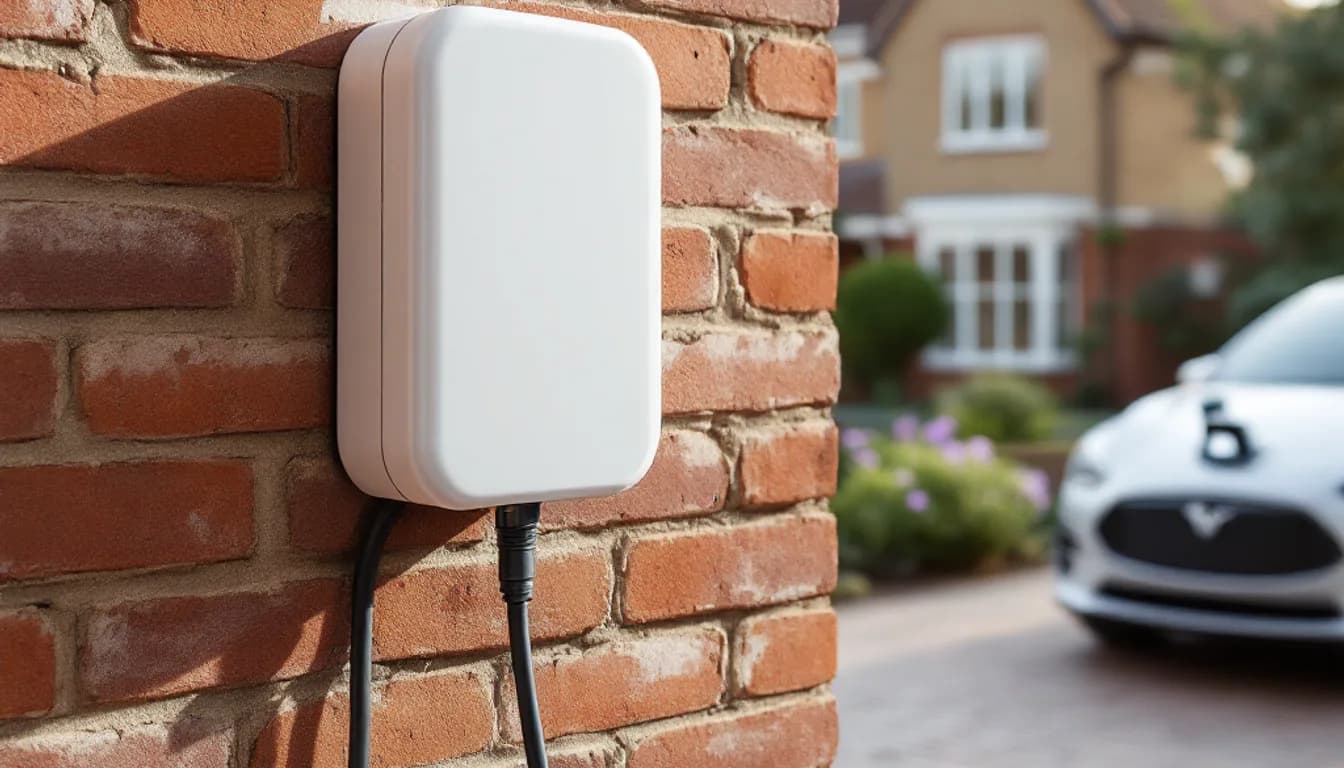
The best home EV charger isn't the one with the flashiest app. It's the one that matches your tariff, your roof, and the way you actually charge. I fit these units across London every week, and the same truth keeps proving itself: two identical driveways can need two completely different chargers. This guide ranks the strongest 7kW home units on sale in the UK for 2026, what each one is genuinely best at, and how to pick without overpaying for features you'll never touch.
I'm Yousif, and I handle domestic and commercial installs at Capital Electricians. Everything below is drawn from the manufacturers' own specifications and from putting these boxes on real walls. Whatever you choose, the fitting itself has to be done properly, which is why our EV charger installation service covers the survey, the dedicated circuit and the certification, not just bolting a unit to the brick.
How we picked, and what actually matters
Every charger here is a smart unit that meets the current UK requirements for a home chargepoint. Beyond that baseline, four things separate a good buy from a regret.
- Tethered or untethered. Tethered means the cable is fixed to the box, so you just grab and plug in. Untethered gives you a socket and you supply your own cable, which is tidier and future-proofs you for a different connector later.
- Smart tariff control. The real savings come from charging on a cheap overnight rate. The best units talk directly to tariffs like Intelligent Octopus Go and schedule themselves.
- Solar compatibility. If you have panels, or plan to, a charger that diverts surplus solar into the car turns spare daytime generation into free miles.
- Load balancing. A unit with a current sensor clamp watches the whole house and eases off charging when the kettle, oven and shower all fire at once. This can be the difference between a straightforward fit and needing the board upgraded first.
One thing worth settling early: for a typical home, 7kW is the sweet spot. A standard single-phase supply can't deliver 22kW anyway, and most cars charge overnight comfortably at 7kW. We cover the full picture in our guide on what you need to install an EV charger at home.
1. Ohme Home Pro
If your whole strategy is cheap overnight charging, this is the one I reach for first. The Ohme Home Pro pairs directly with your electricity tariff and schedules the car to charge during off-peak hours automatically, so you're not setting timers by hand every night. It's the tidiest answer for anyone on a smart EV tariff.
It comes tethered with a 5m Type 2 cable and, unusually, a colour screen on the front so you can see what's happening without opening the app. There's dynamic load balancing built in with a CT clamp, plus a Solar Boost mode in the app if you add panels later. According to Ohme's own product page, the unit outputs 7.4kW.
Best for: smart tariff users who want set-and-forget cheap charging.
- Automatic scheduling tied to your energy tariff
- Front colour screen plus app control
- Dynamic home load balancing as standard
2. myenergi Zappi
Got solar panels, or seriously thinking about them? The Zappi is the unit I recommend most often for solar homes. Its ECO and ECO+ modes let it charge the car using only the surplus energy your panels would otherwise export back to the grid, so on a bright day you're topping up on sunshine rather than paying for it.
Per myenergi's product page, it's available tethered or untethered, comes in 7kW single-phase or 22kW three-phase versions, and is designed and built in Grimsby. It includes a CT clamp for renewable monitoring and ships with surge protection and PEN fault technology as standard, which can simplify the install.
Best for: homes with solar PV, now or on the roadmap.
- Genuine solar surplus diversion (ECO and ECO+ modes)
- Tethered or untethered, black or white
- UK-made with built-in surge and PEN fault protection
3. Hypervolt Home 3 Pro
The Hypervolt splits the difference between the tariff-clever Ohme and the solar-clever Zappi, and it does it in a box that looks the part on a modern frontage. It runs Boost, Eco and Super Eco charging modes, so you can pull from the grid, blend grid and solar, or run on solar only.
The Hypervolt technical specification confirms 7.4kW output at 32A, tethered cable options at 5, 7.5 and 10 metres, WiFi and Bluetooth connectivity, and an IP66 weatherproof rating. It also integrates with smart tariffs and offers selectable LED brightness, which sounds trivial until you've got a bright unit facing a bedroom window.
Best for: buyers who want solar and tariff smarts plus a longer cable run.
- Three modes covering grid, solar-blend and solar-only
- Cable options up to 10m for awkward driveways
- WiFi and Bluetooth with over-the-air updates
4. Wallbox Pulsar
Short on wall space? The Pulsar is one of the most compact units I fit, which makes it a genuine favourite for tight porches, narrow side returns and shared parking. Don't let the size fool you: it's a properly capable smart charger.
The Wallbox Pulsar family page lists tethered and socket versions, app-based scheduling for off-peak charging, solar integration and Dynamic Load Management to avoid tripping your main fuse. Charging can reach up to 22kW on a suitable supply, though most homes will run it at 7.4kW.
Best for: tight spaces and buyers who want a small, discreet unit.
- Genuinely compact footprint
- Tethered or socket, Type 1 and Type 2 compatible
- Dynamic Load Management and solar support
5. Andersen A3
Some clients care as much about how the box looks as how it charges, and that's a fair ask when it's mounted on the front of the house for the next decade. The Andersen A3 hides its cable completely inside the unit when you're not using it, so there's no coiled lead on show.
According to the Andersen A3 page, it carries a 5.5m hidden tethered cable, charges at 7kW on single-phase supplies, and can be finished in 13 standard colours plus premium wood and special-edition options. You control it through the Andersen app, it supports solar, and it's backed by a 7-year warranty. It sits at the premium end, and you're paying for the design.
Best for: design-led homes where kerb appeal matters.
- Fully concealed cable, no lead on display
- 13 standard colours and premium finishes
- 7-year warranty with app and solar support
6. Easee One
At 1.5kg, the Easee One is the lightest and one of the smallest units on this list, and it's clever with it. You can set it as tethered or untethered from the app, lock the cable in place if you want, and pick from five colours to match the wall.
The Easee One product page confirms up to 7.4kW single-phase charging, load balancing across up to three units on the same fuse, and built-in open PEN protection so no separate earth rod is needed. Add the Equalizer accessory and it can balance against your whole home and work with solar. That multi-unit balancing makes it a smart pick for two-EV households.
Best for: compact installs and homes running more than one charger.
- Very light and compact, five colour options
- Tethered or untethered, switchable in the app
- Balances up to three units on one fuse; Equalizer adds solar
7. Tesla Wall Connector
Own a Tesla? This is the obvious match, but it's worth knowing it isn't Tesla-only. The Wall Connector uses a Type 2 connector and, per Tesla's UK support pages, works with non-Tesla electric vehicles too.
It connects to WiFi for over-the-air updates and management through the Tesla app, and it can power-share across multiple units on one circuit, distributing the available supply between cars automatically. That makes it a tidy choice if you're planning two or more chargers on a shared board. Scheduling and control sit inside the Tesla app rather than a standalone one.
Best for: Tesla owners and multi-charger setups.
- Works with Tesla and non-Tesla EVs
- Automatic power sharing across multiple units
- WiFi with Tesla app control and updates
How to pick the right charger for your home
Forget the marketing and answer these in order. It's the same sequence I run through on a survey.
- 7kW or 22kW? If you have a standard single-phase supply, which most UK homes do, 7kW is your ceiling and it's plenty for overnight charging. 22kW needs a three-phase supply and rarely makes sense at home.
- Tethered or untethered? Pick tethered for daily grab-and-go convenience. Pick untethered if you want a cleaner wall, easier cable replacement, or flexibility for a future car.
- What's your tariff? On a smart EV tariff, prioritise a unit that schedules to it automatically, like the Ohme or Hypervolt.
- Solar now or later? Panels change the answer. The Zappi and Hypervolt are built around solar diversion.
- Is your board ready? An older consumer unit may need attention before any charger goes on. We flag that at survey stage.
Grants matter too. The EV chargepoint grant for renters and flat owners on GOV.UK gives eligible residents 75% off the cost of buying and installing a socket, up to £500, provided you have private off-street parking and the right permissions. Homeowners in houses aren't covered by that particular scheme, so check the criteria before you budget. We break down the numbers in our guide to EV charger installation costs and grants.
Frequently asked questions
Is 7kW enough to charge my EV at home?
For almost everyone, yes. A 7kW charger adds roughly enough range overnight to cover typical daily driving several times over. Unless you're doing very high mileage and turning the car around in a few hours, 7kW on a single-phase supply is the right call.
Tethered vs untethered: which should I choose?
Tethered is more convenient day to day because the cable's always attached. Untethered looks tidier, lets you swap the cable if it wears or you change cars, and suits households with different connector types. Neither charges faster; it's purely about convenience and flexibility.
Can I get a grant for a home EV charger?
If you rent or own a flat with private off-street parking, you may qualify for the GOV.UK chargepoint grant covering 75% of the cost up to £500. Standard homeowners in houses generally don't qualify under the current household scheme. Always confirm your eligibility before ordering.
Can I install an EV charger myself?
No. A home chargepoint draws heavy, sustained current and must go on a dedicated circuit. Electrical Safety First advises that a home charging point should be installed by a registered and competent electrician, and warns against charging from standard socket-outlets or extension leads. Our work is NICEIC registered, certified to BS 7671 and Part P compliant.
Which home charger is best for solar panels?
The myenergi Zappi is the standout for solar because its ECO modes divert surplus generation into the car. The Hypervolt Home 3 Pro is a strong alternative with its solar-only and solar-blend modes. Both let you charge on sunshine you'd otherwise export.
There's no single best charger, only the best charger for your driveway, your tariff and your supply. Get that match wrong and even a premium unit underdelivers. Get it right and the thing quietly pays for itself in cheap overnight and solar miles.
If you're in London and want a straight answer on which unit suits your home, we'll survey it properly and fit it to standard. Call Capital Electricians on 020 3653 2600 and we'll take it from there.
Related reading
Do You Need Planning Permission for an EV Charger?
Most home EV chargers are permitted development, so no planning permission is needed. But London listed buildings, conservation areas and flats are the catch.
Read more
EV Charger Installation Cost in London (Plus the £500 Grant)
What a home EV charger costs to install in London, the £500 government grant for renters and flat owners, and what the job actually involves.
Read more
What You Need to Install an EV Charger at Home in London
Off-street parking, board capacity, open-PEN earthing, a DNO notification and a registered installer: what a London home EV charger really needs.
Read more