
Can I Do My Own Electrical Work in the UK? Part P Explained
Swapping a like-for-like socket is legal DIY. New circuits, consumer units and bathroom wiring are notifiable under Part P and need a competent person to sign them off. Here's where the line sits.

By Ali Elm
Managing Director•22 July 2026
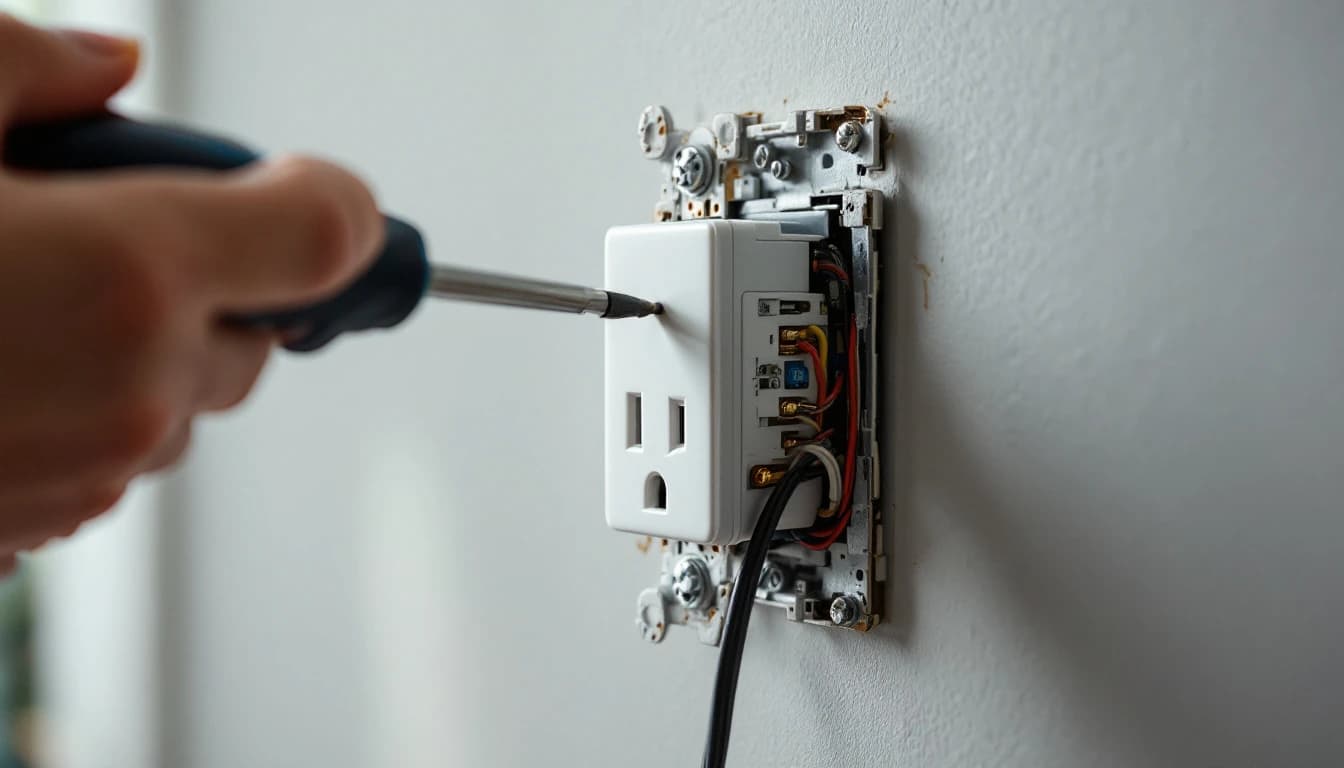
Short answer: yes, you can legally do some of your own electrical work in England. Swapping a like-for-like socket, switch or light fitting on an existing circuit is non-notifiable, and you're allowed to do it yourself. New circuits, consumer unit changes and anything in a bathroom are a different story.
Those bigger jobs are "notifiable" under Part P of the Building Regulations, so they have to be done or signed off by a competent person. Get that wrong and it can hold up a house sale or leave you with paperwork problems years down the line. Here's exactly where the line sits.
What is Part P, and what does "notifiable" mean?
Part P is the part of the Building Regulations that covers electrical safety in homes in England. It says electrical work in a dwelling must be designed and installed to protect people from fire and electric shock. The official guidance, Approved Document P on GOV.UK, has applied in England since 2013 and sets out when work has to be notified.
Notifiable simply means you have to tell building control before the work happens, or use an electrician who is registered to sign it off for you. As Electrical Safety First puts it, notifiable work must either be carried out by a registered electrician who issues a certificate, or reported to your Local Authority Building Control. Non-notifiable work carries no such requirement, though it still has to be safe.
So the real question isn't "am I allowed to touch it." It's "is this job notifiable or not." That's the split that decides everything.
Electrical work you can legally do yourself
Plenty of small jobs are non-notifiable in England. You can legally do these yourself, as long as the work is done properly and the wiring behind it is sound:
- Replacing a socket, switch or light fitting like-for-like on an existing circuit.
- Adding a socket, fused spur or lighting point to an existing circuit, provided it isn't in a special location (more on those below).
- Replacing a damaged length of cable on a single existing circuit.
Two honest cautions. First, non-notifiable does not mean "no rules." The work still has to meet BS 7671, the Wiring Regulations, so the cable size, protection and connections all have to be right. Second, isolate the circuit at the consumer unit and test that it's dead before you touch anything. If you're not confident doing that, a small job on your sockets and switches is cheap for us to handle and you get it tested at the same time.
Electrical work that's notifiable (must be done or signed off)
This is the group that trips people up. In England, the following work is notifiable and needs a competent person to certify it or building control to inspect it:
- Installing a brand new circuit. A new radial or ring, a cooker circuit, a garden supply, or a dedicated circuit for an EV charger all count.
- Replacing or upgrading the consumer unit. GOV.UK lists "replace fuse boxes and connected electrics" as work that needs approval, so a fuse board replacement is always notifiable.
- A full or partial rewire. New circuits and new wiring throughout means a house rewire is firmly in notifiable territory.
- New wiring or alterations inside a room with a bath or shower. GOV.UK specifically flags "change electrics near a bath or shower" as needing approval.
Those bathroom and consumer unit examples come straight from the government's own building regulations approval guidance, so there's no grey area on those two.
What about kitchens and outdoor sockets?
Here's the bit a lot of blogs get wrong. Before 2013, kitchens and outdoor work were on the notifiable list. The 2013 update to Part P narrowed things down, and a kitchen on its own is no longer treated as a special location in England. The current special locations are rooms with a bath or shower, plus swimming pools and saunas.
Don't take that as a green light, though. Most real outdoor jobs, like a garden socket, a supply to a shed, or an EV point, need a brand new circuit, and a new circuit is notifiable whatever room it feeds. Add the wet, exposed conditions outdoors and the RCD protection that goes with them, and this is rarely a sensible DIY job. If you want a socket outside, our team can run it as a proper notifiable circuit and certify it.
England vs Scotland and Wales
Part P is an England rule. If your property is elsewhere in the UK, the framework changes.
Scotland doesn't use Part P at all. It runs a building warrant system under the Building (Scotland) Regulations, and the Scottish building standards technical handbook requires electrical installations to follow BS 7671, with certain work needing a warrant before it starts. Wales has its own Building Regulations since powers were devolved, so if you're over the border, check the notification rules with your local authority. The BS 7671 wiring standard applies right across the UK regardless, so the safety bar for the actual wiring doesn't move.
The real sting: no certificate can block a house sale
This is where DIY electrical work comes back to bite people, sometimes years later. When you sell, the buyer's solicitor asks for the Building Regulations compliance paperwork for any notifiable work done to the property. No certificate, and the sale stalls.
Electrical Safety First is blunt about it: without the right certification, you may find it difficult to sell the property. In practice that means indemnity insurance, price retentions, or a scramble to get an electrician to inspect and certify work that's already buried in the walls. We cover this in more detail in our guide on whether you need an EICR to sell your house.
There's an insurance angle too. If an electrical fire ever traces back to unnotified, uncertified work, a home insurer can reasonably ask who did it and whether it met the regulations. That's an uncomfortable conversation to have after a claim. The cleanest fix is to get notifiable work certified at the time, which is exactly what our electrical certificate work is for.
How to get notifiable work signed off
If a job is notifiable, you have two routes. One is simple, one is a faff.
- Use an electrician registered with a competent person scheme. GOV.UK confirms you don't need to get approval yourself if you use someone registered under one. We're NICEIC registered, which means we can self-certify the work, notify building control on your behalf, and hand you the certificate. Nothing extra for you to arrange.
- Notify your local authority building control yourself, before you start. You pay their fee, they inspect the work as it progresses, and they issue the compliance certificate. It's slower and usually more expensive, and you're responsible for getting the installation tested to prove it's safe.
For most homeowners, route one is the obvious choice. You avoid the council fee, you avoid the inspection admin, and you end up with the same certificate at the end. If you're weighing up costs before you commit, our guide to Part P and the building regulations walks through what's involved on a typical job.
Frequently asked questions
Is DIY electrical work illegal in the UK?
Not for minor, non-notifiable jobs. Replacing a like-for-like socket or light fitting on an existing circuit is legal to do yourself. Notifiable work isn't illegal to attempt either, but it has to be notified to building control or certified by a competent person. Skip that step and you've breached the Building Regulations, and your council can require you to prove it's safe or put it right.
What electrical work needs a certificate?
Notifiable work: new circuits, consumer unit replacements, and new wiring in a room with a bath or shower. For that work you should receive an Electrical Installation Certificate plus a Building Regulations compliance certificate, either from a registered electrician or via building control.
Can I replace a socket or light switch myself?
Yes. A like-for-like swap on an existing circuit, outside a bathroom, is non-notifiable. Turn off and isolate the circuit at the consumer unit, check it's dead before you start, and make sure the new accessory is wired exactly as the old one. If anything looks scorched or the wiring is old, stop and get it looked at.
Do I need a certificate to sell my house?
For notifiable electrical work carried out since Part P came in, buyers' solicitors will expect to see the compliance certificate. Missing paperwork won't always sink a sale, but it commonly leads to delays, indemnity insurance, or a last-minute inspection to satisfy the buyer.
Can I fit my own outdoor socket or EV charger?
Usually not legally on your own. An outdoor socket normally needs a new circuit, which is notifiable, and an EV charger install has its own wiring and protection requirements on top. Both are best handled by a registered installer who can certify the work.
What happens if I do notifiable work without telling anyone?
The work stays uncertified, which is a problem when you sell or refinance. A council can ask you to prove the installation complies, and in some cases that means exposing wiring for inspection or paying for retrospective testing. It's far cheaper to notify it at the time.
Based anywhere in London and want a notifiable job done and signed off properly? See our consumer unit upgrades service or call us on 020 3653 2600 for a straight answer and a fixed quote.
Related reading

Extension Lead Safety: 13 Amps, Daisy Chaining and Heaters
An extension lead shares one socket's 13 amps between everything plugged into it. Here's the simple maths, why daisy chaining causes fires, and when you need more sockets instead.
Read moreBS 7671 Amendment 3 and the 19th Edition: What Changed
Amendment 3 to BS 7671 took effect on 31 July 2024, Amendment 4 becomes the sole standard on 15 October 2026, and the 19th Edition has no announced date. Here's what any of it means for your home or rental.
Read more
Smoke Alarm Beeping? What the Chirp Means and How to Stop It
A single chirp every 30 to 60 seconds means a low battery or an alarm at the end of its life. Here's how to find the culprit, even on a mains-wired interlinked system.
Read more