
HMO Electrical and Fire Alarm Requirements: A Landlord's Guide
What an HMO needs for electrical safety and fire alarms in England: the five-year EICR, interlinked alarm grades under LACORS, emergency lighting, and what a council inspector actually checks.

By Ali Elm
Managing Director•1 October 2026
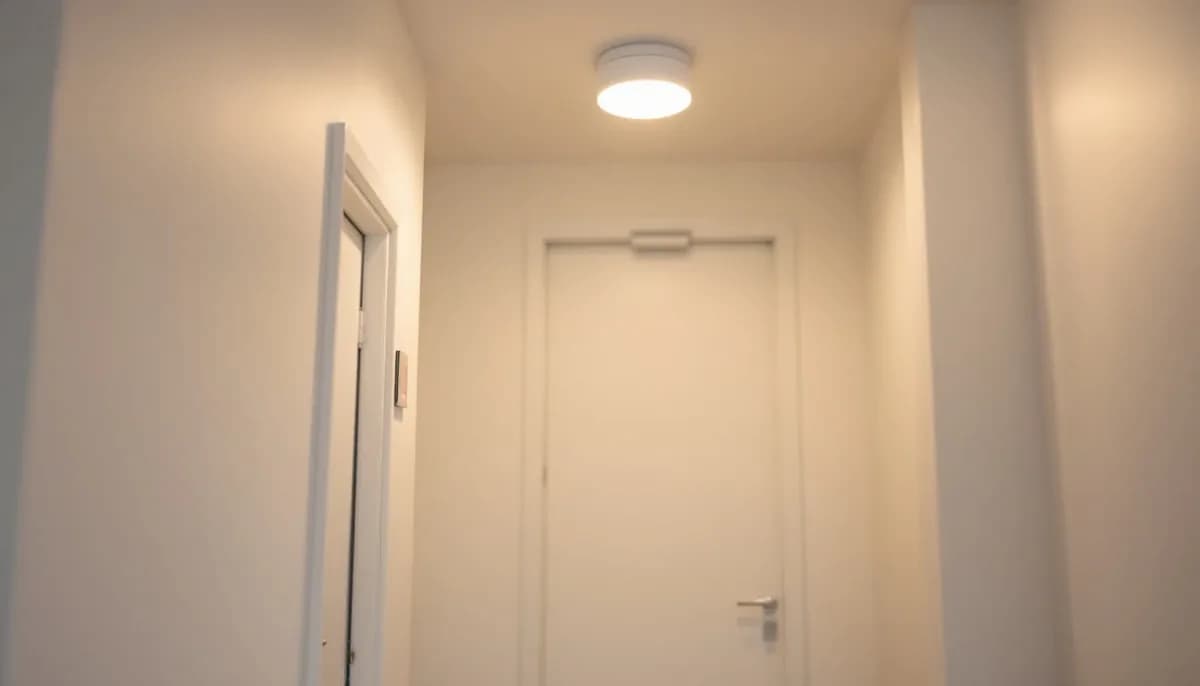
Every HMO in England must have its fixed electrical installation inspected and tested at least every five years, and it must have working smoke alarms on every storey, with the exact alarm grade and fire precautions set by your council's licensing conditions and the fire risk of the building. Smaller shared houses usually run interlinked mains alarms, while larger HMOs often need a full fire alarm panel. Your council and your fire risk assessment decide which side of that line you sit on.
We inspect and certificate a lot of London HMOs, and the pattern is always the same. The landlord knows an EICR is due. What catches them out is everything around it: the alarm grade the licence actually specifies, the emergency lighting on a gloomy stairwell, the logbook the inspector asks for that nobody has kept. This guide pulls the whole lot together, with the actual regulations named, so you can walk into your next inspection knowing what is coming.
First, does your property count as an HMO?
It does if it is, as the government's licensing guidance puts it, "rented out by at least 3 people who are not from 1 'household'", with tenants sharing a bathroom, toilet or kitchen. Three friends sharing a flat is an HMO. A couple and a lodger is an HMO.
Licensing then splits in two. A "large HMO", meaning one "rented to 5 or more people who form more than 1 household", needs a mandatory licence in England. Smaller HMOs can still need one if your borough runs an additional or selective licensing scheme, and in London many do. Licence conditions can require you to "install and maintain smoke alarms" and to "provide safety certificates for all electrical appliances when requested", so the licence document itself is part of your electrical and fire alarm compliance, not a separate matter.
If you are not sure whether your borough licenses your size of HMO, our post on London landlord licensing by borough maps it out. Get that bit wrong and the safety standards below are moot, because you should not be letting the property at all.
The electrical requirements: an EICR at least every five years
The Electrical Safety Standards in the Private Rented Sector (England) Regulations 2020 apply to HMOs just as they do to any private let. Under them, your installation must be "inspected and tested by a qualified person (a person competent to undertake the inspection and testing) at least every 5 years", and the report that comes out of it is the Electrical Installation Condition Report, the EICR.
Once you have the report, the paperwork duties are strict, and they are the bit councils actually check:
- Existing tenants: a copy within 28 days of the inspection.
- New tenants: a copy "before they occupy the premises".
- Prospective tenants: within 28 days of asking for it.
- The council: within 7 days of a request. One week. If your EICR lives in an email chain from 2021, that request stings.
If the report flags remedial or further investigative work, it must be done "within 28 days or any shorter period if specified as necessary in the report", and you then have another 28 days to send the tenant and the council written confirmation it is finished. C1 (danger present) and C2 (potentially dangerous) codes both have to be resolved. A C3 is advisory, though in an HMO with six tenants sharing one kitchen circuit, we would treat most C3s as worth fixing.
Breach the regulations and the council can impose "a financial penalty of up to £40,000", as the government guidance for landlords states as of October 2026. Five years is the legal maximum interval. Your licence can demand a shorter one, so read the conditions rather than assuming. For what the inspection itself involves and what it tends to cost, see our EICR cost guide for landlords and our EICR and electrical certificates service.
Smoke and heat alarms: the legal baseline
Separate from anything LACORS or your licence says, the Smoke and Carbon Monoxide Alarm (England) Regulations set a floor for every private rental. Landlords must fit "at least one smoke alarm ... on each storey of their homes where there is a room used as living accommodation", plus a carbon monoxide alarm in any living room "which contains a fixed combustion appliance (excluding gas cookers)". Alarms have to be in "proper working order on the day the tenancy begins", and repaired or replaced once you are told one is faulty. Ignore a remedial notice and the fine runs to £5,000 per breach, per the government's booklet for landlords.
The guidance confirms "the regulations apply to unlicensed HMOs". Licensed HMOs are covered through the Housing Act 2004 instead, which is why your licence conditions repeat and usually exceed these basics. Our post on smoke alarm regulations in the UK goes deeper on the general rules.
What LACORS asks for: alarm grades and categories
Here is where HMO fire alarm requirements get specific. Councils benchmark HMO fire precautions against the LACORS "Housing: Fire Safety" guidance, and it is worth saying plainly: it is guidance, not law. In practice it is the standard inspectors measure you against, so treat it as the rulebook unless your council has published its own.
The guidance, hosted by the Chartered Institute of Environmental Health, splits systems two ways. By grade: a Grade D system is "one or more mains-powered smoke (or heat) alarms each with integral battery standby supply" with "no control panel", while Grade A is "a system of electrically operated smoke and/or heat detectors which are linked to a control panel". By category: LD3 means detectors "in circulation spaces that form part of the escape routes", and LD2 extends coverage into rooms "that present a high fire risk to occupants".
What that means for real buildings:
- A typical shared house up to four storeys: Grade D with LD3 coverage "plus additional detection to the kitchen, lounge and any cellar containing a risk", all interlinked so one alarm triggers them all. The kitchen unit is a heat alarm, because a smoke alarm above a toaster will cry wolf weekly and tenants will disconnect it.
- Larger HMOs, bedsits and higher risk layouts: Grade A with LD2 coverage, a panel on the wall, sounders loud enough to hit 75dB at every bedhead, and often a mixed system where the communal panel works alongside Grade D alarms inside letting rooms.
- Interlinking is not optional in a Grade D system: "where more than one alarm is installed they must be interlinked". Battery-only units dotted around a house will fail an inspection.
The exact spec for your property depends on its size, layout and occupants, and on your council. Two identical looking houses in different boroughs can end up with different requirements. Our smoke and heat alarm installation service starts from the licence conditions, not a one-size package.
Emergency lighting and the escape route
Emergency lighting is the requirement landlords most often miss entirely. LACORS recommends it "for all HMOs of five or six storeys", and for shorter buildings "if the route is long or complex or where there is no effective borrowed light", with any system designed to BS 5266. Borrowed light is the honest test. Stand on your stairs at night with the lights off and the bedroom doors shut. If you cannot see the way down, neither can a tenant in smoke, and an inspector will clock that in seconds.
Once fitted, emergency lights need routine testing and a record of it, which our post on emergency lighting testing explains. The same logic applies to the escape route itself: thumb-turn locks on final exits, self-closing fire doors that actually close, nothing stored under the stairs. Fire doors deserve their own article; here, just know an inspector will swing every one of them.
The duties that never end: the 2006 Management Regulations
The Management of Houses in Multiple Occupation (England) Regulations 2006 sit underneath everything else. Regulation 4 requires the manager to keep the means of escape "free from obstruction" and "maintained in good order and repair", and to keep "any fire fighting equipment and fire alarms ... maintained in good working order", as the regulation itself states.
Maintained is the load-bearing word. An alarm system that was perfect on installation day fails this duty the month a detector dies and nobody notices. That is why the routine is: tenants or a managing agent testing alarms weekly, a competent engineer servicing the system periodically, and everything written in a logbook. The logbook is not bureaucracy for its own sake. It is your evidence, and it is the second thing an inspector asks for, right after the certificates.
What a council inspector actually looks at on the day
This is the part most guides skip. Having sat through plenty of these visits, here is the shape of one.
Paperwork first. The officer will want your EICR, confirmation of any remedial work, gas safety records if there is gas, and your alarm servicing and test log. They know exactly which documents the 2020 Regulations oblige you to produce within 7 days, so arriving with them ready sets the tone for the whole visit.
Then the walk-round, escape route in reverse. They will test whether the alarms sound throughout the house, look for the heat detector in the kitchen, check self-closers pull doors fully shut, glance up stairwells for emergency lighting, and open understairs cupboards looking for storage. They are scoring the property against the Housing Health and Safety Rating System, the council's risk assessment tool, and against the fire guidance their authority has adopted. Kingston, for example, states plainly that it "has adopted the LACORS housing fire safety guidance" and that licensable HMOs "are required to meet fire and amenities standards", per its HMO guidance. Every London borough has an equivalent page, and reading yours before the visit is the cheapest preparation there is.
One honest tip: tell your tenants the visit is happening. An inspector who hears "the alarm in the hall has been beeping for a month and nobody came" will not be sympathetic, and frankly should not be.
Frequently asked questions
Does every HMO need a fire alarm panel?
No. A smaller shared house will usually be fine with a Grade D system of interlinked mains alarms, which has no panel. Grade A panel systems are generally for larger HMOs, bedsits and buildings where the layout or number of storeys raises the risk. Your council's licensing conditions and fire risk assessment decide which applies.
How often does an HMO need an EICR?
At least every five years under the 2020 Regulations, and sooner if the report itself or your HMO licence specifies a shorter interval. Some councils set three years as a licence condition, so check the document rather than assuming five.
Are battery smoke alarms acceptable in an HMO?
Not as the main system. HMO fire alarm standards expect mains-powered alarms with battery backup, interlinked so they all sound together. Standalone battery units will not satisfy a licensing inspection, whatever the packaging says.
Does my HMO need emergency lighting?
It depends on the escape route. Taller HMOs of five or six storeys are expected to have it, and shorter buildings need it where the route is long, complex or has no borrowed light. A fire risk assessment answers it for your specific building, and your council will have a view.
Who enforces HMO electrical and fire alarm rules?
Your local council's private sector housing or housing enforcement team, using the 2020 electrical regulations, the Housing Act 2004, the 2006 Management Regulations and their own licensing conditions. The fire and rescue service can also enforce the Fire Safety Order in the communal parts of HMOs.
Can I do the fire alarm work myself?
Fitting interlinked mains alarms or a Grade A panel is fixed installation work, and in an HMO it has to satisfy the council at inspection. It is not a sensible DIY job. The commissioning paperwork matters as much as the hardware, and a certificated installation is what your licence conditions will ask to see.
Running an HMO anywhere in London and want the electrics and alarms sorted in one visit? See our landlord services or call us on 020 3653 2600. We will tell you exactly what your licence asks for and give you a fixed quote before any work starts.
Related reading
London Landlord Licensing by Borough: The Electrical Rules
Most London landlords now need a council licence as well as an EICR. Here's what 17 councils ask for on the electrics, borough by borough, checked in October 2026.
Read more
Landlord Electrical Safety Certificate: The 2026 Legal Requirements
What England's landlord electrical safety law requires in 2026: 5-year EICRs, the deadlines you must hit, and fines now up to £40,000.
Read more
Ceiling Fan Installation: Fixing, Wiring and Costs Explained
Swapping a pendant for a ceiling fan is a half day job when the fixing and wiring are right. Here's what a proper ceiling fan installation involves, and what it costs.
Read more