
Replace Storage Heaters: The Honest Guide for London Flats
Old storage heaters cold by teatime? A London electrician's honest guide to replacing them: high heat retention models, electric radiators, costs and the wiring nobody mentions.

By Mo Elm
Lead Engineer•30 September 2026
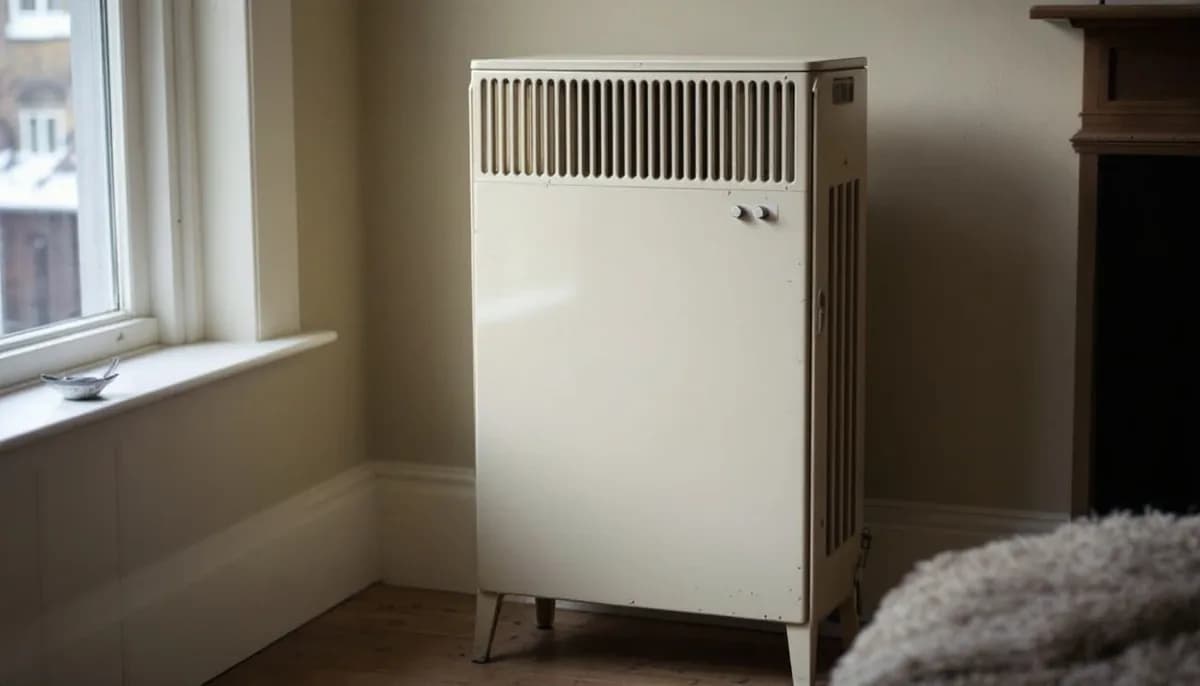
Yes, you can replace old storage heaters, and in most London flats the choice comes down to two options: modern high heat retention storage heaters that keep using your off-peak tariff, or electric radiators that heat on demand. The right answer depends on when you're home, which tariff you're on, and what your wiring can take.
We get this call most winters. Someone in a flat in Ealing or Wandsworth, heaters that feel warm enough at nine in the morning and stone cold by six, with a plug-in convector doing the evening shift at peak prices. It's frustrating and it costs real money. If that's your flat, here's the honest version of your options, including the wiring part that most guides skip.
How storage heaters and Economy 7 actually work
A storage heater is a box of dense bricks with electric elements running through them. Overnight, during the cheap off-peak hours, the elements heat the bricks. Through the day, that stored heat leaks out into the room. As Energy Saving Trust puts it, "they work by storing heat during off-peak hours and releasing it when needed".
Economy 7 is the tariff that makes the sums work. You get roughly seven hours of cheaper electricity overnight and a higher rate during the day. Your storage heaters and usually your immersion heater run on the cheap hours, and you try to keep daytime use low. The two dials on the heater matter more than most people realise. Input sets how much charge goes in overnight. Output sets how fast heat comes out during the day. Boost, if your model has one, heats at the full day rate, which is exactly what you were trying to avoid.
Behind the scenes, those heaters sit on dedicated off-peak circuits that are only live while the meter switches to the night rate. That detail matters a lot when you come to replace them, and we'll come back to it.
Why old storage heaters run out of heat by evening
The design has a built-in flaw: the bricks start losing heat the moment they've charged. Old heaters leak it through thin insulation all day, whether you want it or not, so by early evening there's little left. The output dial on a 1980s unit is just a flap over a vent, not a proper control. And the input dial asks you to guess tomorrow's weather the night before. Guess wrong and you're either roasting at midnight or cold at six.
Age makes it worse. After thirty or forty years the insulation degrades, elements run below spec, and the controls stiffen up. Nothing is broken, exactly. The heater is just doing badly what it was never very good at.
The 2018 rules that changed storage heaters for good
From 1 January 2018, ecodesign requirements for local space heaters set minimum efficiency and control standards for anything new sold in the UK. The regulation itself defines a storage heater as one "designed to store heat in an accumulating isolated core and to discharge it for several hours after the accumulation phase", and it's the reason the old basic manual models disappeared from sale.
What replaced them is the high heat retention storage heater, and it's a genuinely different machine. You may also hear people call the rules "Lot 20". That's the trade shorthand for this part of the ecodesign regulation.
Option one: high heat retention storage heaters
A modern high heat retention storage heater keeps the same idea, cheap overnight charge, but fixes the leak. The core sits inside much thicker insulation, so the heat stays in until you ask for it. A quiet fan pushes heat out when the room needs it rather than letting it drift out all day. Automatic charge control works out how much charge to take based on how much you used the day before, so you're not guessing at dials in the dark.
In practice they suit a flat where someone is home for a good part of the day, where Economy 7 is already in place, and where you want set-and-forget reliability. They also reuse the existing off-peak wiring in many cases, which keeps the job simpler. For landlords they're a low-maintenance fit, because there's little for a tenant to get wrong.
Option two: electric radiators, and when they cost more to run
Electric panel radiators and convectors heat the moment you switch them on, room by room, with proper thermostats and timers. Heating one room for a home office all winter is exactly where they shine, because you're not charging a whole flat's worth of bricks every night for a room you sit in twice a week.
Here's the catch competitors gloss over. Every unit of electricity a radiator uses comes at your day rate unless you've moved to a smart tariff, and Energy Saving Trust notes that electricity is around four times more expensive than gas per unit. If you're home all day through a cold January and heating the whole flat on electric radiators at day rate, you can spend more than you did on Economy 7 storage heaters doing the same job. The savings with radiators come from control, heating less, less often, in fewer rooms. If your life doesn't work that way, high heat retention storage heaters on the night rate usually win.
What about a heat pump in a flat?
Worth a sentence, because everyone asks. The Boiler Upgrade Scheme offers a grant towards replacing fossil fuel heating with a heat pump in England and Wales. But an air source unit needs somewhere to live outside, freeholder consent in a block, and space for a cylinder inside. In the London flats we work in, it's rarely practical. The honest decision for most flat owners is between the two electric options above, not a heat pump.
The wiring side: why a swap is not plug and play
This is the part that surprises people, and it's why we're writing this at all.
Your old storage heaters run on dedicated off-peak circuits, often from a separate small consumer unit, switched by the meter. Those circuits are dead for most of the day. An electric radiator needs a standard circuit that's live all day. So changing types usually means new radial circuits back to your main board, checking the board has the capacity and protection for them, and then a conversation with your supplier about whether Economy 7 still makes sense once the heaters are off it. If your board is old or crowded, that's the moment to look at a consumer unit upgrade, and our post on whether your fuse board is safe will tell you what to look for.
Even a like-for-like swap to high heat retention heaters isn't always simple. We check the condition of the existing circuits first, because forty-year-old cable feeding new heaters is worth testing before it carries full load again. If the wider installation is showing its age, the signs a property needs rewiring are worth knowing. And if the heaters or their circuits have been tripping or misbehaving, that's a fault finding job before it's a replacement job.
Two more practical points. Old heaters are brutally heavy, the bricks weigh as much as the casing, so removal is a two-person job, and on seventies units we treat the internal panels as suspect until proven otherwise because some contained asbestos. New circuits in a home are notifiable work under Part P, the building regulation for electrical safety in dwellings, so they need to be done and certified by a registered electrician, not improvised.
What it costs
Costs vary with the flat, the circuits and how many heaters you're changing, so treat these as rough UK guidance, not quotes. Energy Saving Trust's published guide figures put electric panel heaters at around £300 to £500 and electric storage heaters at around £900 to £1,400. On top of the units themselves, budget for the electrical work: new circuits where needed, testing, and removing the old heaters. Labour and day rates vary across London, and our guide to what an electrician costs in London explains how that's built up. Whatever route you take, get a fixed written quote before anyone starts.
If you're a landlord
For rented flats there's a legal duty underneath all of this. Section 11 of the Landlord and Tenant Act 1985 obliges landlords "to keep in repair and proper working order the installations in the dwelling-house for space heating and heating water". A storage heater that no longer heats in January is a repair obligation, not an upgrade decision you can park until spring.
When heaters are replaced, the fixed wiring feeding them is part of the installation covered by the five-yearly electrical safety check, and our guide to landlord electrical safety certificate requirements covers how that works. Replacing tired heaters before the tenants move in is far easier than mid-tenancy, and tenants notice reliable heating more than almost anything else in a flat.
Frequently asked questions
Can I replace storage heaters with electric radiators myself?
No, not properly. Swapping types means changing circuits from off-peak to standard supply, which is notifiable electrical work that has to be tested and certified. The old units are also extremely heavy. It's a job for a registered electrician, and a second pair of hands.
Are new storage heaters worth it?
If you're on Economy 7, home for a good part of the day, and want low running costs with minimal fiddling, a high heat retention model is a solid upgrade over anything built before 2018. If your routine is irregular or you only need to heat one or two rooms, electric radiators give you control the bricks never will.
Do electric radiators use a lot of electricity?
They convert every watt into heat, same as any electric heater. The difference is when you buy that electricity. At day rate it costs more than off-peak charging, so the bill depends on your tariff and how many rooms you heat for how long, not on the radiator itself being thirsty.
Should I stay on Economy 7 after replacing my storage heaters?
Only if enough of your use still happens overnight. Once the heaters are gone, most of your electricity is daytime use at the higher day rate, and a single-rate or smart tariff often works out cheaper. Your supplier can model it from your actual usage, and it's worth asking before the new heaters go in.
Who removes the old storage heaters?
We do, as part of the job. They're disconnected, carried out and disposed of properly. If there's any chance the unit is old enough to contain asbestos panels, we flag it before anything gets disturbed rather than after.
Does my landlord have to replace a broken storage heater?
In England, yes, the duty to keep space heating installations in repair and proper working order sits with the landlord. Report it in writing, and if nothing moves, your council's private housing team is the next step.
Ready to ditch heaters that give up by teatime? We install and wire replacement electric heating across London, whether that's high heat retention storage heaters on your off-peak supply or electric radiators on new circuits, and we'll tell you honestly which suits your flat. Get in touch for a fixed quote or call us on 020 3653 2600.
Related reading
What Is a Fused Spur? FCUs, Fuse Sizes and When You Need One
A fused spur, or fused connection unit, is a wall-mounted unit with its own fuse that feeds one fixed appliance off a circuit. Here's what it does and when you need one.
Read moreElectric Shower Installation: Cost, Circuits and the Catch
What an electric shower install actually involves in a London home, why the consumer unit decides half the price, and the questions to ask before you book.
Read more
Does an Electric Cooker Need Its Own Circuit?
Most electric cookers and every electric hob need a dedicated circuit. Here is how to work out whether yours does, and what a proper cooker circuit involves.
Read more