
Do You Have to Move Out During a House Rewire?
Usually no. Most house rewires can be phased room by room, so you can stay put. Here's what to expect on timeline, dust, power and living in it.

By Mo Elm
Lead Engineer•22 July 2026

No, you usually don't have to move out during a house rewire. Most rewires are done room by room, which means plenty of people stay put for the whole job. A full rewire is messy and loud though, so if you've got young children, work from home, or just can't face the upheaval, a few nights elsewhere can be worth it.
The honest answer comes down to the size of the job and how much disruption you can live with. Here's what actually happens during a rewire, how long it takes, and how staying in the house really works.
Do you have to move out during a rewire?
You don't have to move out. There's no rule that says the house must be empty, and a decent electrician can work around you.
What changes things is the scale. A full house rewire touches every room, lifts floorboards and cuts channels into walls, so parts of your home become a building site for a week or so. Staying is doable. It just isn't comfortable.
Here's the rough split:
- Staying makes sense if you can shuffle between rooms, you don't mind dust and noise, and losing power to one area at a time won't stop your day.
- Moving out makes sense if the property is empty anyway (ideal), you work from home and need reliable power, or there's a baby, a shift worker, or anyone who can't cope with the mess.
One thing worth knowing: an empty house gets rewired faster. When we don't have to move furniture, sheet up every room and reconnect power each evening, the job flows. Some homeowners book the work for a holiday, or for the gap between buying and moving in, for exactly this reason.
How long does a house rewire take?
A full rewire on an average UK home usually runs 5 to 10 working days. Bigger or older properties take longer, and an occupied house tends to add a day or two because of the extra care.
As a rough guide by property size:
- Flat or small 2 to 3 bed terrace: around 4 to 7 days
- 3 to 4 bed semi: around 7 to 10 days
- Larger or period detached: 10 days or more
Flats often come in quicker because access is simpler and there's less floor to lift. Period homes with solid walls, lath and plaster ceilings, or awkward loft access take the longest. If you're not sure you even need the work yet, the signs your house needs rewiring are worth a read before you book anything.
First fix and second fix: where the real disruption is
A rewire happens in two stages, and they feel completely different to live through.
First fix (the messy bit)
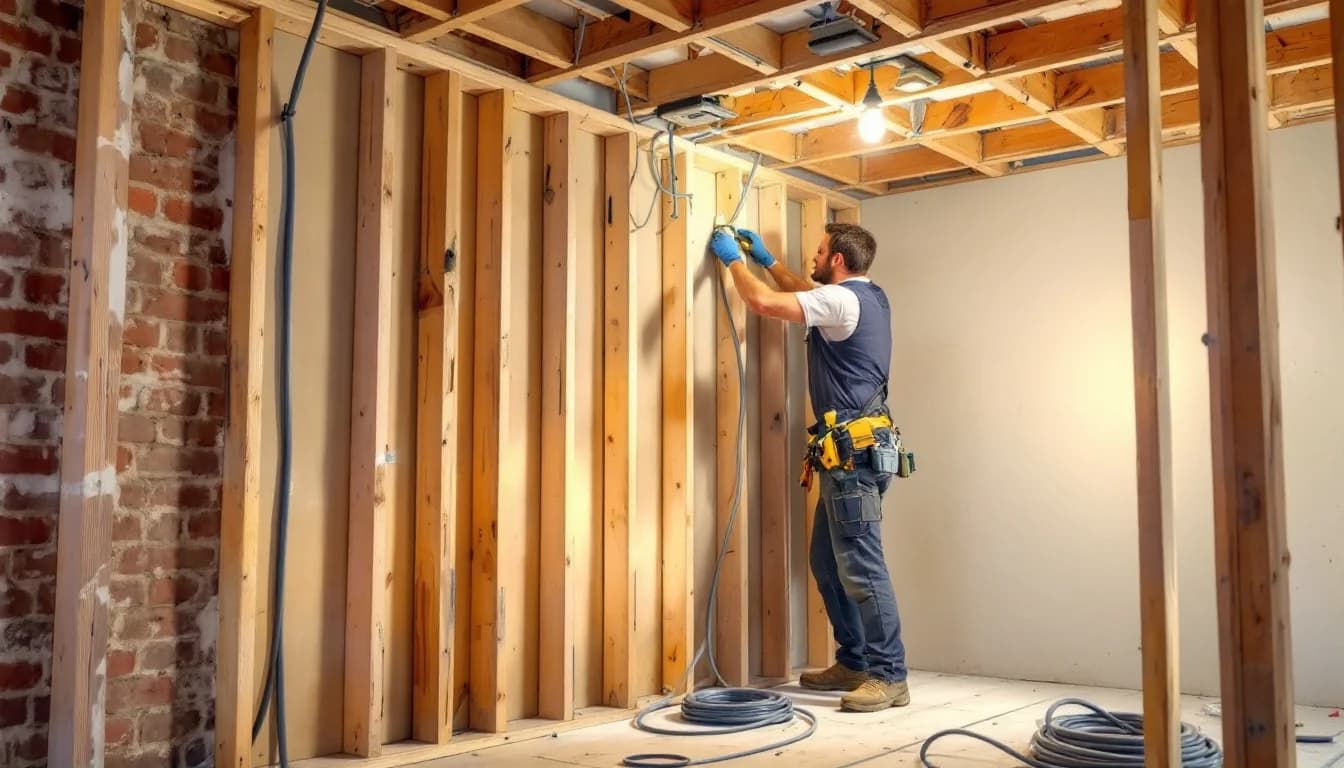
First fix is all the hidden work. We lift floorboards, cut channels into walls for new cables, fit back boxes, and run everything back to a new consumer unit. This is where the dust and the noise come from, and where circuits get switched off while we work on them.
If you're staying, first fix is the stage you'll notice most. Rooms get emptied and sheeted, floors come up, and there's a fair bit of drilling and cutting.
Second fix (the tidy bit)
Once the plastering has dried, second fix is fitting the sockets, switches and light fittings, connecting the consumer unit, then testing and certifying the whole installation. It's quieter, cleaner, and the house starts to feel normal again.
Between the two stages you'll usually need a plasterer to make good the chased walls. Some electricians arrange this, some leave it to you, so ask upfront.
Living in your house during a rewire, room by room
This is the part most guides skip. You don't lose the whole house at once. A rewire is phased, so we work one area at a time and keep the rest of the property running.
In practice that means we might do the upstairs bedrooms first while you keep the kitchen and a living room live, then swap over. You lose power to the room being worked on, not the entire house. It takes more planning and it stretches the job a little, but it's how most occupied rewires get done.
Will you have power the whole time?
Mostly, yes, but not everywhere at once. During first fix, whichever circuit we're working on gets isolated for safety. Electricity is not something to take chances with, and the HSE is clear that the risk of injury rises with higher voltages, so live working during a rewire isn't an option. We can often keep a socket or two running off a temporary supply so the kettle and the wifi stay on. Tell us what you can't do without and we'll plan around it.
Dust and mess
Chasing walls makes fine dust, and it travels. We sheet up, run dust extraction on the tools, and clean down at the end of each day, but a rewire is never spotless. Bag up soft furnishings, take pictures off the walls in the working area, and move anything precious well clear. Plan to redecorate the chased walls afterwards.
Water and heating
A rewire doesn't touch your pipework, so your plumbing stays put. The catch is that your boiler, immersion heater and central heating pump all run on electricity. When we isolate the circuit feeding the boiler, you lose heating and hot water until it's back on, usually the same day. If it's winter, keep a plug-in heater handy and let us know, so we can sequence the boiler circuit sensibly. Nobody wants a cold night for no reason.
Rewiring a London flat
Flats come with a few wrinkles a house doesn't. If you're a leaseholder, check your lease before you commit, because major electrical alterations often need written consent from the freeholder or managing agent.
Older London conversions add more. In a Victorian house split into flats, your floor is often someone else's ceiling, so getting to cables can mean coordinating access with a neighbour. Cables that run through communal risers or hallways need permission and careful protection of the shared space.
The compliance side is the same as any home. A rewire is notifiable work under Part P of the Building Regulations and must be carried out to BS 7671 and certified, as the Planning Portal sets out. Even swapping the fuse box on its own is work that can need building control sign-off, so a full flat rewire certainly does. We handle the notification and the certificate as standard.
Rewiring a tenanted property
If the property is let, moving out isn't really the tenant's call to make alone. It's the landlord's job to arrange the work and give proper notice before anyone turns up, and a full rewire in an occupied let is disruptive enough that many landlords time it between tenancies.
Rewires in rentals often start with an inspection. Under the Electrical Safety Standards in the Private Rented Sector (England) Regulations 2020, landlords must have the electrical installation inspected and tested at intervals of no more than five years and give tenants a copy of the report, as set out in Regulation 3. If that EICR flags serious problems, the fix can be a partial or full rewire, and remedial work has to be sorted within 28 days.
If you're a landlord weighing this up, our landlord and letting agent work cover the inspection, the works and the paperwork in one go. Whether the tenant stays put or needs putting up elsewhere depends on the scope and your tenancy agreement, so it's worth agreeing that before work starts.
Frequently asked questions
Can you live in a house while it's being rewired?
Yes. Most rewires are phased room by room, so you keep power in the areas we're not working on. It's dusty and noisy, and you'll lose power to one room at a time, but plenty of people stay throughout. An empty house is just easier and a little faster.
How long does a rewire take for a 3 bed house?
Usually about 5 to 10 working days for a full rewire, depending on the age of the property and how easy the floors and walls are to get into. Staying in the house while it's done can add a day or two.
Do I need to move all my furniture out for a rewire?
Not all of it, but the more you clear the better. We need access to walls, floors and the loft. Moving furniture to the centre of rooms, or into a room we've finished, keeps things moving. Anything fragile or valuable is best packed away.
Does rewiring make a lot of mess?
Yes, mainly dust from chasing walls and lifting floors. We sheet up and clean down daily, but you should plan to redecorate the affected walls afterwards. It's the price of getting new cable safely into an old house.
Will I lose hot water and heating during a rewire?
Only while the circuit feeding your boiler is switched off, usually for part of a day rather than the whole job. Tell us in advance and we'll sequence it so you're not left cold overnight.
Based anywhere in London and want your rewire done properly, with the mess kept to a minimum and a fixed price agreed first? See our house rewiring service or call us on 020 3653 2600 for a straight answer and a fixed quote. And if you're budgeting, our guide to what a rewire costs breaks the numbers down.
Related reading
How Much Does It Cost to Rewire a House in London?
Realistic London rewiring costs by property size, what changes the price, how long it takes, and the warning signs your wiring is overdue.
Read more
10 Warning Signs Your House Needs Rewiring (London)
The 10 warning signs a London electrician looks for to tell whether your house needs rewiring, and which signs mean turn the power off now.
Read more
Ceiling Fan Installation: Fixing, Wiring and Costs Explained
Swapping a pendant for a ceiling fan is a half day job when the fixing and wiring are right. Here's what a proper ceiling fan installation involves, and what it costs.
Read more